Geopolitics and Empire: The Legacy of Halford Mackinder

Geopolitics and Empire: The Legacy of Halford Mackinder by Gerry Kearns dissects the enduring relationship between spatial strategy and imperial ambition through the career and influence of British geographer Halford Mackinder. From Edwardian Britain to contemporary Washington and Moscow, Kearns traces how geographical reasoning serves the political imperative to control space, enforce sovereignty, and project power.
The Heartland Thesis and Strategic Global Space
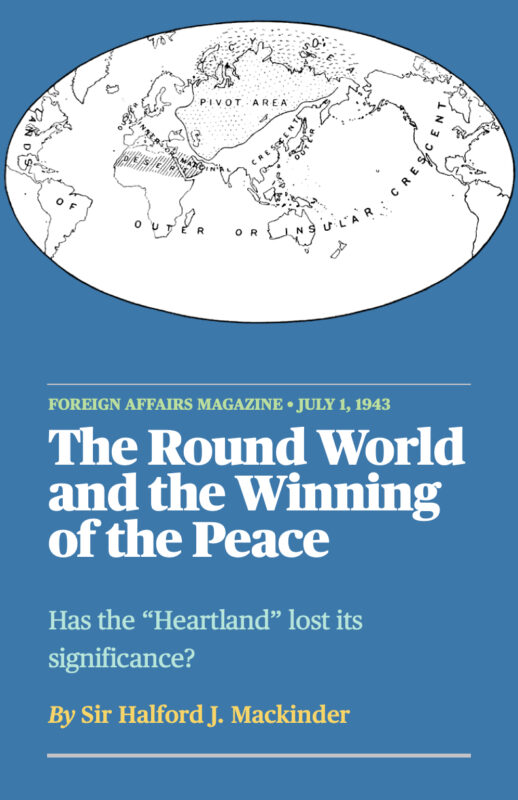
Halford Mackinder’s pivotal assertion—“Who rules East Europe commands the Heartland; who rules the Heartland commands the World-Island; who rules the World-Island commands the World”—encapsulates the doctrine that geography underwrites global power. Mackinder defined the Heartland as the resource-rich core of Eurasia, impervious to sea power and accessible only by land. This formulation crystallized a strategic worldview wherein control of territory guarantees strategic preeminence.
Kearns examines how this thesis arose in the context of British anxieties about rising land-based powers. The British Empire, a maritime hegemon, perceived threats from rail-connected empires that could consolidate power in Eurasia. Mackinder’s geographical theories positioned Britain’s imperial survival on containing such consolidation, framing geopolitics as a necessary doctrine of imperial vigilance.
Imperial Statecraft and the Discipline of Geography
Mackinder institutionalized geopolitics by embedding it within British educational, political, and military infrastructures. As the first director of the London School of Economics and a Member of Parliament, he fused geography with statecraft. His textbooks defined imperial expansion as a natural outcome of geographic destiny. His lectures trained generations of civil servants and military officers to read the map as a battlefield, a resource grid, and a strategic ledger.
Geography, under Mackinder’s direction, did not merely describe the world. It shaped imperial thinking, justified overseas interventions, and instructed the imperial class in how to visualize global order. This transformation positioned geography as a political tool—an epistemology of control rather than curiosity.
Geopolitics as Doctrine in Nazi Germany and Cold War America
Mackinder’s influence did not expire with the twilight of the British Empire. In 1930s Germany, Karl Haushofer adopted Mackinder’s Heartland concept to formulate geopolitical justifications for expansion into Eastern Europe. Haushofer’s writings influenced Hitler’s military advisors, embedding geopolitics into Nazi statecraft. The idea of Lebensraum—the necessity for territorial expansion—drew from the same intellectual lineage.
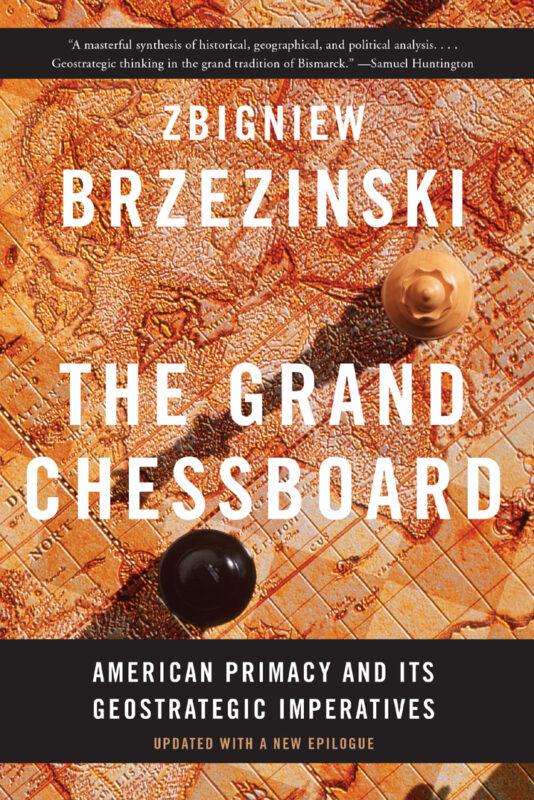
During the Cold War, American strategists revived Mackinder’s logic in the doctrine of containment. The Soviet Union, situated within the Heartland, became the geographical and ideological adversary of the United States. Policymakers from George Kennan to Zbigniew Brzezinski invoked Mackinder’s map to plan military bases, proxy wars, and diplomatic initiatives. The U.S. structured its alliances, intelligence networks, and forward deployments along the conceptual contours drawn by Mackinder.
Geopolitics in the Age of Oil and Terror
After the Cold War, new threats required updated geographies. Yet the foundational premise endured: control territory to control history. U.S. military doctrine under the Bush administration echoed Mackinder’s insistence on preemption and strategic reach. The 2002 National Security Strategy asserted the necessity of acting before threats materialize. The Heartland reemerged in discussions about the Caspian Basin, Central Asia, and the Middle East—regions deemed essential for energy security and counterterrorism.
Russian nationalists likewise returned to Mackinder. Aleksandr Dugin’s Foundations of Geopolitics, widely read within Russian military and political circles, enshrines Eurasia as the arena of existential contest with Atlanticist powers. Dugin’s Eurasianism envisions a continental bloc expelling Western influence. Mackinder’s ideas, repurposed, now serve Moscow’s aspirations to reclaim strategic depth.
Conservative and Progressive Geopolitics
Kearns frames the geopolitical tradition initiated by Mackinder as conservative in form and function. Conservative geopolitics interprets global space as a zero-sum arena where states struggle over resources, access, and dominance. It privileges military power, denies the efficacy of international law, and portrays world order as a fragile armistice sustained by vigilance.
The book introduces a counter-tradition of progressive geopolitics. This alternative draws from thinkers like Peter Kropotkin, Mary Kingsley, John Hobson, and Élisée Reclus. These figures emphasized cooperation, mutual aid, and cultural plurality. They refused to reduce human difference to racial hierarchy or strategic utility. Their geopolitics imagined a world system grounded in shared rights, multilateral institutions, and the ethics of solidarity.
Progressive geopolitics does not dismiss geography but reframes it. Instead of lines of conflict, maps can reveal webs of interdependence. Instead of emphasizing threats, they can trace flows of care, responsibility, and shared vulnerability. Progressive geography supports a global order premised on dignity, not domination.
Mackinder’s Career and the Institutionalization of Empire
Mackinder’s own career demonstrates how ideas solidify through institutions. At Oxford and Cambridge, in the Royal Geographical Society, and in Whitehall, he translated theories into policy. His 1919 mission to South Russia exemplifies the direct application of geopolitical doctrine to military planning. Britain sought to contain Bolshevism by manipulating postwar boundaries and sponsoring anti-communist forces. Mackinder’s strategic recommendations, grounded in Heartland theory, guided British involvement in a region he had designated as the fulcrum of global control.
Kearns shows how Mackinder’s status as explorer, academic, and policymaker allowed him to fuse theory and practice. His life exemplifies how knowledge becomes power through access, influence, and institutional leverage.
Geopolitical Imaginaries and Imperial Ethics
The book analyzes how Mackinder’s ideas shaped the imperial imagination. Geopolitics offered a lens that naturalized expansion, subordinated difference, and legitimized violence. Race and masculinity underpinned this logic. Empire required tough men and compliant others. Strategic clarity demanded moral hierarchy. Geopolitical thinking structured a world where dominance appeared rational, necessary, and just.
Kearns reveals how this vision narrowed the ethical range of political action. By portraying force as the only viable instrument, it foreclosed diplomacy, law, and empathy. By invoking existential stakes, it demanded loyalty over judgment. Geopolitics became a script that wrote the world into roles: hegemon and vassal, civilizer and savage, core and periphery.
The Revival of Geography as Critical Practice
Kearns does not abandon geography. He reclaims it. The book insists on the discipline’s capacity to expose power, challenge orthodoxy, and imagine alternatives. Geography maps injustice, but also possibility. It can trace the routes of capital and the roots of resistance. It can reveal the layered terrains of exclusion and the fragile networks of interdependence.
Progressive geography asks: What kinds of global relations foster justice? How can space serve care rather than control? What would a world look like if its maps prioritized peace over position?
These questions demand more than critique. They require a reorientation of method, pedagogy, and imagination. Kearns offers the history of geopolitics not as a cautionary tale, but as a call to action.
Strategic Space and Ethical Futures
The stakes of this analysis extend beyond academic debate. Policymakers draw maps to plan wars, secure borders, and extract resources. Geopolitical thinking shapes treaties, alliances, and doctrines. It underwrites drone strikes, sanctions, and surveillance. It influences how nations define threats and choose allies. The legacy of Mackinder moves in these channels.
To interrupt this legacy, geography must interrogate its assumptions. It must ask who draws the maps, who benefits from the lines, and what lies beneath the surface of strategy. Kearns shows that these are not abstract inquiries—they are decisions about life and death, sovereignty and submission.
Geopolitics remains a living language of power. But it also contains its own antithesis: the possibility that space can signify care, not conquest. In that possibility lies the task of remaking geography for a world that does not yet exist but urgently must.