JFK to 911 Everything Is A Rich Man’s Trick
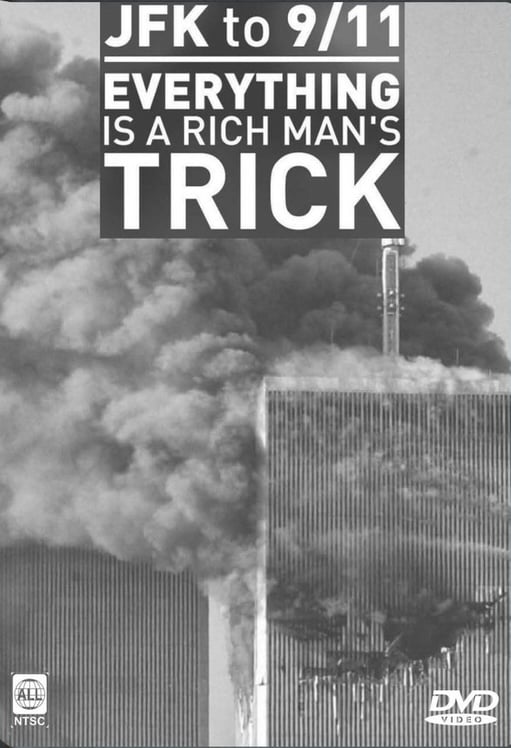
JFK to 911 Everything Is a Rich Man’s Trick by Francis Richard Conolly reconstructs the history of the 20th century as a continuous, elite-driven conspiracy. The film-turned-book traces a line of control stretching from industrial tycoons of the early 1900s through two world wars and into the events of the 21st century. Conolly asserts that a hidden coalition of bankers, oil magnates, and secret society members orchestrated world events to consolidate power, subvert democracy, and engineer perpetual conflict for profit.
The assassination of Kennedy as a fulcrum
President John F. Kennedy’s death marks the turning point in the narrative, not as an isolated act but as the culmination of decades of planning by entrenched financial and political forces. Conolly identifies eight snipers in Dealey Plaza, coordinated and paid by oil barons and industrial elites, with the plan finalized at the Dallas home of Clint Murchison the night before the killing. The Warren Commission, led by a man Kennedy had fired—Allen Dulles—reframed the event as the work of a lone gunman. Conolly rejects that framing entirely. He locates the real decision-making power in a network whose motivations centered on preserving war profits, intelligence secrecy, and private banking interests.
Foundations in industrial monopolies
The roots of this network go back to men like E.H. Harriman, John D. Rockefeller, and Andrew Carnegie. Harriman’s creation of a railroad monopoly seeded capital that expanded into oil and steel. Their monopolistic control allowed them to suppress market competition and influence national economies. These monopolies did not merely produce wealth—they generated the first private fortunes that rivaled national treasuries. Conolly argues that these magnates saw governments as obstacles or tools. Their financial empires required long-term access to raw materials and labor, which they secured through foreign policy manipulation and domestic political control.
War as industrial strategy
World War I served as a testing ground. Rather than destabilizing capitalism, war inflated profits and debt obligations. Remington and other arms manufacturers multiplied their revenues. International banks financed both sides, ensuring repayment with interest. War became a model business plan. In this analysis, World War II followed not from unresolved political tensions but from decisions by elite financiers to rearm Germany for strategic and economic purposes.
Conolly names the Dulles brothers, Averell Harriman, Prescott Bush, and George Herbert Walker as key financiers who revived German industry after World War I by buying stock and propping up failing firms. The goal: make Germany a strong anti-communist bulwark. They selected Adolf Hitler as a frontman and facilitated his rise through industrial partnerships and secret cash transfers routed through Dutch banks.
Secret societies and institutional infiltration
Skull and Bones, the secret society founded at Yale University, plays a central role. Conolly traces its members from its founding in 1833 to the White House, the CIA, the State Department, and the Supreme Court. These bonds created a closed network of influence. Membership required initiation rituals designed to ensure lifelong loyalty. George H.W. Bush and his father Prescott were both members. John F. Kennedy, recognizing their power, issued warnings against secret societies in public speeches.
This allegiance operated outside of democratic institutions. Conolly insists that the Kennedy assassination was a defensive move by this network to prevent disruption. Kennedy had fired Dulles, resisted escalation in Vietnam, sought to regulate the Federal Reserve, and questioned the CIA’s unchecked authority. The elite network interpreted these moves as existential threats.
From Nazi Germany to corporate America
Conolly delineates the financial and industrial structure of Nazi Germany as an American business project. IG Farben, manufacturer of Zyklon B gas, worked with Standard Oil in a cartel agreement. Ford supplied trucks to the Wehrmacht. Coca-Cola created Fanta for the German market during wartime embargoes. Royal Dutch Shell and Chase Bank continued business operations during the occupation of Europe.
The construction and operation of Auschwitz is recast as an industrial investment opportunity. Slave labor reduced costs. Gold stolen from Jewish prisoners entered British banks. Harriman and Walker allegedly facilitated the railway infrastructure. Conolly treats Auschwitz as a logistical extension of corporate strategy, not as an aberration, but as a natural consequence of profit-maximizing policy.
Smedley Butler and the failed coup
In 1934, General Smedley Butler revealed a plot to replace President Roosevelt with a fascist regime backed by elite businessmen, including figures from the Colgate, DuPont, and Rockefeller families. Butler feigned agreement long enough to expose the plan. Conolly credits Butler with saving American democracy from immediate corporate takeover. Roosevelt, fearing another depression, declined to prosecute. The conspirators suffered no legal consequences and retained their influence.
Pearl Harbor and postwar expansion
The Japanese attack on Pearl Harbor pushed Roosevelt to seize Nazi-linked assets through the Trading with the Enemy Act. Conolly argues the response came too late. American firms had already provided telecommunications infrastructure, oil, rubber, and metals to the Nazi regime. Hitler’s blitzkrieg ran on Ford-built trucks. U.S. corporations sued for damages after the war, and courts granted compensation.
Postwar trials at Nuremberg, according to Conolly, carefully avoided inquiry into these American corporate ties. He notes the press silence, citing Rothschild-connected newspapers that printed sympathetic stories about the Nazi regime during the 1930s. The continuity of elite wealth across the war reveals to Conolly that the conflict resolved no systemic imbalance. It merely shifted the management of control from Berlin back to New York and London.
Media silence and historical control
Control of narrative emerged as a necessary tool. School textbooks, history curriculums, and mainstream media avoided discussion of elite complicity in fascist finance. Conolly sees this erasure as deliberate. Knowledge of corporate involvement in Nazi war crimes would damage brand integrity and undermine postwar capitalist hegemony.
He cites the British royal family's German origins and sympathies as further evidence of coordinated elite consensus. Edward VIII's overt support for Hitler, Prince Harry’s Nazi-themed costume, and ties between Dutch royalty and Nazi investors form what Conolly sees as a coherent pattern.
9/11 as a culmination
The final movement of the documentary brings the conspiracy arc to the modern era. The attacks on September 11, 2001, serve in Conolly’s structure as the mechanism to rejuvenate the war economy and expand domestic surveillance. He treats 9/11 as a psychological operation, structured to provoke public support for foreign invasions and the erosion of civil liberties. The Patriot Act, wars in Afghanistan and Iraq, and the rise of private security firms are framed as deliberate outcomes. The same elite who funded Hitler, profited from Auschwitz, and silenced JFK reasserted control.
A closed loop of wealth and power
The argument converges on a single structural principle: concentrated wealth creates structures to perpetuate itself. The actions of the Bush family—financing Nazis, laundering profits through Union Bank, ascending to the presidency—illustrate this cycle. Conolly claims no event in modern political history occurred without input or sanction from this elite network.
His timeline resists traditional periodization. The so-called “American century” did not mark the rise of liberal democracy. It marked the successful globalization of corporate autocracy masked as democratic consensus. Behind every flag, he says, there is a ledger. Behind every president, a syndicate. Behind every war, a transaction.
The purpose of this narrative is not to indict individuals but to reveal systems. If history seems chaotic, the disorder is cosmetic. Beneath the surface, Conolly sees a throughline of strategy, investment, and control. The century’s calamities functioned not as missteps or tragic inevitabilities, but as dividends. Understanding them demands following the money—across borders, generations, and official versions.