Lying About Hitler
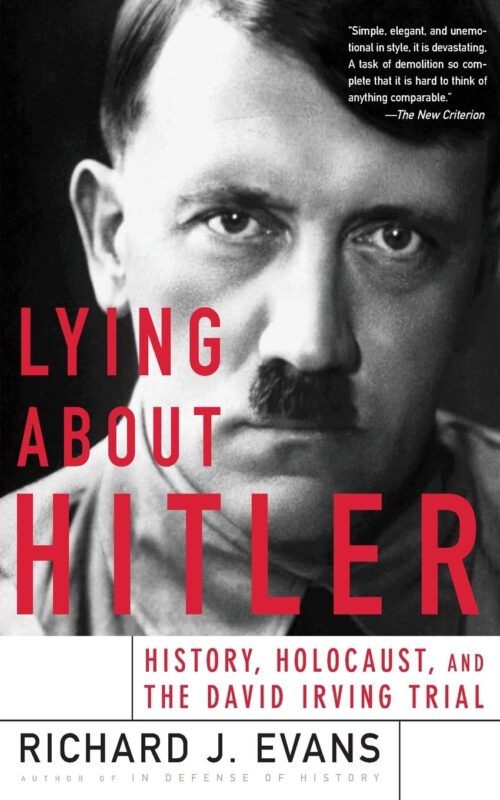
Richard J. Evans’s Lying About Hitler investigates how historical falsehoods gain traction, focusing on David Irving’s libel lawsuit against Deborah Lipstadt and Penguin Books. The trial unspooled a broader confrontation between historical method and ideological distortion, challenging the idea of history as interpretative opinion.
The architecture of deliberate misrepresentation
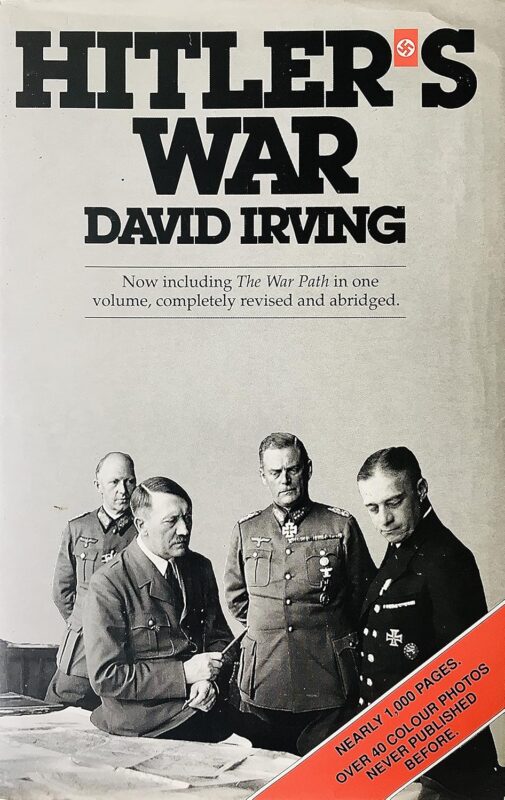
Evans dissects Irving’s work to expose a pattern of manipulation rather than isolated error. Through forensic analysis of footnotes, mistranslations, and document selection, Evans shows how Irving constructed a narrative that consistently exonerates Hitler. Misquotations become structural, not accidental. Irving bends sources to confirm ideological aims. This is not a debate about competing interpretations but an empirical demonstration of falsification.
The trial as evidentiary theater
The courtroom becomes a stage where questions of truth, bias, and objectivity transform into legal findings. Irving's decision to sue provided Lipstadt the opportunity to defend her claims under judicial scrutiny. Evans, called as an expert witness, submitted a 740-page report cataloging Irving’s distortions. The case examined Irving’s use of sources across multiple books, exposing a deliberate pattern of falsification aimed at minimizing Nazi responsibility for the Holocaust.
Standards of historical objectivity
History demands rigorous attention to primary sources, consistent methodology, and a clear separation between evidence and ideology. Evans clarifies these criteria and shows how Irving fails them. Historical objectivity does not require neutrality toward genocide; it requires accuracy, contextual integrity, and intellectual honesty. By these standards, Irving’s work disqualifies itself from the discipline of history.
The forensic method of exposure
Evans catalogues specific examples: mistranslating Hitler’s orders, omitting damning documents, and selectively quoting to sanitize Nazi policy. One case centers on Hitler’s 1943 speech to military leaders—Irving translates a passage in a way that removes reference to the extermination of Jews. The original text contradicts Irving’s interpretation. The distortion is systematic. Evans aligns this pattern with Irving’s ideological commitments and personal associations with Holocaust denial networks.
Political function of denial
Holocaust denial serves political revisionism. Irving’s distortions align with contemporary far-right narratives that rehabilitate fascism and undermine democratic memory. His writings operate within a propaganda economy that reclaims Nazi history for modern ultranationalist use. Evans identifies these networks and situates Irving within them, showing how historical denial fuels political extremism.
Authority and expertise
Evans confronts the assertion that history is merely a contest of narratives. His work establishes the necessity of disciplinary standards. Expertise in history involves methodological transparency and critical engagement with evidence. Irving’s refusal to cite opposing historians, his disregard for archival counterevidence, and his reliance on ideologically aligned sources mark a disqualifying departure from those standards. History is not opinion. It is argument based on evidence. When the evidence is faked, the argument collapses.
Legal judgment as historical judgment
Justice Charles Gray ruled against Irving, affirming the core findings of Evans’s report. The court held that Irving had misrepresented the historical record in bad faith. The judgment establishes a precedent: Holocaust denial, when exposed through its documentary manipulations, can be judged factually false in legal terms. The trial gave public weight to scholarly consensus and recentered truth at the core of historical inquiry.
The afterlife of falsehood
Even in defeat, Irving continued to frame himself as a martyr to free speech. Evans anticipates and confronts this rhetorical shift. The trial's outcome did not silence debate; it clarified boundaries between scholarship and propaganda. Irving's works circulate through self-publishing and extremist networks, insulated from scholarly review. Exposure shifts the terrain—it arms educators, librarians, and the public with documented refutations.
The epistemology of warning
Evans argues that truth in history matters because it shapes moral and civic memory. Denying the Holocaust erodes the foundations of democratic accountability and fuels political violence. The trial showed how falsification becomes strategy, how historical lies cloak ideological agendas, and how truth can be defended not only in books but in courtrooms. Lying About Hitler functions as both case study and warning.
Embedded within archives
Evans draws on extensive documentation: trial transcripts, archival discoveries, expert witness statements, and judicial rulings. This grounding distinguishes his method. He treats history as an evidentiary craft, built on traceable records, open to scrutiny. Irving’s failure lies in his rejection of this craft. He does not engage with archives to discover; he uses them to decorate predetermined conclusions. Evans’s model is the inverse: documentation drives interpretation.
The historian’s burden
The trial dramatizes a question central to Evans’s career: how do historians defend truth under siege? Lying About Hitler answers with method, clarity, and public witness. Historians bear not only intellectual but ethical responsibility. They write in the shadow of memory, often contested, sometimes dangerous. The stakes are real—truth is not only academic; it protects democratic culture from the corrosion of lies.
From courtroom to classroom
The implications of the case extend beyond the immediate actors. Evans’s work offers a framework for teaching historical literacy: how to read sources critically, how to detect bias, how to distinguish between argument and propaganda. The book equips students with tools to resist misinformation and interpret history with rigor. It bridges the academy and the public, showing why history matters and how it can be defended.
Redrawing the line
Evans does not argue for censorship. He draws a line between legitimate disagreement and deliberate falsification. Irving crosses that line. The trial provides a map for navigating similar cases. When falsehoods pose as history, documentation is the remedy. The task is not to debate bad faith on equal terms but to dismantle its methods and affirm standards of evidence.
A benchmark for historical defense
Lying About Hitler stands as a defining case of historical intervention in public life. It articulates a defense of historical truth rooted in archival discipline and legal accountability. Evans merges scholarship with civic duty. The book documents how historians can, and must, intervene when truth is under assault. This is not merely a reflection on a trial. It is a call to preserve the integrity of historical practice against the encroachments of political distortion.


About the Book