The German Generals Talk
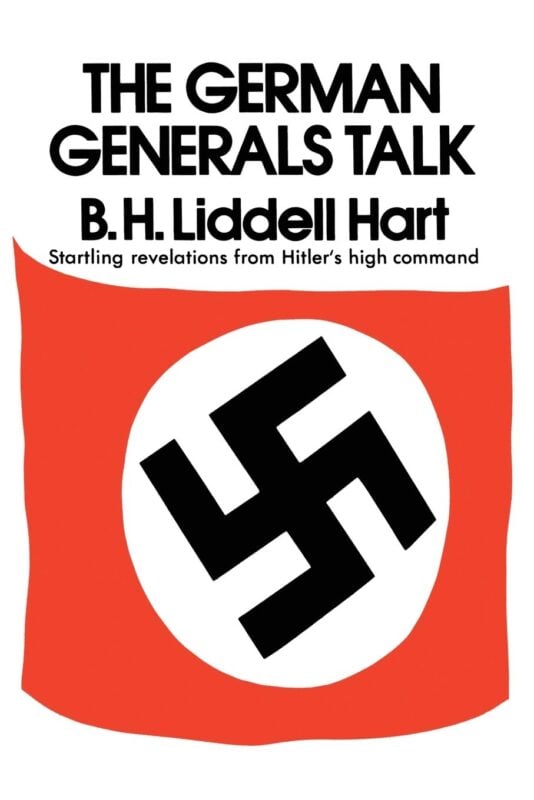
The German Generals Talk by B. H. Liddell Hart draws on post-war interviews with German military leaders to reveal the operational mindset, internal conflicts, and decision-making failures within the Nazi high command. This book functions as both a strategic analysis and a psychological profile of Hitler’s generals, mapping the erosion of professional military judgment under the pressure of ideology and centralized authority.
The Split in Command: Strategy Fractured by Fear
Germany’s military elite disintegrated under Hitler’s command structure. Professional officers, trained in the General Staff tradition, failed to assert operational independence. Their deference to Hitler’s strategic whims, reinforced by an oath of loyalty and the threat of reprisal, collapsed what might have been a unified military response to unfolding crises. The internal schism between tactical calculation and ideological command paralyzed effective resistance. When success required dissent, the High Command submitted.
Generals described Hitler as brilliant in psychological manipulation, especially early in the war. He envisioned operations with surprising tactical foresight—Poland, France, and Norway showcased that acuity. But the very brilliance that won early victories calcified into overreach. Hitler insisted on pressing attacks even as strategic odds turned. At Moscow, in Normandy, at Stalingrad, his inability to recalibrate inflicted compounding losses. Generals predicted disaster, but obedience superseded insight.
The Legacy of Seeckt: Shaping the Post-Versailles Army
Hans von Seeckt reconstructed the German military under Versailles restrictions. His reforms emphasized mobility, technical skill, and professional soldiering over mass conscription. He designed a framework in which a small but capable force could expand rapidly when political conditions allowed. This doctrinal shift, grounded in flexibility and psychological warfare, laid the groundwork for the Wehrmacht’s early wartime success.
Seeckt’s influence persisted in the structural DNA of German forces. He promoted forward-deployed leadership, rapid communications, and operational surprise. His focus on education, intercommunication, and decentralized initiative produced a generation of officers adept at maneuver warfare. The idea that a well-trained elite could outmaneuver a mass army became operational reality in 1940.
The Rise of Hitler: The Collapse of Civil-Military Balance
When Hitler assumed power, the fragile balance between the military establishment and civilian oversight dissolved. Generals welcomed his promises of rearmament and national revival, underestimating the consequences. Hitler’s consolidation of command after the Blomberg-Fritsch Affair eliminated structural checks. The dismissal of key officers enabled direct Führer control over military planning. The shift was not organizational—it was existential.
From 1938, strategic decisions concentrated around Hitler, sidelining General Staff assessments. Commanders such as Brauchitsch and Halder voiced warnings but lacked structural leverage. The annexation of Czechoslovakia, achieved without conflict, validated Hitler’s instincts over their caution. The army, deprived of strategic autonomy, became a tool for Hitler’s ideological ambitions.
France 1940: Tactical Triumph, Strategic Illusion
The invasion of France marked the Wehrmacht’s most brilliant operational campaign. Speed, surprise, and maneuver decapitated Allied resistance. Junior officers, embracing mechanized breakthrough, executed plans with decisive energy. Yet the success deepened Hitler’s conviction in personal infallibility. He claimed strategic authorship, ignored the architects of the breakthrough, and increasingly overruled military professionals.
This pattern solidified during the planning of Operation Barbarossa. Generals raised alarms about logistical overreach and Soviet depth, but Hitler dismissed them. The early victories in Russia masked the widening gap between operational capacity and political fantasy. The German army raced toward a horizon it could not sustain.
The Erosion of Authority: Fear and Careerism in the High Command
Generals who resisted Hitler’s directives faced removal or marginalization. The culture of military obedience, rooted in oaths and tradition, provided Hitler with structural compliance. Ambitious officers filled vacated posts, often affirming decisions they had privately questioned. This cycle corroded professional standards.
Surveillance by the SS and political commissars embedded ideological control within military units. Field commanders balanced operational judgment with loyalty tests. As failure loomed, some generals obeyed suicidal orders to expose Hitler’s irrationality, hoping collapse would provoke change. It did not. The command structure absorbed loss after loss without decisive rupture.
The Rommel Paradox: Autonomy, Fame, and Tragedy
Rommel’s rise reflects the tension between tactical genius and political isolation. Celebrated for his North African campaigns, Rommel operated with relative autonomy. His direct communication with Hitler, bypassing standard hierarchies, granted him latitude but limited his institutional support. When he questioned broader strategy or joined resistance circles, his fame turned into liability. His forced suicide exemplifies how personal brilliance could not overcome systemic rot.
Rommel’s operations exemplified the doctrines Seeckt envisioned: speed, psychological disruption, and adaptability. But Rommel fought within a system that no longer rewarded strategic honesty. His end demonstrated the fate of generals who straddled professionalism and political disillusionment.
The Normandy Breakdown: Paralysis in the West
Allied landings in Normandy revealed the Wehrmacht’s strategic rigidity. Rundstedt and Rommel recognized the danger but lacked authority to maneuver freely. Hitler delayed reserves, second-guessed reports, and refused adaptive tactics. The German response, fragmented and slow, allowed the Allies to consolidate and expand. Field commanders could not realign positions or reinforce breakthroughs without permission. As events demanded initiative, the structure delivered paralysis.
The failure in Normandy stemmed from more than misjudgment. It reflected the cumulative consequences of a decade of command centralization, ideological infiltration, and the erosion of strategic professionalism.
The Anti-Hitler Conspiracy: Resistance Without Leverage
The 20 July 1944 plot against Hitler emerged from the army’s inner circle. Generals and staff officers, recognizing the trajectory of total defeat, acted from a belief that regime change could salvage national survival. Yet their efforts lacked coherence, support, and timing. The attempt failed swiftly, exposing the isolation of opposition within the military elite. The purges that followed eliminated many of the Wehrmacht’s most capable minds.
The conspiracy underscored how far the command system had shifted. Generals who once controlled national defense policy could no longer coordinate internal dissent. Surveillance, factionalism, and moral exhaustion splintered collective action.
The Collapse: Final Orders and Strategic Disintegration
In the final months, Hitler issued directives detached from battlefield reality. He relocated phantom divisions, ordered counterattacks without fuel, and dismissed reports of collapse as treason. The generals executed these commands with diminishing conviction. Resistance hardened only where ideology held sway or SS units enforced compliance. Otherwise, retreat, surrender, and surrender of command authority accelerated.
German operational coherence disintegrated faster than its material capacity. Where cohesion survived, it owed more to local leadership than central command. Hitler’s suicide and the army’s surrender confirmed a failure not only of arms but of command doctrine itself.
The Institutional Failure: Lessons from a Military Collapse
The German Generals Talk demonstrates how structural integrity dissolves when strategy yields to ideology. The Wehrmacht, though equipped with intellectual and tactical capital, could not resist political encroachment. Oaths, hierarchy, and tradition enabled obedience over judgment. Hitler exploited these features not to guide the army, but to own it.
The professional soldier, as envisioned by Seeckt, required separation from politics to remain effective. Yet that very separation created a vacuum into which ideology flowed. The detachment of military leadership from political responsibility became its own vulnerability.
Command failed not for lack of capacity but for surrender of initiative. Generals who saw clearly could not act decisively. Their silence, fragmentation, and gradual subordination transformed a force of strategic competence into a mechanism of national ruin. In documenting their perspectives, Hart does more than expose failure—he traces the structural causes of collapse. The German army’s experience reveals that where command becomes obedience, strategy becomes submission.


About the Book