Traitor King: The Scandalous Exile of the Duke & Duchess of Windsor
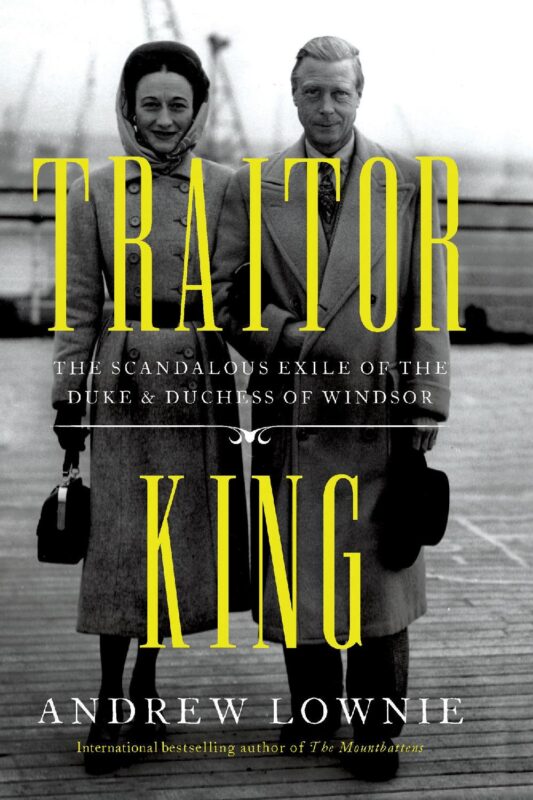
Traitor King: The Scandalous Exile of the Duke & Duchess of Windsor by Andrew Lownie reconstructs the dramatic abdication of Edward VIII, the seismic shockwaves through the British monarchy, and the scandal-fueled exile that recast two royal figures as outsiders on the world stage. Edward VIII’s abdication in December 1936, following his determination to marry Wallis Simpson, reverberated far beyond Buckingham Palace, exposing the fragility of constitutional tradition and the enduring power of personal desire to remake history.
Edward’s Abdication and Its Political Reverberations
On December 11, 1936, Parliament passed the Abdication Bill, ending Edward VIII’s 326-day reign and inaugurating the era of George VI. The king’s family watched events with a combination of shock and grief, the monarchy forced to recalibrate its future. Edward’s choice emerged from a convergence of personal and political conflict: his infatuation with Wallis Simpson—an American, twice-divorced, and a figure viewed with skepticism and suspicion—rendered his position untenable in the eyes of the Church, government, and court. Edward framed his decision publicly as a necessary surrender, declaring in his broadcast that he could not carry the burden of kingship without the woman he loved. Churchill and other political figures witnessed the abdication as a seismic event, the end of a royal era, and the beginning of an exile that would disrupt lives and unsettle alliances.
A Royal Romance That Redefined Power and Loyalty
Wallis Simpson’s entrance into royal circles catalyzed Edward’s transformation from sovereign to outsider. Their romance, beginning in the early 1930s and deepening after her divorce proceedings in 1936, challenged the boundaries of acceptability and loyalty. Wallis, under surveillance and subject to Establishment suspicion, navigated the treacherous terrain of British public opinion, police investigation, and elite gossip. Her detractors pointed to her cosmopolitan background, rumored affairs, and purported ambitions, seeing her as a disruptive force at the heart of the monarchy.
Edward’s devotion to Wallis provided the catalyst for his abdication, but also became the source of his liberation from royal constraints. The couple’s separation during the legal maneuverings preceding their marriage heightened the dramatic tension: while Edward struggled with his new role as Duke of Windsor and his estrangement from his family, Wallis faced public hostility, threats, and relentless scrutiny. Their private communications, intercepted and analyzed by multiple governments, reveal the psychological strain and the relentless efforts to secure a future together.
Financial Negotiations and Family Fractures
In the wake of abdication, the Windsors confronted a series of practical and emotional obstacles, beginning with money. Edward sought the financial compensation traditionally allotted to a younger son of a monarch, but his obfuscations regarding his actual wealth created friction. Disclosures that he maintained substantial assets abroad complicated negotiations and seeded distrust within the royal family. The settlement—eventually resolving annuities, property interests in Balmoral and Sandringham, and pensions for staff—became a protracted affair, leaving wounds that shaped family dynamics for decades.
Edward’s interactions with his brother, George VI, expose the limits of royal solidarity. Telephone calls, meticulously timed and increasingly rebuffed, tracked the deterioration of their relationship. Queen Mary’s refusal to accept Wallis, and the new Queen’s steadfast defense of royal protocol, reinforced the Windsors’ isolation. The refusal to grant Wallis the title of Her Royal Highness marked a definitive rupture: the Windsors, by decree and by practice, existed outside the central sphere of royal legitimacy.
Exile as Performance and Estrangement
Exile forced the Windsors into a life of movement, spectacle, and precarious belonging. The early months in Austria, spent at Schloss Enzesfeld as guests of the Rothschilds, illustrate a pattern that would define their lives: reliance on the hospitality of the rich and well-connected, bouts of boredom and restlessness, and emotional volatility. Edward oscillated between gratitude and resentment, attempting to sustain a public persona while grappling with loss of status and meaning. Wallis’s social circle, dominated by Americans, artists, and business magnates, intersected with political currents that rendered their position even more ambiguous.
The couple’s wedding at Château de Candé in the Loire, occurring after Wallis’s divorce became absolute in May 1937, crystallized their outsider status. The royal family’s boycott, the threat of official retribution for friends and former advisers who might attend, and the presence of only a handful of British guests signaled the Windsors’ new reality. Wallis’s gown, designed in a signature “Wallis Blue” by Mainbocher, and the low-key, carefully orchestrated ceremonies affirmed the couple’s commitment to each other, but did not shield them from gossip, resentment, or political anxiety.
The German Tour: Royalty in the Shadow of Nazism
Autumn 1937 brought a decisive turn. The Windsors embarked on a controversial tour of Germany, orchestrated in part by Charles Bedaux, a Franco-American businessman with deep ties to German industry and the Nazi regime. Their arrival in Berlin—greeted by swastikas and Nazi officials—ignited public outrage and diplomatic alarm. The couple’s itinerary included visits to labor organizations, social welfare offices, and, most sensationally, personal audiences with Adolf Hitler and his top aides.
The visit placed the Windsors at the intersection of power and propaganda. Joseph Goebbels, Hitler’s propaganda minister, described Edward as sympathetic to German interests and lamented his absence from the British throne. Wallis’s published impressions of Nazi leaders, including her account of Goebbels and his wife, reflect her acute observational skills and self-aware positioning as a participant in global history. British intelligence and diplomatic staff monitored the couple closely, reporting their movements and interactions, while Nazi officials deployed them as symbolic assets in a campaign for international respectability.
Allegiances and Suspicion: Surveillance and the Windsors’ Public Image
Government authorities in Britain and abroad interpreted the Windsors’ German sympathies and their proximity to fascist circles as evidence of deeper loyalties. Intelligence memos, police reports, and diplomatic correspondence document the persistent belief that Edward and Wallis could serve as unwitting or willing agents of foreign influence. British officials, wary of the couple’s ability to generate headlines and attract attention, worked to minimize their public role and sever any appearance of official sanction. This suspicion intensified after Wallis’s choice of a legal adviser with direct connections to the Nazi leadership and her persistent entanglements with figures such as Ribbentrop and Oswald Mosley.
Financial considerations intersected with politics, as the Windsors’ dependence on wealthy hosts—often themselves linked to German or fascist interests—complicated their efforts to construct an independent life. The costs of exile, both literal and symbolic, mounted: Edward’s penchant for lavish gifts and high-stakes gambling, the couple’s extravagant travel, and Wallis’s international legal battles over unauthorized publications underscored their vulnerability and exposure.
The Windsors’ Pursuit of Purpose
Bereft of formal duties, Edward and Wallis sought new roles on the world stage. Proposals to head peace movements, champion the working classes, or advise on international labor reforms generated interest but failed to achieve lasting significance. The couple’s reliance on intermediaries—industrialists, journalists, socialites—repeatedly opened them to manipulation and furthered their reputation as naïve or opportunistic.
Edward’s meetings with industrial leaders and his attempts to position himself as a broker for international reconciliation often collapsed under the weight of skepticism and suspicion. Wallis, for her part, navigated the shifting terrain of international society with a combination of tactical charm and strategic detachment, aware that her presence generated as much animosity as intrigue.
Psychological and Emotional Costs
The psychological costs of exile and scandal permeate the narrative. Friends and observers noted the persistent sense of loss, jealousy, and insecurity that defined the Windsors’ relationship. Fruity Metcalfe, a longtime companion, recorded scenes of late-night discord, Wallis’s bouts of anger and Edward’s depression, and the toll exacted by public rejection and personal ambition. The couple’s correspondence, tracked and sometimes intercepted by government agencies, exposes moments of vulnerability and desperation.
Wallis’s isolation became acute, exacerbated by the loss of close confidantes and the relentless pressure to embody an idealized love story. Edward’s need for affirmation and his repeated attempts to reconnect with his family reveal a man both liberated and haunted by the consequences of his decision.
Legacy of the Abdication: Scandal, Loyalty, and Historical Impact
The Windsors’ saga endures as a testament to the disruptive power of personal loyalty and the mutable boundaries of royal legitimacy. Edward’s abdication triggered a cascade of events that reshaped the British monarchy, tested the limits of family and national loyalty, and exposed the vulnerabilities of tradition. Wallis’s role—at once agent and victim, object of fascination and derision—complicates any straightforward reading of events.
Andrew Lownie’s meticulous research reveals the convergence of personality, politics, and contingency at the heart of the scandal. The Windsors’ pursuit of recognition and relevance ran aground on the rocks of suspicion, national security, and historical contingency. Their story interrogates the intersection of private desire and public duty, showing how a single decision can destabilize a dynasty and shift the course of twentieth-century history.
Enduring Fascination and Cultural Memory
Traitor King: The Scandalous Exile of the Duke & Duchess of Windsor stands as a definitive account of a royal crisis that continues to reverberate in cultural memory and historical inquiry. The book’s synthesis of documentary evidence, personal testimony, and historical analysis situates the Windsors at the center of debates over loyalty, legitimacy, and the interplay between public image and private reality. Readers encounter a narrative that fuses psychological insight with geopolitical drama, drawing connections between individual action and institutional transformation.
Lownie’s account of the Windsors’ exile elucidates the complexities of power, the weight of reputation, and the unpredictable consequences of personal choice. The narrative compels us to consider the ways in which love, ambition, and the pursuit of meaning intersect with the demands of history—raising questions that echo far beyond the lives of its protagonists.


About the Book