The Occult in National Socialism: The Symbolic, Scientific, and Magical Influences on the Third Reich
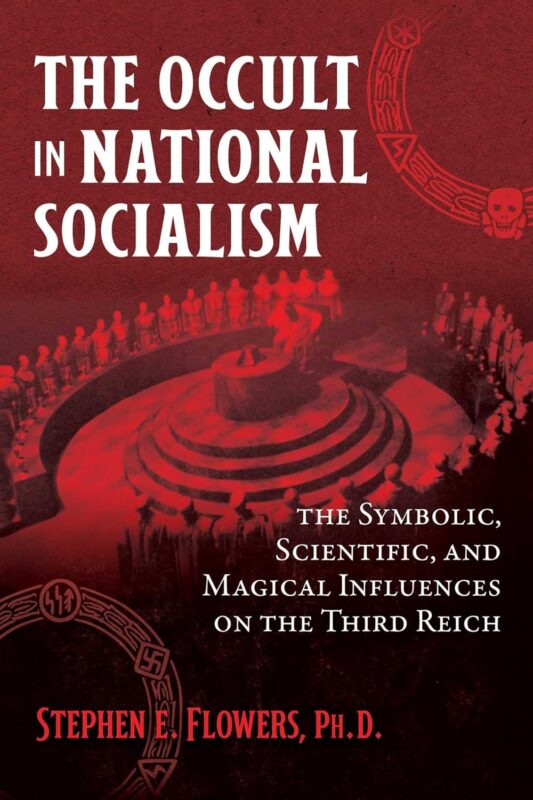
The Occult in National Socialism by Stephen E. Flowers explores the tangled relationships between myth, mysticism, pseudo-science, and the development of National Socialist ideology in twentieth-century Germany. Flowers asserts that the persistent fascination with “Nazi occultism” emerges from the complex interplay between real intellectual currents and the persistent creation of postwar myths. This study draws on decades of research, combining philological precision with cultural analysis, to reveal the real drivers of occult influence, symbolic tradition, and myth-making within the context of the Third Reich.
Defining the Terrain: Volkism and the Mythic Structure of Identity
Flowers locates the roots of National Socialist occultism in the rise of volkism—a movement grounded in the veneration of blood, soil, and shared heritage. Volkism fuses notions of race, nation, and destiny with a mythic sense of communal purpose, permeating the intellectual life of Central Europe from the mid-nineteenth century onward. As Romantic nationalism reoriented cultural energy from Enlightenment rationalism to the rediscovery of ancient Germanic traditions, the intellectual environment fostered both scientific innovation and esoteric speculation. Volkism thrives by defining the “Volk”—the people—as a collective entity bonded by landscape, language, myth, and ancestry. This paradigm elevates the idea of nation to a transcendental plane, where identity operates both as cultural essence and as a motivating myth.
Romanticism and the Rediscovery of Ancestral Myth
German Romantic thinkers, including the Brothers Grimm, Richard Wagner, and Johann Gottlieb Fichte, excavate the mythic past through scholarship, art, and activism. Their work restores forgotten Germanic legends and folk traditions, building a foundation for modern German identity. Jacob and Wilhelm Grimm establish the fields of comparative mythology and folklore, linking language, myth, and nation-building in a single scholarly project. Richard Wagner brings myth to life in his music dramas, articulating a vision of cultural renewal through the Gesamtkunstwerk—the total work of art that unifies music, word, and ritual. This cultural project both romanticizes and operationalizes the idea of myth, seeding future generations with the belief that ancient wisdom still shapes present destinies.
Occultism: Practices, Theories, and the Quest for Power
Occultism, as defined by Flowers, comprises practices and ideas rejected or unaccepted by dominant intellectual authorities. The occult operates at the threshold of the known and the hidden, promising access to forces, energies, and knowledge unavailable to mainstream science or conventional religion. Occult traditions assert the reality of correspondences—hidden links between visible phenomena and invisible orders. Practitioners claim to mediate and manipulate these correspondences, aiming for personal transformation or collective power. Occultism in this context synthesizes ancient mythic traditions, speculative pseudo-science, and emergent psychological models. The occult becomes a tool for those who seek both meaning and agency in a world transformed by rapid scientific and social upheaval.
Symbolism, Ritual, and the Shaping of Collective Will
Flowers analyzes the symbolic dimension of Nazi practice as a system of meta-communication. Rituals, spectacles, insignia, and public performances channel mythic energy, forging psychological unity and directing mass will toward ideological goals. The swastika, adapted by Vater Jahn from ancient Germanic artifacts, becomes both a symbol of renewed identity and an instrument of collective action. Mass rallies, orchestrated speeches, and choreographed displays function as operant magic: through repetitive, emotionally charged symbolism, the regime binds individual identities to a greater whole, reinforcing the ideological “truth” of the Volk and its destiny. Nazi “magic” thus manifests in the ability to transform myth into action through media, ritual, and propaganda.
Science, Pseudo-Science, and the Quest for Biological Destiny
Scientific thought during the Nazi era does not merely supplement ideological claims but participates in the construction of the mythic order. Figures like Ernst Haeckel and Hans Hörbiger develop evolutionary and cosmological theories that, while couched in scientific terms, sustain occult patterns of thought. Haeckel’s Monism transforms evolutionary science into a quasi-religious creed, while Hörbiger’s cosmological speculation blurs the line between scientific innovation and mythic fantasy. Nazi leaders integrate these ideas into their worldview, justifying policies of eugenics, racial hygiene, and “blood and soil” agriculture. The pursuit of biological destiny acquires both a scientific veneer and a mythic imperative, legitimizing the regime’s efforts to engineer the Volk through both social policy and biological intervention.
The Multiplicity of Ideologies Within National Socialism
National Socialist ideology does not coalesce into a single, unified doctrine. Instead, it displays a multiplicity of viewpoints and internal tensions. Leaders such as Hitler, Himmler, Rosenberg, and Darré espouse divergent views on race, science, religion, and the occult. Some advocate for a pagan revival, others for a new scientific religion, and others for the continued dominance of Christianity (albeit reinterpreted in a nationalist framework). The party’s program, articulated in official documents, lays out fundamental principles—racial citizenship, centralized authority, economic self-sufficiency, and a commitment to “positive Christianity.” Flowers situates these principles within the broader context of occult and volkisch currents, showing that symbolic, scientific, and esoteric influences converge but do not fuse into an operational unity.
Occult Practices and the Limits of Esoteric Influence
Investigating the actual presence of occult organizations and practices within the Third Reich, Flowers finds that most claims of widespread occult activity derive from myth, rumor, and postwar embellishment. Genuine esoteric societies, like the Thule Society or the Ordo Templi Orientis, intersect with the early history of National Socialism but do not direct its evolution. Instead, the Nazi state increasingly suppresses independent occult and esoteric movements, viewing them as rival sources of loyalty and ideological contamination. However, certain individuals—especially in the SS—experiment with ritual, symbolism, and myth as tools for cultivating elite identity and social control. Occultism, when present, operates as a symbolic undercurrent rather than a guiding doctrine.
The Power of Myth and the Production of Postwar Legend
Myths motivate human action by operating as “hyper-truths”—principles so deeply embedded in culture that they transcend mere facticity. Flowers contends that the myth of Nazi occultism gains new force after the regime’s collapse. Wartime propaganda, seeking to demonize the enemy, attributes to the Nazis an array of sinister occult powers and arcane secrets. After the war, this narrative expands, fueled by sensationalist books, films, and popular culture. The myth of Nazi occultism becomes a quaggy garden where conspiracy theories and pseudo-history thrive. This process serves several purposes: it demonizes the defeated regime, deflects attention from the complicity of mainstream institutions (including Christian churches), and provides a hyperbolic explanation for the horrors of the Holocaust and World War II.
Ritual, Propaganda, and the Mechanics of Control
Nazi leaders orchestrate large-scale rituals, manipulating symbols and public performance to generate emotional resonance and mass identification. The deployment of insignia, banners, and uniforms serves to encode identity and enforce ideological unity. The regime crafts a visual and auditory language, using it to mobilize support, neutralize dissent, and foster collective submission. Flowers asserts that this system of ritualized communication accomplishes the very aims sought by occult practitioners—transformation, initiation, and empowerment—albeit at the level of mass psychology rather than esoteric initiation.
Science as Mythic Narrative
Nazi policy advances under the banner of scientific progress, but the science itself often functions mythically. Eugenics, racial anthropology, and Lebensraum policies derive their force from scientific claims, yet their logic remains rooted in mythic narratives of struggle, destiny, and purification. The regime mobilizes scientific authority to justify programs of exclusion, forced sterilization, and genocide. Scientific discourse interlocks with symbolic and occult motifs, generating a powerful ideological engine that drives the machinery of the state.
The Postwar Cultivation of Nazi Occult Mythology
Flowers dedicates the final part of his book to the postwar evolution of Nazi occult mythology. Wartime propaganda laid the groundwork, but postwar authors and media creators expand the myth, generating a vast literature on Nazi magic, secret societies, and lost technologies. Popular works such as The Morning of the Magicians and The Spear of Destiny turn fragments of history into sprawling narratives of conspiracy and supernatural evil. Flowers cautions that this mythology functions to simplify, distort, and distract, obscuring more mundane but equally sinister forms of complicity and violence.
Historical Responsibility and the Danger of Myth
The persistence of the Nazi occult myth reflects a deeper tendency to locate evil in the otherworldly or the monstrous. This narrative locates responsibility outside the sphere of ordinary actors and institutions, absolving or minimizing the involvement of mainstream society. Flowers calls for renewed historical attention to the concrete, human dimensions of complicity, warning that myth-making can mask the true mechanisms of violence and social control. Only by confronting the real drivers of ideological extremism—myth, science, propaganda, and the structures of mass psychology—can societies hope to understand and resist the recurrence of similar patterns.
Synthesis and Enduring Significance
The Occult in National Socialism synthesizes intellectual history, myth analysis, and critical theory to map the pathways by which occult, symbolic, and scientific traditions converge within the ideological matrix of the Third Reich. Flowers demonstrates that myth, ritual, and pseudo-science feed on one another, generating a powerful engine for both action and postwar legend. The book advances the argument that understanding the real and imagined influences of occultism in National Socialism requires both critical distance and cultural fluency—a willingness to see where myth generates action and where action generates new myth. What remains at stake is not the tallying of occult influences, but the recognition of how myth and ideology produce real historical outcomes.
What does the persistence of the Nazi occult myth reveal about the need for mythic explanation in times of crisis? Flowers suggests that this myth endures because it channels cultural anxiety, transforms horror into narrative, and provides a structure for understanding events that threaten the foundations of moral and historical comprehension. The book thus offers both a detailed historical study and a meditation on the enduring power of myth, ritual, and the occult imagination within modernity.

About the Book