The Rise of the Fourth Reich: The Secret Societies That Threaten to Take Over America

The Rise of the Fourth Reich by Jim Marrs investigates the postwar survival and transformation of National Socialist power structures, tracing their integration into American and global institutions. Marrs situates his account in the chaotic aftermath of Hitler’s apparent suicide, grounding the book in questions that echo through contemporary political and economic realities. What happens when an ideology designed for authoritarian control finds new soil and new methods for influence? The pursuit of this inquiry leads through secret escape routes, covert government programs, powerful corporations, and the persistent shadow of clandestine societies.
The Escape and Survival of Nazi Power
Adolf Hitler’s death in his Berlin bunker in April 1945 signaled the collapse of the Third Reich, but a coordinated exodus had already begun among high-ranking Nazis. Marrs details the deployment of “ratlines”—clandestine escape networks supported by sympathetic elements in the Vatican, Argentina, and Spain. The logistical sophistication of these efforts reveals a network with resources, planning, and international reach. Nazis carrying scientific expertise, intelligence skills, and wealth moved through these channels into safe havens across Europe and South America.
Marrs identifies Project Paperclip as a decisive moment in the integration of Nazi personnel into American life. The United States, eager to secure technological superiority during the emerging Cold War, orchestrated the transfer of hundreds of Nazi scientists, engineers, and intelligence experts. The program’s scope extended far beyond rocketry, reaching into medicine, mind control research, and even psychological operations. Marrs asserts that these individuals brought with them not only technical know-how, but also a set of organizational methods, ideological leanings, and a willingness to operate within the structures of power.
The Infrastructure of Ideology
As former Nazis settled into new roles, Marrs observes how their expertise merged with the ambitions of American and international elites. He draws a line from the industrial cartels of interwar Germany—deeply embedded in global banking and corporate finance—to the military-industrial complex that President Eisenhower would later warn against. Marrs asserts that globalist financiers and corporate interests, many with a record of prewar and wartime collaboration with the Nazis, facilitated this transfer. What motivates the enduring alliance between economic power and authoritarian ideology? Marrs suggests that the pursuit of centralized control and monopolistic wealth operates above the level of public politics, shaping events across decades.
The author defines the First and Second Reichs as foundational empires of German power, but he devotes particular attention to the Third Reich as an ideological project. National Socialism, in Marrs’s analysis, arises from the fusion of state and corporate power, disciplined by nationalist myth and operationalized through secretive organizations. He expands the concept of fascism, quoting Mussolini’s description of corporatism as the merger of state and corporate authority. This definition becomes central to the thesis: when private power colonizes government functions, new forms of totalitarianism emerge under democratic veneers.
Secret Societies and Elite Networks
Marrs anchors his narrative in the secret societies that influenced both prewar and postwar trajectories. The Thule Society and the Germanenorden fostered the occult and nationalist currents that shaped early Nazi ideology. In America, Marrs highlights the Skull and Bones society at Yale, tracing its origins to German secret organizations and associating its membership with pivotal roles in government, intelligence, and finance. Marrs links these networks to the enduring influence of the Illuminati, Masonic lodges, and their principle of concealment. Secrecy, according to Weishaupt, serves as the strength of these orders, allowing them to manipulate events under alternate identities and organizational covers.
The connection between elite societies and the rise of corporatism creates a feedback loop. Marrs documents how early 20th-century financiers—including the Rockefellers, Schiffs, Warburgs, and Rothschilds—supported both communist revolutions and the rise of National Socialism. This apparent paradox resolves when viewed through the lens of managed conflict and the drive for global control. By fostering ideological oppositions and fueling wars, the globalist elite achieve conditions for expanded authority and profit.
Transplanting Totalitarian Methods
The book outlines a steady convergence between Nazi organizational principles and emerging American practices after WWII. Marrs details the proliferation of surveillance, emergency legislation, and mass propaganda as hallmarks of this shift. He asserts that policies designed to protect the state in times of crisis—such as identity cards, gun registration, and national security apparatus—echo the legal innovations of Hitler’s early regime. Marrs notes that the centralization of power, justified through appeals to security and nationalism, creates fertile ground for authoritarian methods to flourish under democratic pretense.
Project Paperclip represents only the most visible layer of this process. Marrs contends that Nazi ideology penetrated scientific research, military doctrine, and intelligence operations. Eugenics programs, mind control experiments, and covert interventions draw on the legacy of wartime science. The continuity between Nazi research and Cold War projects like MK-ULTRA and NASA reflects both the direct involvement of former Nazis and the adaptability of authoritarian approaches to new political environments.
Corporate-State Convergence and Economic Power
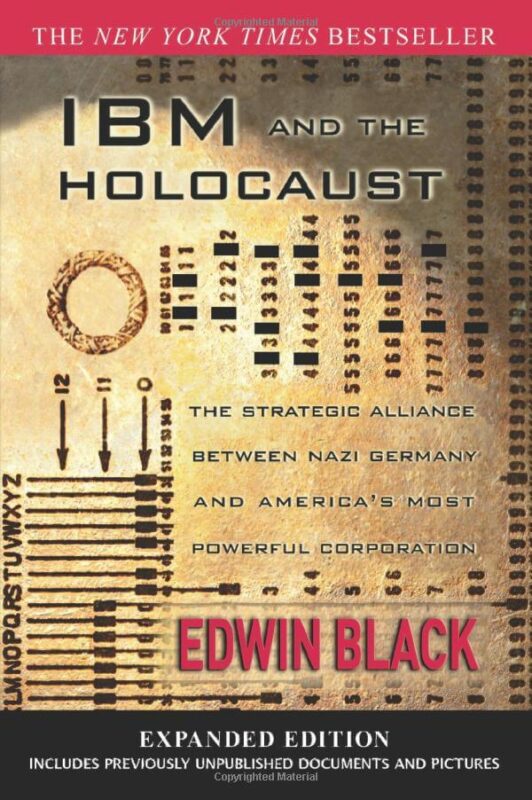
Marrs scrutinizes the postwar evolution of multinational corporations and the centralization of economic power. The transfer of Nazi capital into Swiss, Argentine, and American front companies, facilitated by legal and financial expertise, establishes the basis for immense conglomerates. Marrs highlights the role of institutions such as the Bank of International Settlements in laundering and protecting these assets, maintaining cross-border relationships between former enemies. The author points to specific corporate actors—Standard Oil, IBM, Ford, General Motors, and others—as beneficiaries and enablers of Nazi technological and organizational advances.
As these entities grow, their ability to shape policy increases. Marrs argues that by embedding their interests within government agencies, multinational corporations exert direct influence over legislation, regulation, and foreign policy. He identifies the phenomenon of “revolving doors,” where executives and officials interchange roles, as a primary mechanism for perpetuating elite control. The resultant system, which he characterizes as the Fourth Reich, places the priorities of wealth accumulation and centralized authority above those of democratic deliberation and civic responsibility.
Propaganda, Education, and Public Control
Controlling the levers of information production becomes central to maintaining the new order. Marrs asserts that media consolidation, standardized educational curricula, and widespread surveillance operate as tools for shaping public consciousness. The manipulation of news, the rewriting of history, and the control of narrative flow create a compliant and distracted populace. Marrs traces the lineage of these tactics to Goebbels’s Ministry of Propaganda, yet he asserts that advances in technology and psychology have refined their application in the contemporary era.
The educational system, Marrs claims, channels students toward conformity, obedience, and technical competence rather than critical inquiry or dissent. This focus serves the needs of a managerial and technocratic elite, reducing resistance and instilling acceptance of official narratives. The convergence of media and government messaging amplifies this effect, producing what Marrs terms “manufactured consent.” The goal becomes the perpetuation of a social order that privileges central authority and corporate interests.
American Policy and the Globalist Agenda
Marrs draws attention to recurring patterns in American and world politics that echo the methods and ambitions of National Socialism. The consolidation of executive power, the use of preemptive wars, and the restriction of civil liberties align with his analysis of the Fourth Reich’s modus operandi. Marrs connects the events of 9/11 and the subsequent expansion of the national security state to earlier historical precedents, such as the Reichstag fire and the Enabling Act of 1933. Emergency powers, once granted, rarely recede. Instead, they entrench new norms of surveillance, detention, and coercion.
Globalization serves as both a means and an end for this project. Marrs explores the creation of supranational organizations, trade agreements, and banking consortia that transcend national boundaries. These structures, designed for efficiency and profit, undermine local autonomy and democratic accountability. Marrs views the rhetoric of the “New World Order,” invoked by leaders from Hitler to President George H.W. Bush, as an articulation of this long-standing ambition for centralized, technocratic control.
Enduring Influence and the Future
Throughout the book, Marrs underscores the persistence and adaptability of fascist principles. The specific forms change—shifting from open militarism and racial ideology to managerial corporatism and technological dominance—but the underlying drive for control, surveillance, and monopolization remains. Marrs calls attention to the networks of influence that bridge war, peace, crisis, and stability, arguing that these are not mere relics of the past but active forces in present governance.
The question emerges: How do societies maintain vigilance against the quiet return of authoritarian power? Marrs encourages critical examination of official narratives, transparency in government-corporate relationships, and a renewed commitment to the principles of civic liberty. The stakes, he contends, involve the survival of genuine democratic governance amid forces seeking to subordinate it to private ambition and centralized control.
Jim Marrs constructs a narrative of historical convergence and continuity, mapping the hidden migrations of power from Nazi Germany into the heart of the postwar order. His synthesis challenges readers to interrogate the assumptions of freedom and security in an era of unprecedented surveillance, centralization, and manipulation. The evidence he presents invites reconsideration of how history shapes the present, and how the architecture of control survives beyond regimes and generations, clothed in new language and supported by new technologies.


About the Book
https://youtu.be/NRu2-seGrq0