IBM and the Holocaust: The Strategic Alliance Between Nazi Germany and America’s Most Powerful Corporation-Expanded Edition
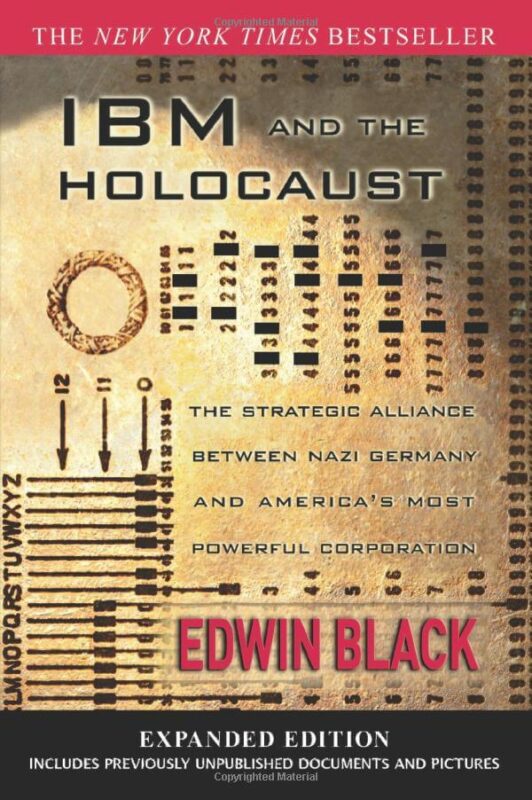
IBM and the Holocaust by Edwin Black exposes the decisive role of corporate technology in the machinery of genocide, demonstrating how the drive for efficiency and profit converged with the Nazi regime’s ambitions for total control. IBM, under the leadership of Thomas J. Watson, forged a strategic alliance with Hitler’s Third Reich, shaping the administrative and logistical foundation of the Holocaust.
Origins of Corporate-Enabled Genocide
Edwin Black’s investigation begins in the early 1930s, as Hitler rises to power and the Nazi government prioritizes the identification and categorization of Jews, a process critical to enacting the Final Solution. IBM’s punch card technology, designed for rapid data processing and detailed cross-referencing, fits the requirements of the Nazi bureaucracy. The company’s German subsidiary, Dehomag, adapts and customizes Hollerith machines, transforming abstract racial policy into actionable intelligence. The Nazi regime demands precision. IBM’s systems supply it. The census operations do not simply record religious affiliation; they establish bloodlines, trace lineage, and construct the infrastructure necessary to isolate, ghettoize, and ultimately annihilate Jewish populations across Europe.
The Punch Card System: Engine of Mass Bureaucracy
IBM’s Hollerith punch cards convert human beings into sortable data points. Each card contains columns for nationality, religion, profession, physical characteristics, and more. Operators input, sort, and retrieve data on a scale never before imagined. When a transport arrives at Bergen-Belsen, Auschwitz, or any of the hundreds of camps equipped with these systems, camp authorities feed new arrivals’ data into punch cards, reducing identity to code and fate to a column. The administrative offices that process this information become hubs of mechanized selection, assigning work, tracking transfers, and recording deaths. IBM leases the machines, provides punch cards by the billions, and dispatches technicians to maintain and upgrade equipment, ensuring operational continuity even as the machinery operates within the heart of genocide.
Thomas Watson’s Calculated Engagement
Watson, the autocratic chairman of IBM, orchestrates the transnational management of these operations. He directs Dehomag’s strategies, arranges profits to flow through carefully constructed legal and financial routes, and instructs intermediaries in Geneva and Switzerland to circumvent wartime restrictions. Watson sustains personal oversight through coded communications, undated agreements, and oral instructions, cultivating plausible deniability while remaining acutely informed of Dehomag’s activities. When legal barriers threaten direct engagement, Watson deploys Swiss channels, facilitating communication between IBM New York and its German subsidiary. He prioritizes market dominance, coordinates legal maneuvering, and guarantees the supply of punch cards and services to the Reich.
Bureaucracy as Instrument of Death
IBM’s contribution transcends enumeration. The punch card system underpins the logistics of deportation, forced labor, and extermination. Nazi administrators use IBM machines to schedule trains, allocate slave labor, and tally deaths. The Reichsbahn, Germany’s railway system, depends on Dehomag’s installations to orchestrate the movement of millions—out of ghettos, across occupied territories, and into death camps. The SS Economics Office in Oranienburg aggregates camp data, adjusts labor allocations, and monitors mortality, all with IBM’s statistical power. At Bergen-Belsen, workers decode the meaning behind columns and hole positions—hole 8 for Jew, hole 3 for homosexual, hole 12 for Gypsy, column 34 for “special handling,” the euphemism for extermination. The transformation of individuals into data points systematizes selection, removes moral friction, and accelerates annihilation.
Customization and Direct Involvement
IBM does not supply a generic product. Dehomag’s engineers design, test, and refine punch card formats in close consultation with Nazi authorities. Reich officials request new data columns; Dehomag responds. Machine sets are tailored for census operations, camp administration, and transport logistics. IBM’s German staff, often avowed Nazis, participate directly in implementing and maintaining these systems. IBM New York remains the only source for blank punch cards—every card used in Nazi operations originates from the parent company or its authorized manufacturers, guaranteeing dependency and continual profit.
Profit and the Calculus of Collaboration
The business model dictates that machines are never sold, only leased, with recurring revenue from punch card sales and service contracts. IBM’s New York headquarters ensures that profits from Germany and occupied Europe reach American coffers. When legal restrictions threaten financial flows, IBM pivots to indirect methods. The drive for market share and technological dominance overrides moral or political hesitation. Watson never instructs his staff to withhold technology, halt maintenance, or limit service—even as evidence of Nazi crimes saturates the global press. IBM’s representatives regularly travel to Berlin, oversee operations, and negotiate pricing, undeterred by the unfolding destruction.
The Power of Data in Nazi Policy
IBM’s technology catalyzes Nazi efficiency. Census operations, tracing bloodlines across generations, allow authorities to discover Jews who would otherwise escape detection. The scale and speed of asset confiscation, ghettoization, and deportation rise with each refinement in data collection. Food rationing, labor quotas, and transport timetables run on Dehomag’s statistical engines. The Final Solution’s scope expands in direct relation to the capabilities of IBM’s machines. The company’s capacity to cross-reference vast populations ensures that the Nazi state achieves levels of control, precision, and reach unattainable through manual methods.
The Human Cost of Mechanized Persecution
Inside the camps, life and death hinge on punch card entries. Each prisoner’s fate—assignment to labor, transfer, or extermination—derives from the data encoded in holes and columns. Camp authorities request labor for local industries, farms, or war production; the machines isolate suitable candidates with mechanical precision. Executions, deaths from starvation, and “special handling” accumulate as daily statistics, their human meaning dissolved in the flow of numbers. Prisoners become numeric records, shuffled, sorted, and eliminated with administrative detachment.
IBM’s Response and Denial
IBM shields its participation behind layers of corporate structure and legal ambiguity. Executives refuse to document sensitive discussions, instruct staff to avoid written correspondence on contentious topics, and employ intermediaries to manage relations with the Nazi regime. After the war, the company rebuffs inquiries, restricts access to records, and distances itself from responsibility. Black’s research uncovers thousands of documents, internal memoranda, and eyewitness testimonies, exposing the scope and depth of IBM’s complicity.
The Legacy of Technological Complicity
Black’s account underscores the ethical consequences of technological innovation in the hands of unchecked power. IBM’s pursuit of technical excellence and profitability merges seamlessly with a regime intent on total domination and destruction. The machinery of data processing amplifies the ability of the state to surveil, organize, and eliminate, setting a precedent for the use of information technology as a tool of social control. The story of IBM and the Holocaust warns against the uncritical celebration of technological progress, highlighting the necessity of moral scrutiny in corporate decision-making.
Research, Evidence, and Global Reach
Edwin Black’s investigation mobilizes a network of researchers, translators, and historians across seven countries. His team analyzes over 20,000 documents from fifty archives, organizes data chronologically and thematically, and reconstructs the intricate web of IBM’s involvement. He locates obscure references, deciphers code words, and verifies each assertion with documentary evidence. The book’s structure follows the progression of IBM’s relationship with the Reich, from initial engagement, through the escalation of genocide, to the postwar period of obfuscation and denial.
Revelation and Accountability
IBM and the Holocaust presents an empirical case for corporate accountability in crimes against humanity. The company’s integration into the Nazi bureaucracy, its technical leadership, and its relentless pursuit of profit at the expense of human life reveal the dangers inherent in subordinating ethics to efficiency. Black urges continued vigilance, calling for the preservation of evidence, the transfer of corporate archives to independent custodians, and the adoption of robust safeguards to prevent the recurrence of technologically enabled mass atrocity.
Cultural and Moral Significance
The narrative reaches beyond the confines of a business history, situating IBM’s actions within the larger context of twentieth-century violence and the evolution of the information age. Black documents the consequences of abstracting individuals into data, cautioning against the seductive power of depersonalization and mechanization. He illuminates the mechanisms by which routine business practice can slide into the facilitation of evil, anchoring the analysis in specific, documented actions and decisions.
Convergence of Technology, Power, and Genocide
IBM and the Holocaust traces the convergence of American industrial ambition with Nazi genocidal policy. The company’s technical resources and managerial expertise enable the most extensive, systematic persecution in history. Black asserts that the architecture of modern information management emerges from these origins, carrying with it the burden of historical responsibility. He challenges readers to scrutinize the ethical foundations of technological enterprise, demanding transparency, accountability, and a recognition of the past.
Call to Action
The history Black reveals in IBM and the Holocaust remains urgently relevant. As societies worldwide accelerate their adoption of data-driven technologies, the risks of surveillance, profiling, and social control intensify. The evidence Edwin Black compiles demands active engagement with the ethical dimensions of innovation, a refusal to separate business imperatives from human consequences, and a commitment to remembering the lessons inscribed in the record of IBM’s complicity. The convergence of profit, power, and data shaped the fate of millions. Understanding that convergence equips societies to resist its recurrence.

About the Book