On the Trail of the Assassins: One Man’s Quest to Solve the Murder of President Kennedy
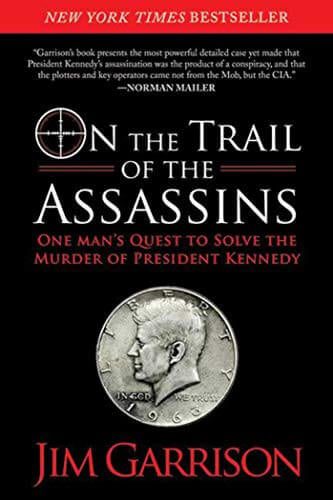
On the Trail of the Assassins by Jim Garrison investigates the assassination of President John F. Kennedy by focusing on the sequence of decisions, actions, and discoveries that unfolded in New Orleans. The book anchors its account in the experiences of Garrison, who served as district attorney, drawing the reader into the intricate machinery of official investigation and the charged climate of suspicion, intrigue, and power that enveloped the aftermath of November 22, 1963. This narrative does not dwell in speculation; it tracks the emergence of facts, the meaning of those facts, and the convergence of interests that shaped the investigation, the prosecution, and their larger historical consequences.
Garrison’s Awakening and the Pursuit of Clarity
A sense of public loss and uncertainty shrouded New Orleans when news arrived that President Kennedy had been shot. Garrison’s initial response reflected the gravity of the moment—shock, followed by a determination to understand not only the events in Dallas but the emerging threads leading back to his own jurisdiction. As details filtered in, the New Orleans connection deepened. Lee Harvey Oswald, already positioned as the accused assassin, had lived in New Orleans just months before the killing. Reports surfaced of his associations with controversial figures like David Ferrie and Guy Banister, whose own backgrounds radiated outward into the clandestine world of intelligence and anti-Castro operations.
Garrison convened his staff, prioritizing the investigation of Oswald’s New Orleans ties. The early inquiry revealed the volatile presence of David Ferrie, whose actions on the day of the assassination included a sudden trip to Texas under dubious circumstances. Ferrie’s story unraveled during questioning; he cited an ice-skating trip to Houston in the midst of severe weather, a detail contradicted by subsequent evidence of persistent phone calls and links to Jack Ruby—the man who would later shoot Oswald. The investigation raised the stakes: what had seemed peripheral now signaled a network of relationships that challenged the prevailing narrative.
Dismantling the Official Narrative
Garrison’s reading of the Warren Commission’s 26 volumes proved decisive. He found the structure of the investigation fragmented, with critical testimony buried, evidence disregarded, and logical continuity sacrificed to the construction of a singular conclusion. Witnesses at Dealey Plaza described rifle fire from the grassy knoll and observed suspicious figures in the vicinity—details that persisted in the public imagination but remained marginal in the Commission’s official story.
The autopsy process itself exhibited a troubling chain of custody. Key physical evidence, including photographs, x-rays, and President Kennedy’s brain, vanished or were destroyed. The paraffin test on Oswald’s hands and cheeks returned negative for rifle discharge, a result concealed for months. These patterns suggested methodical suppression and destruction of evidence, sharpening the tension around what officialdom chose to reveal and conceal.
Networks of Influence and Motive
As the inquiry expanded, Garrison’s focus shifted to the wider landscape of Cold War intelligence, anti-Castro activism, and right-wing agitation. Clay Shaw, director of New Orleans’ International Trade Mart, emerged as a pivotal figure in this network. Connections between Shaw, Ferrie, Banister, and Oswald drew the contours of a conspiracy rooted in clandestine opposition to Kennedy’s policies. The narrative identified motive in the president’s intent to shift U.S. foreign policy, draw down the Vietnam conflict, and recalibrate the relationship with the Soviet Union. Such moves threatened established interests in the intelligence community, the military-industrial complex, and among exile groups.
The intricate relationships between private citizens, government agents, and covert operatives became central to Garrison’s case. Ferrie’s background in the Bay of Pigs operation, his anti-Castro militancy, and his associations with both Banister and Oswald built a lattice of shared objectives and operational familiarity. These connections set the stage for what Garrison saw as the orchestration of the assassination—a deliberate act, enabled by the machinery of covert government.
The Prosecution of Clay Shaw
March 1, 1967, marked the public arrest of Clay Shaw, shocking the nation and signaling the beginning of the only prosecution ever brought for the murder of President Kennedy. The charge of conspiracy to murder placed New Orleans at the center of a storm of national attention. Shaw’s background—polished, well-connected, respected—contrasted sharply with the image of Oswald as a lone, disaffected gunman. The trial confronted jurors with an array of evidence, from witness testimony regarding Shaw’s clandestine activities to documentation of his use of aliases in covert operations.
Sabotage and Resistance
Throughout the prosecution, Garrison and his office encountered determined resistance. Federal authorities and intelligence agencies mounted efforts to infiltrate, intimidate, and obstruct the investigation. Witnesses vanished, died under mysterious circumstances, or reversed testimony under pressure. Media campaigns worked to discredit Garrison, painting him as a publicity-seeker and political opportunist. The machinery of opposition operated on multiple fronts: legal, bureaucratic, and psychological.
Despite these obstacles, the trial reached its conclusion. Jurors acknowledged the existence of a conspiracy, but acquitted Shaw, citing insufficient evidence directly tying him to the shooting. The full scope of Shaw’s intelligence connections only became public later, reinforcing Garrison’s argument about the depth of the official cover-up and the difficulty of unmasking institutional complicity.
Consequences and Legacy
The process of investigation and prosecution altered Garrison’s consciousness and, by extension, influenced the national dialogue on trust, secrecy, and authority. The book identifies the assassination and its cover-up as the pivotal events initiating a new era in American political culture. The nation’s loss of innocence, the proliferation of cynicism, and the deepening distrust in government and media institutions all trace their origins to the patterns established in the wake of November 22, 1963.
Garrison observes that institutional power, when threatened by scrutiny, employs legal, bureaucratic, and psychological tools to defend its prerogatives. The refusal to consider the possibility of conspiracy, the destruction of evidence, and the orchestration of media narratives all represent manifestations of this dynamic. The assassination’s unresolved dimensions continued to shape the Cold War, contribute to the escalation in Vietnam, and fuel the proliferation of covert operations that operated beyond public accountability.
JFK’s Foreign Policy Shift and Its Implications
Kennedy’s approach to Cold War diplomacy, his movement toward dialogue with adversaries, and his growing skepticism toward military interventionism marked a decisive departure from established doctrine. The book posits that these changes catalyzed opposition among those who depended on conflict, secrecy, and covert action as tools of national power. The stakes extended beyond ideology: policy changes threatened the interests and authority of entrenched networks within government, intelligence, and the defense industry.
The narrative asserts that Kennedy’s murder arose as a logical outcome of this convergence of interests. The book refuses to separate the act of assassination from its broader political context; the two move in synchrony. The cover-up thus becomes not merely a matter of hiding the perpetrators, but of preserving the machinery of national security, foreign policy, and institutional authority from public scrutiny.
Patterns of Suppression and the Role of Media
Garrison’s investigation documented the methods through which evidence disappeared, witnesses recanted, and official stories solidified. He exposes the interplay between federal agencies, law enforcement, and the press, which constructed a version of events insulated from inconvenient facts. The Zapruder film, locked away for years; the destruction of autopsy materials; the rewriting of witness statements—all register as deliberate acts within a coordinated effort to shape historical memory.
The press, in Garrison’s account, did not merely report the news; it participated in the manufacture of consensus. The pattern extended beyond individual reporters or outlets. Media coverage orchestrated a climate of ridicule around dissent, portrayed the lone assassin thesis as settled fact, and framed alternative accounts as conspiracy theory. These choices discouraged public inquiry, stifled debate, and reinforced the boundaries of acceptable knowledge.
The Unresolved Questions and the Demand for Transparency
Garrison closes his narrative with a call to future generations: the imperative to re-examine the assassination and its aftermath endures. He argues for the necessity of transparency, accountability, and a renewed commitment to historical truth. The task, as he frames it, does not rest in solving a murder alone; it concerns the reclamation of public agency in the face of secrecy and manipulation. The Kennedy assassination thus remains, in Garrison’s analysis, both a singular event and an enduring template for understanding the operations of power, secrecy, and dissent in modern America.
Enduring Influence and Relevance
On the Trail of the Assassins stands as a foundational text in the literature of American political inquiry. Its influence radiates outward through film, scholarship, and popular culture. The questions it raises—about the relationship between government and citizen, the limits of accountability, the role of secrecy, and the mechanisms of consensus—remain as urgent now as at its publication. Garrison’s voice, grounded in direct experience and structural analysis, animates a debate that shapes historical understanding and drives ongoing demands for truth and justice. The book’s detailed exploration of networks, motives, and methods asserts the necessity of vigilance, transparency, and principled dissent in confronting the unresolved challenges of American democracy.


About the Book
https://youtu.be/GJ-cnJxAFXU