Ordo ab Chao: Volume Two: The Grand Lodge
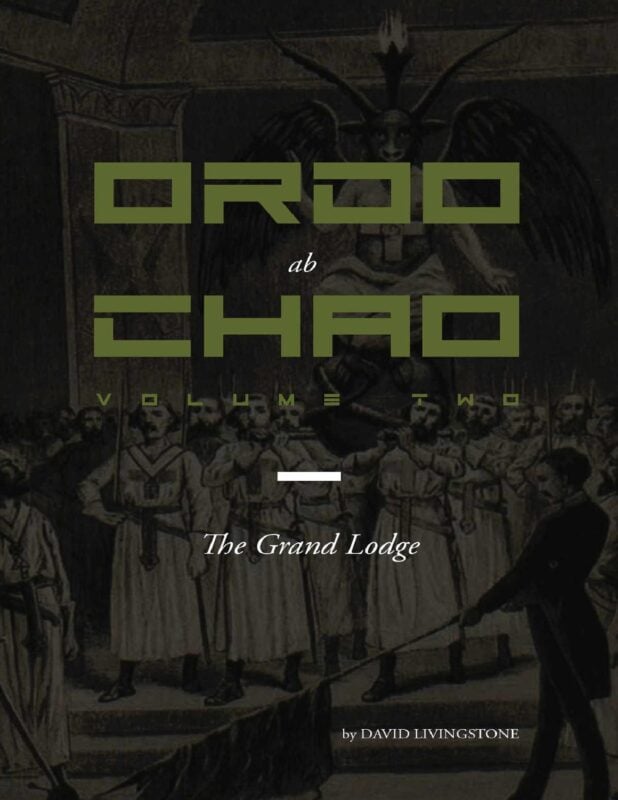
Ordo ab Chao Volume Two: The Grand Lodge by David Livingstone explores the esoteric architecture of modern power through the interwoven rise of secret societies, occult philosophy, and the strategic use of myth to shape historical transformation.
Elizabethan Occult Foundations
The Elizabethan Age served as the crucible for ideological fusion between Hermetic magic, Christian Kabbalah, and statecraft. Queen Elizabeth I, daughter of Anne Boleyn and Henry VIII, embodied the synthesis of dynastic legitimacy and arcane symbolism. Under her reign, court astrologer John Dee helped institutionalize a mystical epistemology that linked divine revelation to empire-building. Dee’s adoption of Giorgi’s De Harmonia Mundi and his Enochian language practice framed national expansion as a theurgical mission.
Elizabeth’s court did not merely tolerate occult interests—it absorbed them into the sovereign identity. Frances Yates identifies the Faerie Queene by Spenser as a Neoplatonic paean to Elizabeth’s divinity. Spenser’s Redcrosse Knight mimics the allegorical path of Christian Rosenkreutz, reflecting the alchemical blend of martial virtue and spiritual enlightenment. Court drama, academic masques, and Shakespearean plays transformed esotericism into performative power.
Baconian Structures and Invisible Orders
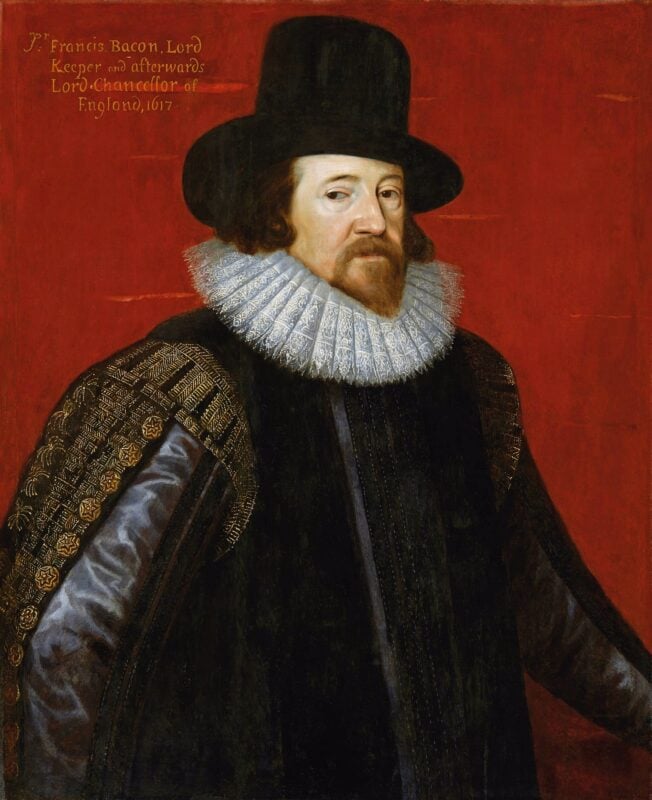
Francis Bacon’s political theology codified this mystical rationalism into institutional ambition. The Knights of the Helmet, a secretive philosophical order devoted to Athena, cloaked itself in Elizabethan theater, particularly through the masques of Gray’s Inn. Bacon’s Advancement of Learning called for “fraternities of illumination” committed to long-term civilizational redesign through knowledge, secrecy, and alchemical science.
Bacon structured his covert network under ciphers like “Shake-Speares” and symbols drawn from the Helmet of Invisibility. His alignment with Rosicrucian imagery and allusions to Pallas Athena shaped a proto-Masonic fraternity whose metaphysical commitment operated through anonymity, encoded language, and controlled spectacle. These structural commitments embedded metaphysics into state infrastructure.
The Rosicrucian Revelation and Planetary Symbolism
With the publication of the Fama Fraternitatis and Confessio Fraternitatis in early 17th-century Germany, the Rosicrucian movement announced itself as an esoteric brotherhood harmonizing Kabbalah, alchemy, and Christian renewal. The movement projected a structured allegory: Christian Rosenkreutz as redeemer-initiator, the Vault as alchemical temple, and the Red Cross as mystical suffering.
This revelation gained cosmic momentum through conjunction astrology. Paracelsus and Postel identified planetary alignments—especially the Great Conjunction of Saturn and Jupiter—as heralds of Elias Artista, the enlightened redeemer-scientist. John Dee’s Monas Hieroglyphica merged these planetary codes with the alchemical triad—Sol, Luna, Mercury—framed in the fiery trigon of Aries. These symbols, interpreted by the Rosicrucians, signaled both epistemic crisis and messianic opportunity.
Guillaume Postel and the Universal Restoration
Postel, linguist and mystic emissary of Francis I, embodied the geopolitical extension of the Kabbalistic worldview. His quest to unify Islam, Christianity, and Judaism under French monarchy channeled both millenarian urgency and philological rigor. His translation of Zoharic texts into Latin brought Jewish mysticism into European discourse while constructing a Christian-Judaic identity fused through the Shekhinah.
Postel’s encounter with “Mother” Joanna, whom he identified as the feminine divine, structured his vision of sacred embodiment and cosmic integration. He saw himself as her vessel, destined to usher a new world order anchored in spiritual reconciliation and linguistic mastery. His work set the intellectual foundation for religious synthesis as state theology.
Tübingen Circle and the Chymical Wedding
The Tübingen Circle operationalized these ideas into Protestant mysticism. Led by Tobias Hess and including Johann Valentin Andreae, Christoph Besold, and Johannes Kepler, the group fused Paracelsian medicine with apocalyptic prophecy. Their focal texts, including Andreae’s Chymical Wedding, encoded esoteric principles into allegorical form, elevating spiritual transformation as prerequisite for social renewal.
The Chymical Wedding stages a seven-day alchemical journey through transformation, initiation, and cosmic marriage. Each day represents esoteric trials culminating in resurrection within the hidden Vault. This ritual structure mapped Rosicrucian ideals onto ritual space, offering a blueprint for inner revolution mirrored by political reformation.
Scottish Masonry and the Stuart Alchemy
The Stuart monarchs of Scotland, especially James VI and Charles I, integrated Masonic symbology and Rosicrucian concepts into governance. The Schaw Statutes, developed under William Schaw, formalized early Freemasonry in Scotland by institutionalizing codes of ethical conduct, architectural knowledge, and ritual secrecy.
James VI’s sponsorship of alchemical and Kabbalistic scholarship further embedded mystical governance into Stuart political theology. His Daemonologie justified spiritual warfare through royal authority, while his engagement with Dee’s apocalyptic calendars positioned the monarchy as mediator between divine will and historical judgment.
The Great Conjunction of 1603 and Fiery Trigon
The planetary conjunction of 1603 marked a catalytic moment. As Jupiter and Saturn entered Sagittarius, astrologers prophesied messianic emergence and global upheaval. This configuration inaugurated the fiery trigon, a 200-year arc culminating in visionary transformation. Dee’s Monas symbolized this conjunction as the geometrical synthesis of celestial and elemental forces.
The Rosicrucians interpreted this event as both celestial confirmation and organizational call. The timing of the Fama’s publication in 1614 aligned with renewed prophetic expectation. Philosophers and alchemists understood the fiery trigon as a mandate to reform human knowledge through Hermetic illumination.
Plantin Press and the Circulation of Secrets
Christophe Plantin’s Antwerp press functioned as a cryptographic hub. Publishing Kabbalistic, Llullist, and Rosicrucian texts under the insignia of the Golden Compasses, Plantin created a network of distribution that preserved secrecy while enabling access. His work connected Iberian Marranos, French Calvinists, and English alchemists through coded print.
Plantin’s Biblia Regia project, coordinated with Arias Montano and secretly guided by Postel, embedded esoteric doctrine into canonical biblical form. This synthesis of print technology and mystical dissemination linked knowledge to divine timing, further structuring the Rosicrucian epistemic revolution.
Myth, Theatre, and Sacred Performance
Shakespearean drama at the Inns of Court encoded ritual motifs into public entertainment. Plays like The Comedy of Errors, A Midsummer Night’s Dream, and As You Like It mirrored Rosicrucian cosmology through allegorical characters, enchanted forests, and archetypal fools. These performances blurred boundaries between political instruction and sacred myth.
The Lord of Misrule festivals dramatized social inversion as metaphysical necessity. Fools, jesters, and festive chaos reflected deeper Hermetic truths: disorder initiates awakening, and comedy reveals sacred inversion. These masques embodied alchemical pedagogy, transmitting Rosicrucian insight under the guise of courtly revelry.
The Shekinah and Feminine Theurgy
The divine feminine, articulated through Postel’s vision of the Shekhinah, structured esoteric symbology around embodiment, intuition, and cosmogenesis. This mystical principle entered European thought through the Zohar’s vision of union between male and female aspects of God. In ritual terms, the Shekhinah animated the Vault and sanctified spiritual marriage.
Rosenkreutz’s Chymical Wedding reenacted this union through ritual death, resurrection, and sacred coupling. The Queen in the Vault and the alchemical bride stood as vessels of wisdom and transmutation. Their presence authenticated the brotherhood’s mission and marked the union of mystical insight with historical transformation.
Knowledge Orders and Political Alchemy
The evolution of Freemasonry drew heavily from these symbolic blueprints. Bacon’s invisible colleges, Dee’s angelic linguistics, and Andreae’s Chymical architecture all contributed to the formalization of initiation, secrecy, and hierophantic knowledge. Masonic rites adopted symbols like the compass, the Vault, the blazing star, and the rose and cross.
These symbols governed not only metaphysical elevation but also civil engineering, moral reform, and social restructuring. The Grand Lodge, framed in Livingstone’s account, represents the institutional crystallization of this hidden tradition. Through initiation, allegory, and encoded architecture, it channels divine order into earthly governance.
Conclusion of the Arc
Ordo ab Chao Volume Two culminates in a vision of strategic myth. The myth is not fiction but structured meaning projected into collective memory. The Grand Lodge functions as both idea and institution, synchronizing planetary rhythms, sacred geometry, and political structure into a unified field.
Livingstone traces this convergence through the corridors of royal courts, the vaults of secret societies, and the glyphs of magical alphabets. Each symbol opens a door, each rite activates a code, and each conjunction marks a new spiral in history’s alchemical ascent. The future, encrypted in the past, awaits decryption.