Our Man in Haiti: George de Mohrenschildt and the CIA in the Nightmare Republic
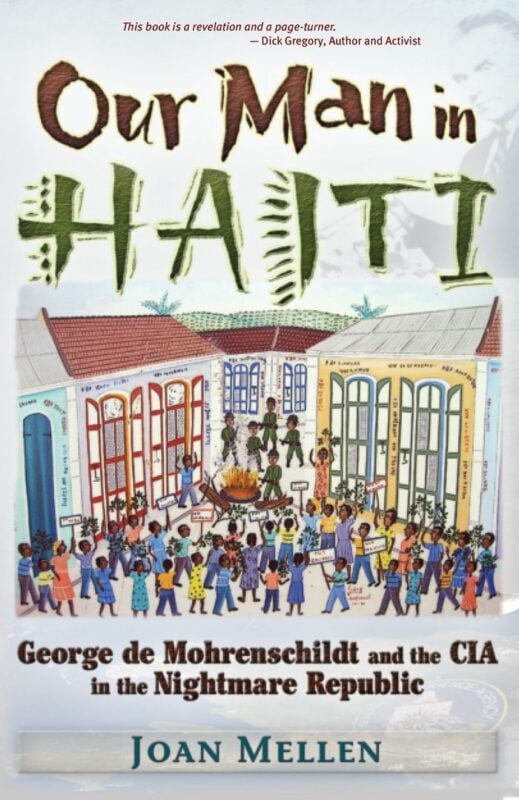
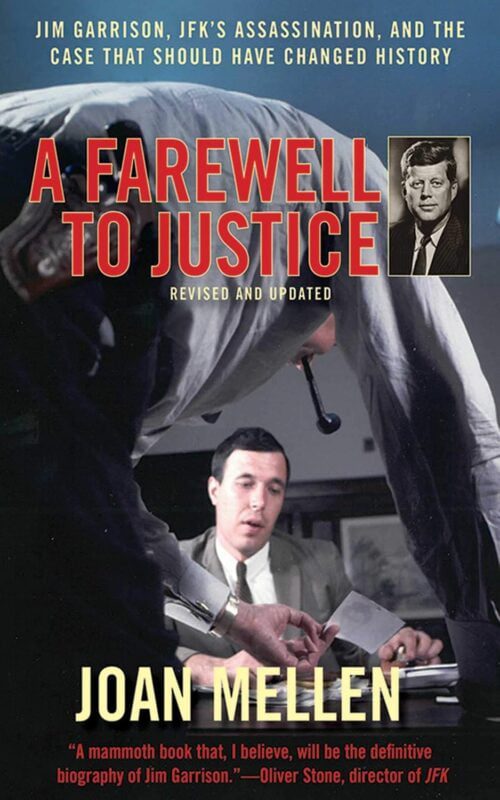
Our Man in Haiti: George De Mohrenschildt and the CIA in the Nightmare Republic by Joan Mellen investigates the geopolitical architecture of U.S. covert operations in the Caribbean through the life of one enigmatic operative. George de Mohrenschildt, an oil geologist and intelligence asset, serves as the narrative conduit into a wider examination of American interventionism, particularly in Haiti under the rule of François “Papa Doc” Duvalier.
The CIA's Pivot from Cuba to Haiti
Following the 1962 Cuban Missile Crisis, the CIA redirected its focus from overthrowing Fidel Castro to stabilizing—or destabilizing—governments in the Caribbean aligned with American interests. De Mohrenschildt arrives in Haiti as the Agency’s attention turns to removing Duvalier. His assignment links him to Clémard Joseph Charles, a Haitian banker favored by U.S. intelligence as a more controllable alternative to Duvalier. Their partnership embodies the CIA’s operational strategy: infiltrate through business and personal relationships, install favorable leadership, and preserve American economic access.
In Haiti, American policy deployed money and paramilitary training to suppress threats that might realign the island with revolutionary ideologies. Duvalier's brutality, carried out through his Tonton Macoute militia, fit a pattern U.S. intelligence had learned to navigate. Aid flowed regardless of internal repression. Strategic utility took precedence.
Character Construction and Political Utility
George de Mohrenschildt defies conventional biographical boundaries. He constructs his identity from fragments of myth, European aristocracy, and carefully staged affiliations. To some, he claims a Polish noble heritage; to others, a history of Communist sympathy. He serves French intelligence in the U.S., possibly the Nazi Abwehr, and eventually American agencies, leveraging his foreignness to appear both exotic and plausible.
This chameleonic quality makes him a valuable operator. He blends into elite society in Dallas, socializes with oil barons, and gains access to political operatives. His association with Lee Harvey Oswald, framed as paternal mentorship, amplifies his historical significance after Kennedy’s assassination. The ambiguity of his allegiances becomes a strategic asset for an intelligence community skilled in obfuscation.
Duvalier’s Consolidation of Power
In 1957, Duvalier secures the presidency through a bribe delivered by Charles, consolidating power by dissolving democratic institutions and declaring himself president for life. His claim to legitimacy draws on historical symbols of black nationalism and the legacy of Toussaint L’Ouverture. Duvalier invokes vodou and revolutionary imagery to present himself as the spiritual and political heir to Haiti’s liberation.
American foreign policy tolerates this authoritarian theater because Duvalier remains economically useful. He suppresses leftist movements, facilitates foreign investment, and supports the U.S. during the Cuban crisis. In return, he receives millions in development loans and military assistance, which he diverts to strengthen his personal regime. The economic aid justifies diplomatic ties, while the CIA prepares alternatives in case loyalty falters.
The Texas Nexus
De Mohrenschildt’s intelligence work is inseparable from his social networks in Texas. Oil magnates like Clint Murchison Jr., meat exporters like HAMPCO, and lobbyists operating through official channels all intersect with CIA operations. Lyndon Johnson’s administration maintains commercial interests in Haiti, with Bobby Baker smoothing out regulatory obstacles. CIA operatives tied to the oil industry collaborate with business elites to secure favorable contracts and economic privileges.
De Mohrenschildt's access to this world underscores his dual function as intelligence asset and economic intermediary. He uses charm and European sophistication to insinuate himself into business circles, serving both espionage and commerce. When CIA considers removing Duvalier, it is through these networks that plans are seeded.
Exploitation as Strategy
The Artibonite Valley project illustrates the economic logic behind intervention. Originally intended to develop irrigation and agriculture, it becomes a mechanism for siphoning American funds into private hands. Contractors like Brown & Root receive lucrative cost-plus contracts backed by U.S. loans. Haiti’s infrastructure gains remain marginal. Food security declines. Agricultural output shrinks. Aid programs function as extraction systems.
Economic dominance follows military involvement. In 1915, U.S. Marines seize Haiti’s gold reserves and rewrite its constitution to allow foreign land ownership. These precedents continue through the Duvalier era. American business seeks profit. The CIA seeks alignment. Together, they produce a state shaped by dependence and repression.
Intelligence and Personality
Mellen presents de Mohrenschildt as a psychological study in amorality. He is charming, manipulative, and incapable of empathy. His personal relationships collapse under the weight of violence and deception. His multiple marriages disintegrate through abuse and fraud. Yet he maintains relationships with powerful men and gains access to sensitive operations.
His value lies in his disposability. The CIA uses him to manage Oswald, then assigns him to monitor Charles. When his utility fades, they release him. He exemplifies how intelligence agencies exploit character flaws as operational tools. His background makes verification impossible. His instability becomes a feature, not a flaw.
Covert Alignments and Strategic Failure
The plan to replace Duvalier never matures into action. Despite Charles’ cooperation and de Mohrenschildt’s facilitation, the risks of destabilization exceed perceived benefits. Duvalier remains in power until his death, handing the presidency to his son. The CIA withdraws, adjusting tactics for other geopolitical arenas.
Haiti continues to suffer under authoritarian rule, compounded by U.S. complicity. The promise of economic development dissolves into corruption and hunger. The intelligence community archives the operation, compartmentalizing its failure. De Mohrenschildt drifts into historical ambiguity, his link to Oswald preserved only in conspiracy and footnotes.
A Study in Power and Surrogacy
Joan Mellen’s research unravels a dense matrix of covert influence. She positions Haiti as a staging ground for Cold War politics shaped by race, capital, and ideology. Intelligence agents function through business surrogates. National policy emerges through back channels and private deals. The Haitian people bear the cost of imperial calculation.
De Mohrenschildt remains central not because of what he did, but because of what his presence reveals. He connects Oswald to CIA. He links corporate interest to intelligence strategy. He embodies the personality type suited to covert work: unreliable, captivating, expendable. The book renders him not as a protagonist but as an operational method made flesh.
Consequences of Complicity
American complicity in Duvalier’s reign reflects a broader pattern of state behavior. Strategic utility drives support for authoritarianism. Intelligence operations pursue stability, defined as predictable compliance. Economic relationships override democratic principle. Haiti’s suffering becomes an acceptable byproduct.
The systems described in the book persist through adaptation. Contracts change. Agents rotate. Objectives remain. By analyzing this convergence in Haiti, Mellen offers a precise case study in how the U.S. manages peripheral states through covert means. The narrative serves not as a historical curiosity but as a template for understanding the mechanics of power.
Why did de Mohrenschildt matter?
Because his life exposes the quiet architecture beneath public policy. Because he moved between governments and businesses without anchoring loyalty. Because he helped shape two turning points in 20th-century American history: the maintenance of U.S. control in Haiti and the fate of Lee Harvey Oswald. Understanding his trajectory clarifies the operational realities of intelligence work and the ways individual lives intersect with geopolitical strategy.