The Hidden History of 9/11
The Hidden History of 9/11 by Paul Zarembka initiates a direct confrontation with the official narrative surrounding the September 11 attacks, assembling a team of experts across disciplines to interrogate inconsistencies, expose suppressed facts, and reveal the structures that obscured the full truth. Zarembka orchestrates a rigorous inquiry into who benefited, what evidence was withheld, and how strategic silence helped sustain a fragile consensus.
Revisiting the Hijackers’ Identities
FBI Director Robert Mueller publicly acknowledged that the case against the 19 named hijackers would not withstand judicial scrutiny. Despite this, the Bureau made no adjustments to its list. Independent investigations uncovered that several alleged hijackers were still alive, documented by authorities and verified by interviews. Official flight manifests never included the names of the accused, and original records were withheld from the public. These structural gaps suggest fabrication rather than error. The report questions how, within 24 hours, the FBI could produce an accurate list without definitive data from the scenes.
Government agencies destroyed large volumes of potentially exonerating evidence. Able Danger, an intelligence operation that reportedly identified ringleader Mohamed Atta years before the attack, was terminated, and its 2.5 terabytes of data were deleted. These events do not reflect oversight. They reveal deliberate suppression. Zarembka’s contributors argue this pattern reflects internal control over the narrative from its inception.
Videotapes and Visual Fabrication
Two key videos served as evidence for the hijackers’ presence. One from Portland, Maine, shows Atta and Abdul Aziz al-Omari boarding a connecting flight to Boston. It includes timestamps, camera identifiers, and clear footage. The second, from Dulles International Airport, lacks all identifying metadata. Released nearly three years later under legal pressure, it contains no timestamps, includes digitally masked faces, and shows manipulated angles inconsistent with closed-circuit surveillance. These deviations do not match standard airport security procedures.
The Dulles footage includes individuals previously reported alive. Visual analysis reveals two different camera perspectives supposedly capturing a single event. FBI and 9/11 Commission reliance on this tape, despite its irregularities, underscores institutional complicity. The visuals advance a narrative with no grounding in verifiable surveillance protocol.
Bin Laden’s Confession Video
In December 2001, the White House released a video allegedly showing Osama bin Laden claiming responsibility. However, Arabic experts and foreign intelligence agencies identified mistranslations and distortions. The video’s content contradicted known facts. Bin Laden praised hijackers who had been proven alive. German investigators and Saudi translators found inconsistencies between the spoken Arabic and the U.S. government’s English transcript. The physical appearance of the man in the video deviated from confirmed images of bin Laden. Analysts point to technical anomalies that suggest digital manipulation. The strategic use of this tape provided immediate narrative closure, which the book identifies as crucial for legitimizing war efforts.
Insider Trading and Financial Forensics
Unusual financial patterns before the attacks raised early alarms. Market analysts documented massive short positions on airline stocks days before 9/11. Insurance companies, defense contractors, and financial firms linked to geopolitical interests profited from shifts triggered by the attacks. Investigators traced trades to firms with intelligence ties, including former CIA executives. The Securities and Exchange Commission launched an inquiry but failed to pursue leads that linked trades to specific actors. Zarembka’s contributors argue that this economic foreknowledge reflects prior knowledge inaccessible without high-level coordination.
Collapse Patterns and Demolition Signatures
The destruction of the Twin Towers and World Trade Center 7 exhibited properties incompatible with structural failure due to fire. WTC 7, which was not struck by a plane, fell symmetrically at near free-fall speed. Steel-frame buildings with localized fires do not collapse entirely. Eyewitnesses reported secondary explosions, molten metal at the base, and seismic spikes before visible collapse. Structural engineers and demolition experts identified ejection of steel beams and pulverized concrete consistent with controlled demolition. The National Institute of Standards and Technology (NIST) delayed release of its report for years and omitted key physical anomalies from its conclusions. The book asserts that these omissions were not analytical failures but strategic decisions to protect institutional credibility.
Military Exercises and Operational Confusion
On the morning of September 11, the military conducted several war games, including simulations of hijacked aircraft. NORAD, the air defense command, was running live-fly drills that mimicked the unfolding attacks. Fighter jets were deployed to the wrong coordinates. Radar screens displayed false blips. The confusion was not incidental. It mirrored the scenario of the attacks. Zarembka and his contributors suggest that these overlapping exercises created a structural blind spot in the nation's defense, allowing the actual operation to proceed without interception.
The Vice President's actions in the bunker beneath the White House include documented stand-down orders, according to testimony from Transportation Secretary Norman Mineta. The 9/11 Commission excluded this testimony and revised the timeline to obscure discrepancies. These omissions were not factual disputes; they were structural interventions that shaped public understanding of state authority during the crisis.
Commission Process and Structural Compromise
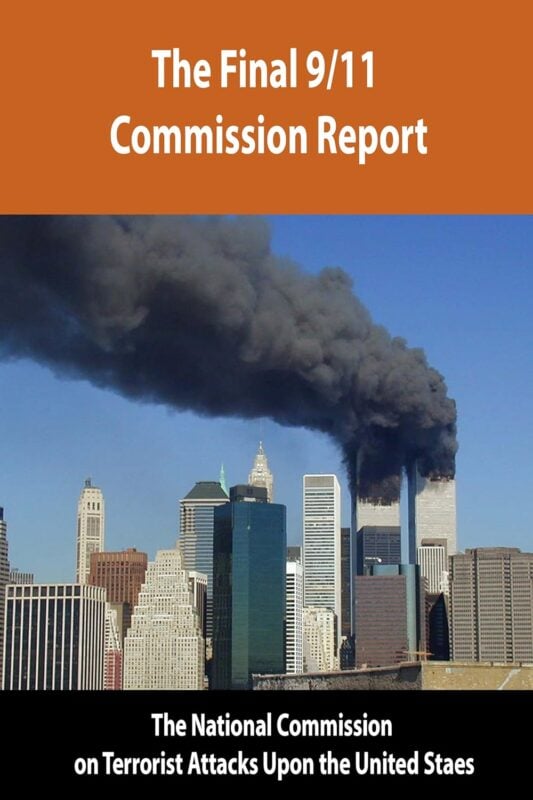
The 9/11 Commission's membership included individuals with direct ties to the intelligence community and the Bush administration. Its executive director, Philip Zelikow, had co-authored books with National Security Advisor Condoleezza Rice. Staffers were prohibited from conducting full interviews or issuing subpoenas. Whistleblowers were silenced. The final report excluded references to forewarnings from foreign governments, internal CIA alerts, and testimonies contradicting the official timeline. The commission did not address discrepancies in the physical evidence or inconsistencies in hijacker identification. The structural design of the commission, as detailed in the book, ensured narrative alignment with institutional priorities.
Al-Qaeda and Intelligence Entanglement
Al-Qaeda functioned as both adversary and asset within U.S. foreign policy operations. During the Cold War, American intelligence agencies funded and trained mujahideen fighters, some of whom later formed the core of al-Qaeda. Zarembka's analysis contextualizes 9/11 within this strategic history. The operational capacity of al-Qaeda reflects not isolation but entwinement. Relationships between the CIA and Islamist networks, especially in Central Asia and the Balkans, reveal convergences that undermine the portrayal of 9/11 as an external surprise.
Machiavellian Statecraft and Political Utility
The concept of Machiavellian state terror anchors the book's theoretical framework. Governments manufacture fear to consolidate control, suppress dissent, and redirect public attention. 9/11 functioned as a catalytic event that enabled the passage of the Patriot Act, militarization of foreign policy, and expansion of surveillance infrastructure. Contributors describe this as strategic authoritarianism, enacted through democratic institutions. The attacks justified wars, restructured civil liberties, and shifted geopolitical priorities. These outcomes follow a logical arc when viewed through the lens of statecraft, not as collateral consequences but as central objectives.
Islamophobia and Imperial Pretext
The political discourse following 9/11 relied on Islamophobia as a framing mechanism. The narrative constructed Muslims as existential threats, legitimizing preemptive war and domestic repression. This ideological shift extended American influence in oil-rich regions and reframed dissent as disloyalty. The authors argue that Islamophobia served as a lubricant for empire, a means of galvanizing support for policies that privileged elite interests at the expense of democratic accountability. The war on terror was never only about security. It was about structural reconfiguration—of laws, markets, and public consciousness.
Patterns of Suppression and Convergence
The Hidden History of 9/11 documents patterns across disconnected sectors—intelligence, finance, engineering, and media. These patterns do not suggest conspiracy as conjecture. They assert convergence as a phenomenon observable in decision-making structures, information management, and institutional behavior. The book rejects simplification and instead maps how authority operationalizes crisis. Its authors trace the movements of actors, the suppression of evidence, and the consequences of silence. Each assertion contributes to a matrix of control that operated with precision, not ambiguity.
Where does responsibility reside when multiple agencies fail simultaneously? How does strategic incompetence morph into systemic redesign? Zarembka proposes that answers emerge not by filling gaps but by following the architecture of omission. The facts do not remain elusive. They remain unspoken by design.