The Lure of the Edge: Scientific Passions, Religious Beliefs, and the Pursuit of UFOs
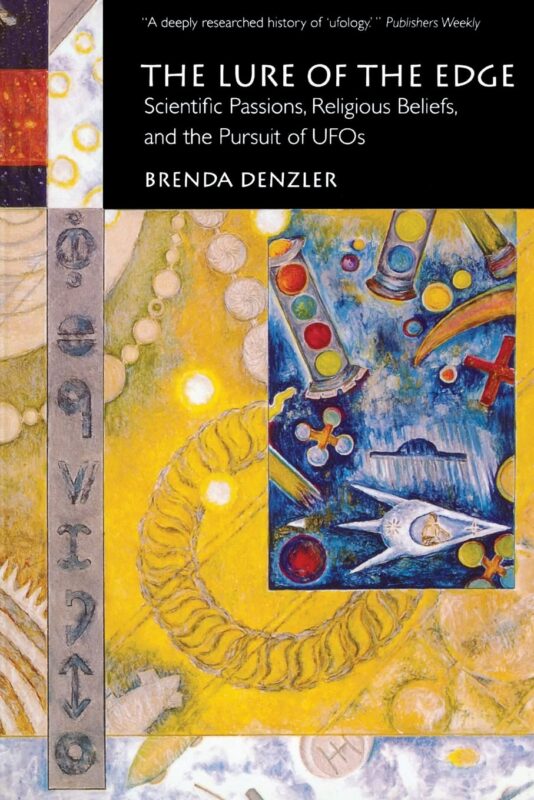
The Lure of the Edge: Scientific Passions Religious Beliefs and the Pursuit of UFOs by Brenda Denzler investigates the dynamic interplay between scientific inquiry, religious conviction, and the enduring fascination with unidentified flying objects. Denzler centers her analysis on the people and communities who pursue the UFO phenomenon with rigorous dedication, revealing how this pursuit shapes American culture, knowledge systems, and existential concerns.
A Community Defined by Inquiry and Experience
People from diverse backgrounds form the heart of the UFO community. Astronomers, engineers, homemakers, military officers, and students contribute sightings and analyses, refusing reduction to a singular stereotype. Surveys show that professionals and technical specialists report UFO encounters, and these voices recur in official and independent investigations. The community builds its collective identity through a commitment to gathering, documenting, and evaluating reports, seeking evidence and coherence across thousands of cases. What motivates these pursuits? Participants express a dual commitment: a search for empirical verification and a deeper, often spiritual curiosity about the cosmos and humanity’s place within it.
The Construction of the UFO Myth
Denzler characterizes the “UFO myth” as a living narrative: a network of stories, personal accounts, and shared beliefs that frame unidentified aerial phenomena as significant, urgent, and real. This myth does not function as fiction or delusion; instead, it organizes and animates a worldview where extraordinary encounters suggest a cosmos more populated and mysterious than conventional science admits. The myth gains power from recurring motifs: the sudden appearance of flying craft, encounters with nonhuman intelligences, government secrecy, and technological capabilities surpassing contemporary understanding. In these stories, individuals report not only sightings but also interactions, messages, abductions, and transformative experiences.
Origins in Modern and Ancient Worlds
Kenneth Arnold’s 1947 sighting near Mt. Rainier triggered the modern wave of UFO investigation in the United States, but historical resonance shapes the narrative. Ancient texts, including the Bhagavata Purana’s accounts of vimanas and Ezekiel’s vision of a “whirlwind,” supply older contexts for mysterious aerial events. In the nineteenth century, the Airship Wave of 1896–1897 generated media frenzy and official investigation across the United States. These earlier phenomena supply both continuity and depth, offering the community a sense of long-standing mystery. Sightings increase in frequency and complexity after World War II, as Cold War anxieties and rapid technological advancement fuel public and official interest.
Science, Technology, and Government Response
The scientific and military establishment responds with structured investigations, most famously Project Sign, Project Grudge, and Project Blue Book. Committees collect thousands of reports, many from trained observers, and assign categories such as “unknown,” “misidentification,” or “hoax.” Statistical analysis from institutes like Battelle reveals that high-quality reports, often from credible witnesses, defy simple explanations. Air Force and CIA panels urge a strategy of public education and debunking, at times invoking national security and imposing secrecy. Laws restrict disclosure, and the flow of information becomes a battleground between grassroots investigators and authorities. Denzler traces how official ambiguity and shifting explanations—ranging from weather balloons to temperature inversions—shape public attitudes and feed suspicions of cover-up.
Grassroots Investigation and Organizational Networks
Frustrated by official reticence, private citizens organize to pursue systematic inquiry. Groups like the Aerial Phenomena Research Organization (APRO), National Investigations Committee on Aerial Phenomena (NICAP), Mutual UFO Network (MUFON), and Center for UFO Studies (CUFOS) form robust networks for collecting reports, training investigators, and publishing analyses. These organizations attract members with advanced degrees, professional credentials, and specialized technical knowledge. They function as clearinghouses and research hubs, sometimes cooperating and sometimes competing. Newsletters, conferences, and field investigations maintain a continual flow of data, debate, and theory.
Abductions, Contact, and the Expansion of Experience
With the publication of Whitley Strieber’s Communion and a surge in abduction reports, the focus of UFO studies broadens. Narratives of abduction, missing time, bodily marks, and telepathic communication generate new fields of inquiry. Investigators develop protocols for interviews, regression hypnosis, and pattern analysis. These stories present existential challenges—witnesses grapple with fear, awe, and a sense of calling. Some articulate religious or metaphysical interpretations, suggesting that the phenomenon signals a transformation in human consciousness or a new relationship with the unknown.
The Tension Between Science and Religion
Within the UFO community, members negotiate the boundaries between scientific method and spiritual or metaphysical speculation. Some insist on empirical standards—photographic evidence, physical traces, radar returns, statistical rigor. Others turn to mystical frameworks, channeling, and interpretations that echo traditional religious narratives. This tension is neither static nor absolute. Denzler documents cases where investigators seek validation through both science and spirituality, sometimes synthesizing elements of both in their search for meaning.
Media, Perception, and the Shaping of Public Opinion
Popular media play a decisive role in shaping attitudes toward UFOs. Newspapers, magazines, television, and film dramatize sightings, abductions, and official reactions, sometimes with skepticism and sometimes with fascination. Iconic cases like Roswell become part of American folklore, fueling both credulity and doubt. Academic treatments often focus on fringe or cultic aspects, highlighting the activities of channelers, contactees, and mass movements like that associated with Marian Keech. Denzler critiques this selective attention, pointing out that it distorts the demographic and intellectual complexity of the broader UFO community.
Surveys and Sociological Research
Denzler supplements historical and narrative analysis with sociological data. Surveys reveal that substantial percentages of Americans—sometimes as high as 48 percent—believe UFOs are real. Technical professionals and scientists report anomalous sightings at rates that challenge the notion of UFO belief as a marker of ignorance or irrationality. Sociological frameworks treat the UFO community as a social movement, a network of meaning-makers united by shared inquiry, mutual skepticism, and a commitment to pursuing questions that mainstream institutions have marginalized.
The Enduring Question: Are We Alone?
The central tension in Denzler’s account arises from the existential question: Are humans alone in the universe? The decline of traditional religious cosmologies, the secularization of science, and the abstraction of God from public life have left many searching for new sources of meaning. UFO narratives offer both evidence and hope: encounters with the unknown suggest companionship in the cosmos, possibilities for contact, and the prospect of new knowledge. The mythos that grows around these phenomena fills a psychological and cultural need, offering answers and inspiring further questions.
Implications for Western Thought and Society
The pursuit of UFOs functions as a theater for the broader drama of Western modernity. The tension between rationalist science and mythic or religious meaning, the drive for empirical validation, and the enduring allure of mystery converge in the ongoing debates and investigations chronicled by Denzler. She observes that the UFO movement reflects a society at a crossroads, torn between competing authorities and worldviews. Participants enact their quests both in dialogue with scientific traditions and through the adoption of new, sometimes radical, metaphysical stances. The phenomenon draws its power from this unresolved tension, inviting ongoing exploration and reinterpretation.
The Picture of a Movement
Denzler provides a portrait of the UFO community based on fieldwork, surveys, and historical research. Members include skeptics, believers, experiencers, and investigators, many of whom move fluidly among these roles. The community is not bound by geography, ethnicity, or socioeconomic status but by a commitment to the significance of the UFO myth and the search for answers. Organizational structures adapt over time, responding to new developments, controversies, and waves of public interest. As reports of abductions, crop circles, and new sightings proliferate, the movement absorbs and interprets these signals, continually reshaping its self-understanding.
From Myth to Meaning: The Future of UFO Studies
Denzler does not resolve the empirical status of UFOs or adjudicate between competing theories. Instead, she invites readers to recognize the complexity and significance of the movement itself. The pursuit of UFOs, she contends, illuminates the ongoing negotiation between science and belief, skepticism and faith, experience and interpretation. The book calls for a fuller appreciation of the UFO community’s diversity, intellectual rigor, and existential seriousness.
Cultural Resonance and Search Engine Impact
Searchers looking for a comprehensive analysis of the intersection of science, religion, and UFO phenomena will encounter in Brenda Denzler’s work a uniquely authoritative perspective. The book’s detailed chronicle of organizations, pivotal incidents, and influential figures establishes a timeline essential for researchers, students, and enthusiasts. Its sociological insight helps frame discussions about contemporary belief systems and the formation of collective identities in response to mystery. For those seeking to understand the enduring fascination with UFOs in American life, Denzler’s synthesis of narrative, data, and theory offers both depth and breadth.
Conclusion: The Lure of Meaning
The pursuit of UFOs continues to challenge, inspire, and provoke. Investigators, believers, and skeptics converge around a shared sense that something vital resides at the edge of known experience. Brenda Denzler’s study charts the pathways by which scientific passions and religious beliefs intersect, generating both new knowledge and new mysteries. The story of UFOs becomes, in this account, a story of the human search for meaning, community, and connection amid uncertainty and the unknown.