Weaponizing Anthropology
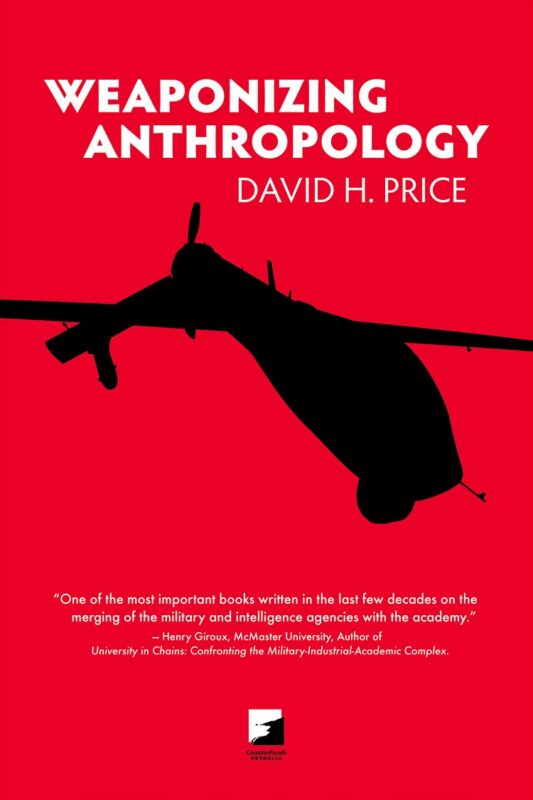
Weaponizing Anthropology by David H. Price investigates the structural integration of anthropology into military and intelligence operations in the United States, tracing a lineage from colonial and wartime practices to post-9/11 counterinsurgency. Price scrutinizes the ethical, political, and institutional dynamics that shape the weaponization of cultural knowledge, identifying decisive inflection points where anthropological expertise becomes entangled with state power. He presents a narrative that connects funding mechanisms, professional codes, campus politics, and fieldwork ethics, revealing a system in which knowledge, power, and policy converge.
The Long Shadow of Militarized Knowledge
American anthropology emerged within the apparatus of colonial expansion. Early ethnographers documented the languages, customs, and histories of subject populations, producing records that served both scientific inquiry and administrative control. These origins establish a precedent for subsequent alignments between anthropological research and state interests. By examining the historical record, Price reveals a recurring pattern in which political and military institutions harness anthropology to stabilize occupations, disrupt insurgencies, and manage conquered societies.
Colonial encounters generated a framework in which fieldwork, documentation, and classification became tools for managing the social order. The interplay between academic inquiry and statecraft shaped the early discipline, embedding questions of power and loyalty in the core of anthropological practice. As the U.S. expanded westward, federal agencies employed ethnographers to facilitate the displacement, assimilation, and governance of Native American communities. Price exposes the material and ideological functions of such research, highlighting the logistical and moral choices that defined the profession from its inception.
Cultural Knowledge as Strategic Asset
Warfare transformed anthropology into an explicit strategic resource. During both world wars, government agencies sought the expertise of anthropologists to provide intelligence on language, geography, and social organization in theaters of combat and occupation. The Office of Strategic Services and other wartime institutions cultivated a cadre of social scientists who conducted fieldwork, compiled ethnographies, and designed interventions for military advantage.
Price documents the recruitment of anthropologists for covert operations, psychological warfare, and population management. He foregrounds the willingness of state institutions to use cultural research as a lever for social engineering. These wartime collaborations generated a legacy of institutional connections, ethical debates, and professional dilemmas that reverberate across decades.
The Cold War intensified the integration of social science into national security operations. Federal funding flowed into universities, supporting language instruction, area studies, and cross-cultural research designed to inform global policy. The creation of funding fronts and research “pass-throughs” enabled intelligence agencies to direct academic projects toward strategic ends, often without the explicit awareness of researchers. Congressional investigations later revealed the extent to which foundations, institutes, and university programs participated in clandestine knowledge production.
Codes of Ethics and the Politics of Responsibility
Ethical crises catalyzed reform within the profession. Controversies over covert research, secret reporting, and collaboration with counterinsurgency operations forced professional associations to articulate principles of responsibility. The American Anthropological Association adopted its first Code of Ethics in 1971, establishing standards for transparency, consent, and the protection of research subjects.
Price traces the internal debates and factional struggles that shaped the discipline’s ethical landscape. He analyzes the procedural, practical, and political dimensions of these codes, demonstrating how disciplinary standards both reflect and respond to external pressures. As the boundaries between research, advocacy, and state service blur, anthropologists confront dilemmas of loyalty, complicity, and autonomy.
Fieldwork embeds anthropologists in relationships of trust, reciprocity, and shared experience with the communities they study. The discipline’s reliance on participant observation intensifies the tension between professional obligations and state demands. Price emphasizes the transformative potential of anthropological engagement—researchers acquire loyalties that may conflict with the instrumentalization of knowledge for coercive or violent ends.
The Post-9/11 Transformation: Programs and Policy
The attacks of September 11, 2001 initiated a new era of militarized social science. The Pentagon, CIA, and related agencies launched initiatives designed to mobilize anthropological expertise for counterinsurgency, intelligence analysis, and psychological operations. Programs such as the Human Terrain System, Minerva Consortium, and Pat Roberts Intelligence Scholars Program restructured the relationship between academia and national security, channeling resources toward research and training with direct military application.
These initiatives introduced new funding streams, institutional partnerships, and recruitment strategies. University campuses became sites of covert and overt engagement, as students and faculty entered into contractual relationships with intelligence agencies. Price investigates the mechanics of these programs, exposing their operational logic, administrative design, and strategic intent. He identifies the long-term risks for academic integrity, intellectual freedom, and democratic governance.
The Human Terrain System sought to embed social scientists in military units deployed to Iraq and Afghanistan, tasking them with gathering, analyzing, and disseminating cultural intelligence for operational purposes. The program incentivized participation through lucrative contracts and promises of fieldwork opportunities, yet drew persistent criticism from within the discipline. Despite aggressive recruitment, few anthropologists with advanced training agreed to serve, underscoring the resilience of ethical standards and the legacy of professional resistance.
Institutional Incentives and Academic Vulnerability
Price examines the economic conditions that facilitate collaboration between universities and the national security state. Reductions in traditional academic funding, coupled with the proliferation of military grants, create a context in which under-resourced departments weigh the costs and benefits of engagement with classified research. The corporate transformation of higher education accentuates the vulnerability of the academy to external influence, as administrators prioritize revenue, reputation, and institutional alliances.
The proliferation of classified research and covert affiliations on campus undermines the principle of academic openness. Students and faculty operating under intelligence contracts conceal their ties, distorting the environment of trust and transparency essential for critical inquiry. Price underscores the corrosive effects of secrecy, arguing that these developments threaten the legitimacy and independence of the university as a public institution.
Discursive Strategies and the Manufacturing of Consent
State agencies and their academic collaborators deploy discursive strategies to normalize and legitimize the militarization of anthropology. Price analyzes the rhetorical frameworks used to justify collaboration, from appeals to national security and patriotism to the reframing of research as humanitarian aid or development work. Key actors assert the necessity of cultural expertise for winning hearts and minds, suppressing debate over the ultimate consequences of weaponized knowledge.
The construction of “armed social workers” as a model for anthropological engagement recasts intervention as benevolent, displacing critical analysis of occupation, domination, and violence. Price reveals the persuasive logic of these discourses, situating them within broader campaigns to recruit, train, and deploy social scientists for strategic ends. The language of necessity, urgency, and expertise underwrites policy decisions, marginalizing dissent and critical reflection.
Political Limits of Professional Associations
Professional organizations, including the AAA, delineate their responsibilities through codes of ethics that privilege questions of practice, transparency, and procedural integrity. Price observes that these associations generally avoid explicit political critique, focusing on the technical and ethical dimensions of research rather than addressing the broader objectives of military and intelligence engagement. This approach confines debate to the realm of best practices, leaving questions of imperialism, occupation, and violence unresolved.
The organizational structure of professional associations encourages incremental reform and consensus-building, yet often fails to mobilize decisive opposition to the instrumentalization of anthropology. Price urges anthropologists to expand the scope of their critique, linking ethical concerns to the underlying political projects that drive collaboration with state power.
Emergence of Organized Resistance
Dissident anthropologists have formed networks and coalitions to challenge the militarization of the discipline. The Network of Concerned Anthropologists, among others, advocates for the restoration of ethical standards that prohibit secrecy, coercion, and complicity in harm. These movements revive historical traditions of activism, drawing on the experience of previous generations who confronted similar dilemmas during the Vietnam War and Cold War.
Price documents the successes and limitations of organized resistance, highlighting moments of collective action, public protest, and institutional reform. He situates these developments within a broader context of academic dissent, labor activism, and movements for social justice.
Ethnographic Practice and the Limits of Weaponization
Participant observation and long-term immersion generate knowledge that exceeds the functional requirements of state agencies. Price argues that the discipline’s methodological core creates the possibility for transformative understanding, solidarity, and critique. The ethical and intellectual commitments developed in the field resist easy assimilation to the strategic imperatives of military operations.
Anthropologists who engage with power confront a dual imperative: to produce knowledge that serves the interests of those they study, and to remain critically vigilant in the face of co-optation. Price posits that the struggle over the weaponization of anthropology is ongoing, shaped by historical contingency, institutional structure, and the agency of practitioners.
Concluding Synthesis: Knowledge, Power, and Accountability
Weaponizing Anthropology by David H. Price traces the entanglement of academic knowledge with structures of power, illuminating the enduring consequences of collaboration between anthropology and the state. By reconstructing the historical and institutional architecture of militarized research, Price reveals a system in which funding, expertise, and ethical codes intersect with policy, strategy, and violence.
He asserts that the contemporary resurgence of military interest in anthropology reflects deeper shifts in the political economy of knowledge. The book urges anthropologists, educators, and citizens to confront the implications of weaponized research, advocating for renewed attention to the relationship between ethics, politics, and the pursuit of understanding. The analysis culminates in a call for accountability, solidarity, and critical engagement—a vision that positions anthropology as a site of contestation and possibility within the machinery of power.