Ian Fleming’s Secret War

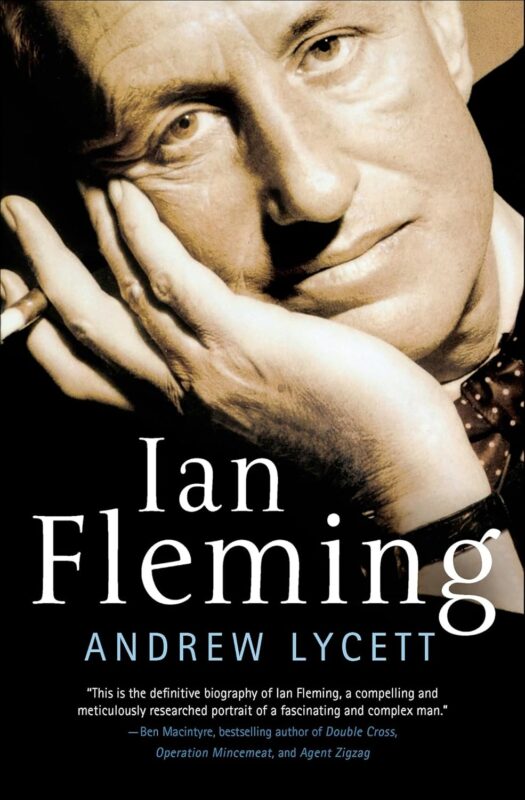
Ian Fleming’s Secret War by Craig Cabell examines the hidden military career of Ian Fleming, uncovering the true nature of his service during the Second World War and tracing the impact of his intelligence work on postwar popular culture. Craig Cabell’s research delivers a vivid, detailed portrait of Fleming’s transformation from disaffected stockbroker to pivotal figure within British naval intelligence. The narrative pursues the origins, execution, and legacy of Fleming’s wartime assignments, grounding his later creative output in lived experience, professional relationships, and strategic innovation.
Origins of a Spy Master
Fleming entered British naval intelligence in the months before the Second World War. Rear Admiral John Godfrey, the new Director of Naval Intelligence, searched for civilian recruits who could bring strategic insight and lateral thinking to the rapidly evolving demands of wartime espionage. Montagu Norman, Governor of the Bank of England, recommended Fleming, recognizing the young stockbroker’s restless intellect and affinity for decisive action. A luncheon at the Carlton Grill initiated Fleming’s journey from the City of London into the nerve center of the British war machine. As war loomed, the Admiralty assigned Fleming a post within Room 39—the crucible for naval intelligence planning and coordination.
Room 39: The Intelligence Crucible
Inside Room 39, Fleming operated at the epicenter of Britain’s clandestine war effort. The environment fused military order with bursts of creative improvisation, as officers and administrators tackled urgent threats with evolving methods. Typewriters clattered, smoke hung in the air, and conversations crackled with strategic import. Fleming’s desk overlooked Horse Guards Parade, placing him at the threshold of the Admiral’s private sanctum. He processed intelligence, drafted memos, and briefed Godfrey, all while absorbing lessons from his more experienced peers. Fleming’s strategic thinking and willingness to challenge higher-ranking officers, balanced by his understanding of protocol, won the trust of Room 39’s leadership. His reputation grew as a fixer and innovator, capable of synthesizing complex information and converting it into actionable plans.
Fleming’s Strategic Vision
Fleming approached intelligence work as both craft and science. He studied enemy patterns, interrogated gaps in Allied strategy, and devised audacious solutions. His lateral thinking drew inspiration from his literary background, blending analytical rigor with narrative flair. The war offered Fleming a proving ground for ideas that would later animate his fiction. The structure of Room 39 fostered collegial exchange; commanders, journalists, and intelligence experts collaborated, debated, and tested new concepts. This environment provided Fleming with exposure to multiple facets of intelligence—from propaganda and deception to technical innovation and psychological warfare.
Operation RUTHLESS: Planning and Failure
Fleming’s ingenuity found expression in Operation RUTHLESS, a plan to seize a German cipher machine by orchestrating a staged air crash in the Channel. Fleming detailed the proposal: secure a downed German bomber, assemble a crew fluent in German, simulate distress, lure a rescue vessel, overpower its crew, and recover the valuable cipher equipment. The operation illustrated Fleming’s capacity for operational design, meticulous planning, and calculated risk. Archival evidence documents his persistent advocacy, as he coordinated between departments, addressed technical objections, and adapted tactics to shifting operational realities. Despite careful preparation, the mission collapsed for want of a suitable target in the Channel, and senior commanders ultimately called it off. The cancellation, dictated by the unpredictable rhythms of war, marked a turning point in Fleming’s understanding of the boundaries and contingencies of covert action.
Formation of 30 Assault Unit
Fleming recognized that intelligence gathering at the front demanded specialized skills and organizational structure. He conceptualized and inspired the creation of 30 Assault Unit (30 AU), a commando group charged with penetrating enemy lines to seize documents, technology, and expertise. This force operated at the intersection of espionage and special operations, blending commando tactics with intelligence collection. Fleming guided its missions from the Admiralty, reviewing after-action reports, shaping doctrine, and leveraging operational lessons for broader strategic effect. The exploits of 30 AU—storming enemy headquarters, targeting technological assets, and operating under conditions of extreme risk—embodied the spirit of innovation and audacity that defined Fleming’s approach to war. Veterans of the unit later described his administrative oversight, incisive commentary, and skill in translating complex field reports into actionable intelligence.
Collaboration and Influence
Fleming’s wartime relationships proved formative. Rear Admiral Godfrey provided mentorship and leadership, embodying the archetype later immortalized as “M” in the Bond novels. Fellow officers such as Donald McLauchlan and Patrick Dalzel-Job (himself an inspiration for James Bond) brought diverse experience to the team, catalyzing creative exchange and critical feedback. The network extended to figures outside the Navy, including Dennis Wheatley, the novelist and intelligence planner, and Aleister Crowley, whose controversial reputation intersected with the fringes of wartime intrigue. These collaborations, both formal and informal, shaped the tactics, strategies, and ethos of the British intelligence community.
Operations Beyond Britain
Fleming’s service included transatlantic missions that deepened British-American cooperation. His trips to the United States, though less thoroughly documented, contributed to the establishment of the Office of Strategic Services (OSS) and the broader framework of Allied intelligence sharing. Fleming’s contacts with American counterparts, including William Donovan, reinforced the principle that intelligence work depended on personal trust, shared objectives, and a willingness to innovate across bureaucratic divides.
The Architecture of Whitehall
Cabell situates Fleming’s career within the architecture and culture of wartime Whitehall. Government buildings housed the interplay of secrecy, urgency, and administrative rigor that drove Britain’s war effort. Underground tunnels connected ministries, officers worked around the clock, and decision-making unfolded against the backdrop of air raids, invasion threats, and technological revolution. The reality of Whitehall demanded adaptability and improvisation; plans succeeded or failed amid the fog of war, and success depended on the capacity to convert raw intelligence into strategic advantage. Fleming’s role in this ecosystem highlights the convergence of individual initiative and institutional support.
From Experience to Fiction
The creative link between Fleming’s intelligence work and his later fiction emerges in Cabell’s analysis. Fleming incorporated real-life scenarios, operational details, and character archetypes from his wartime years into his James Bond novels. He drew upon the personalities and tactics of his colleagues, transposing their qualities into the fabric of his fictional world. Operations such as GOLDENEYE and the exploits of 30 AU informed the structure and stakes of his stories, while his administrative experiences provided insight into the mechanics of intelligence organizations. The distinction between lived reality and literary construction reflects a process of transformation: operational reports, bureaucratic struggles, and flashes of strategic insight became the raw material for global cultural phenomena.
The Nuance of Historical Context
Cabell stresses the need to distinguish the Nazi regime from the German people, acknowledging the complexities of wartime allegiance and victimhood. He draws on primary sources and the testimony of figures such as Simon Wiesenthal and Lord Greville Janner to underscore the atrocities committed under Nazi rule and the importance of precise historical memory. Fleming’s own treatment of these themes demonstrates his sensitivity to the moral and political ambiguities of espionage. The book documents how Fleming’s war service coexisted with his postwar success, emphasizing the interplay between historical reality and literary invention.
Personality and Method
Cabell paints a complex portrait of Fleming’s personality: methodical, reserved, incisive, occasionally melancholic, and fiercely committed to his work. Colleagues and contemporaries described Fleming as both aloof and generous, quick to grasp nuance, and unwilling to tolerate mediocrity. His background at Eton and Sandhurst, coupled with his journalistic training, reinforced his capacity for swift analysis, rigorous documentation, and clear communication. Fleming’s leadership style emphasized autonomy, creative risk-taking, and a capacity to synthesize divergent perspectives. His administrative precision and willingness to learn from mistakes earned him a unique position within the intelligence hierarchy.
Legacy of Contribution
The enduring impact of Fleming’s wartime achievements becomes clear as Cabell traces the arc of his career. The methods, concepts, and organizational models he advanced in Room 39 and through 30 AU influenced postwar intelligence doctrine. Fleming’s experience offered practical lessons for the conduct of special operations, the management of classified information, and the cultivation of strategic alliances. His later literary career magnified these contributions, projecting the mystique and discipline of British intelligence onto a global stage. The convergence of fact and fiction in Fleming’s life underscores the inseparability of narrative from action.
Collecting and Remembering Fleming
Cabell devotes attention to the continuing fascination with Fleming as both a historical figure and cultural icon. Collectors prize first editions of his work, while historians and intelligence professionals study his memos, operational plans, and correspondence for insights into the evolution of modern espionage. The book provides references, archival details, and contextual notes, guiding readers through the documentary record and inviting further inquiry. The process of researching Fleming’s life demonstrates the persistent gaps and uncertainties that characterize intelligence history, but also the opportunities for discovery and interpretation.
The Convergence of War and Imagination
Ian Fleming’s Secret War by Craig Cabell affirms the power of imagination harnessed to real-world challenges. Fleming’s trajectory—from uncertain civilian to architect of commando operations—illuminates the latent potential within creative, restless minds. The British victory in the Second World War depended on more than firepower or numerical superiority; it required the fusion of intelligence, innovation, and narrative coherence. Fleming’s story reveals the architecture of modern espionage and the sources of literary myth, showing how personal experience can drive institutional change and cultural transformation.
The legacy of Ian Fleming’s secret war continues to shape the boundaries of fiction, the practice of intelligence, and the memory of a pivotal era in world history.