The Mighty Wurlitzer: How the CIA Played America
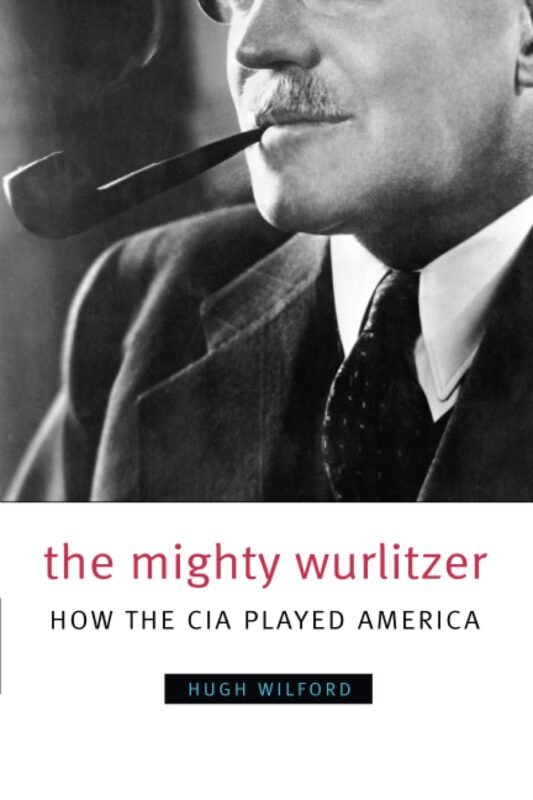
The Mighty Wurlitzer by Hugh Wilford exposes the hidden machinery of Cold War propaganda operated by the CIA across American civil society. Drawing from declassified documents and first-hand accounts, Wilford traces how the Agency orchestrated a vast, coordinated effort to influence public discourse, not through censorship or coercion, but by scripting civic participation from behind the curtain. The metaphor of the "Wurlitzer"—a complex organ where each key corresponds to a different voice in society—captures the engineered harmony of this system, in which students, labor leaders, intellectuals, and artists echoed themes devised at CIA headquarters.
Orchestrating Opinion Through Front Organizations
The CIA’s strategy did not rely on overt control. It built seemingly independent organizations that served its agenda. Agents identified institutions with moral authority or cultural clout and quietly offered funding, logistical support, and ideological framing. These groups ranged from student unions to literary journals to religious forums. By controlling the means of discourse, the CIA could simulate authentic consensus. The Agency’s relationship with the National Student Association reveals the granular nature of this influence. Through covert subsidies and travel arrangements, operatives enabled the association to posture as an international voice for American liberalism, while advancing strategic talking points tailored to counter Soviet narratives.
The Congress for Cultural Freedom and the Battle of Ideas
Among the most sophisticated operations was the Congress for Cultural Freedom, a transatlantic network of writers, editors, and academics. Its goal: promote a vision of liberal democracy as intellectually superior to communism. The CIA helped launch its journals, sponsor its conferences, and recruit prestigious contributors such as Isaiah Berlin, Arthur Koestler, and Mary McCarthy. These voices lent credibility to a broader cultural campaign that celebrated pluralism and artistic autonomy—within carefully drawn boundaries. By investing in literature, criticism, and philosophy, the Agency competed with Soviet cultural diplomacy on terrain that mattered to elites.
Media as Instrument, Journalists as Agents
The CIA maintained direct relationships with reporters and editors at major newspapers and magazines. Through informal briefings, planted stories, and strategic leaks, the Agency channeled narratives into public consciousness. It developed a reputation among journalists as a reliable source of scoops, often granting access in exchange for discretion. Some reporters were on the payroll; others cooperated out of shared ideological aims. In both cases, the distinction between press freedom and state messaging collapsed under the weight of operational expediency. These efforts embedded propaganda not in the margins, but in the heart of the democratic information system.
Religious and Labor Networks as Global Conduits
Clergy and union leaders carried the message of American values across postcolonial landscapes. The CIA funneled funds into Catholic and Protestant missionary groups who engaged in development work with a political subtext. These religious actors became instruments of soft power, promoting local leaders who aligned with U.S. interests and sidelining those who did not. Likewise, the Agency cultivated relationships with international labor organizations. Through groups like the International Confederation of Free Trade Unions, it pushed for non-communist labor leadership in newly independent countries. These operations enabled the projection of ideological influence through trusted, grassroots channels.
Domestic Illusions of Autonomy
Within the United States, the CIA’s reach extended into foundations, charities, and cultural institutions. Entities such as the Ford Foundation and the Farfield Foundation acted as intermediaries, providing cover for funds directed toward CIA-backed projects. The layering of front upon front created plausible deniability and insulated participants from awareness of their role. Few recipients knew the true source of their budgets. Even fewer questioned the alignment of their mission with broader geopolitical aims. The illusion of autonomy depended on compartmentalization and the careful management of information flow within each organization.
Public Exposure and the Crisis of Trust
In 1967, Ramparts magazine published a groundbreaking exposé on the CIA’s ties to the National Student Association. The revelation triggered a cascade of disclosures. Congressional hearings, led by the Church Committee, revealed the scope and intricacy of domestic and international influence operations. These investigations documented the deliberate use of cultural fronts, propaganda, and covert funding to shape civic life. Public reaction was fierce. Activists, intellectuals, and journalists who had participated in these operations often felt betrayed or complicit. The myth of organic civic discourse cracked under the pressure of institutional manipulation.
Institutional Reforms and Political Reckoning
The scandals forced a reevaluation of the CIA’s mandate. Legal reforms, including Executive Order 12333 and the Hughes–Ryan Amendment, imposed restrictions on covert action and required greater transparency. Oversight committees gained jurisdiction over intelligence activities. These measures curtailed direct manipulation of domestic institutions. Yet the legacy of the Wurlitzer era lingers. It fostered skepticism toward civil society’s independence and seeded doubts about the integrity of public debate. The idea that NGOs, think tanks, or advocacy groups might serve state interests through hidden alignments became part of the American political lexicon.
Ideological Flexibility and Strategic Messaging
The CIA’s cultural strategy thrived on ambiguity. Rather than enforce a rigid ideological program, it allowed each front group to shape its message within a liberal anti-communist framework. This flexibility enabled broader recruitment and reduced resistance among collaborators. The Agency encouraged debate, experimentation, and intellectual depth—as long as it served the containment narrative. It favored artists who questioned authority but not geopolitical alignment. It celebrated dissidents abroad while circumscribing dissent at home. This blend of latitude and constraint produced content with emotional and intellectual resonance, calibrated for credibility.
Narrative Infrastructure and the Production of Consent
Wilford emphasizes the infrastructure of influence: the logistical systems that moved people, ideas, and money. The Agency operated travel bureaus, arranged conferences, ghostwrote speeches, and coordinated editorial calendars. These systems formed a skeleton beneath the surface of open society. They did not dictate opinions directly. They shaped the environment in which opinions formed. Through rhythm, repetition, and symbolic association, the Wurlitzer produced consent—not by command, but through a managed ecology of affirmation. The storylines changed across regions and audiences, but the underlying harmony of themes persisted.
The Ethical Boundaries of Liberal Democracy
The book raises urgent questions. What are the ethical limits of influence in a democratic society? Can a state defend its values by subverting the mechanisms that express them? Where does public diplomacy end and psychological warfare begin? Wilford does not offer abstract answers. He traces consequences. He shows what happens when civic trust erodes, when cultural production masks political manipulation, when policy cloaks itself in the language of freedom. His analysis centers on cause and structure. The story of the Wurlitzer is not an aberration. It is a model of systematized narrative control built into the institutional DNA of Cold War governance.
Strategic Implications for Contemporary Policy
Understanding the Wurlitzer system reveals how states integrate cultural tools into grand strategy. The CIA treated storytelling as a domain of conflict. It did not separate aesthetics from security. That fusion shaped a generation of political behavior. Today’s policymakers inherit both the mechanisms and the ambiguities of this legacy. Covert influence remains a core feature of geopolitical competition, though the platforms have changed. Social media, global NGOs, and digital publishing offer new keys to play. Wilford’s historical reconstruction illuminates how such systems operate—and what they leave behind.