Legacy of Ashes: The History of the CIA
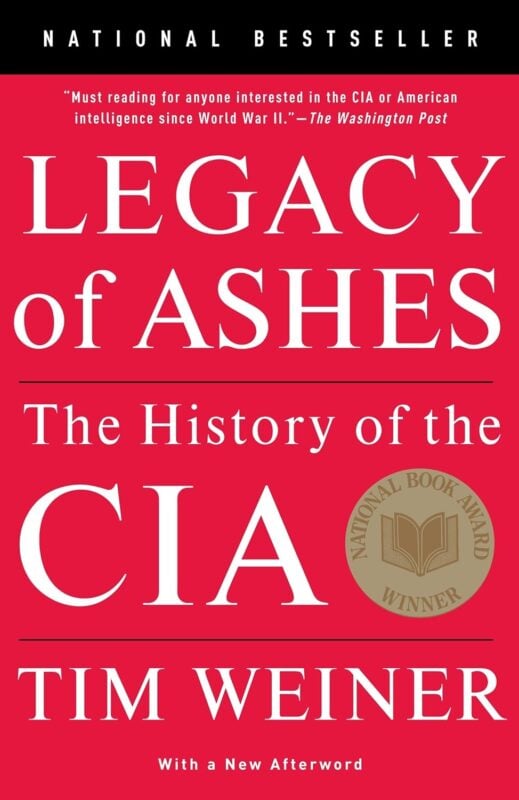
Legacy of Ashes: The History of the CIA by Tim Weiner opens with a stark claim: the United States, despite being the most powerful nation of the twentieth century, failed to build a competent intelligence service. Drawing from declassified documents, interviews, and decades of archival research, Weiner details how this failure unfolded across administrations, wars, and crises. From Truman to George W. Bush, each president relied on a secretive agency plagued by structural flaws, misjudgments, and politicized reporting.
The Truman Blueprint
President Harry Truman wanted information, not espionage. He envisioned a centralized service delivering global news summaries directly to his desk. But William J. Donovan, founder of the wartime OSS, proposed a more ambitious design: a permanent, aggressive foreign intelligence agency. Donovan’s vision gained traction not because Truman endorsed it, but because Cold War pressures demanded it. Truman disbanded OSS in 1945 but soon realized that without a coordinated service, America remained blind to postwar threats. Thus, the CIA emerged in 1947—created quickly, ambiguously, and underfunded, with covert action as its hidden mandate.
Cold War Calculus
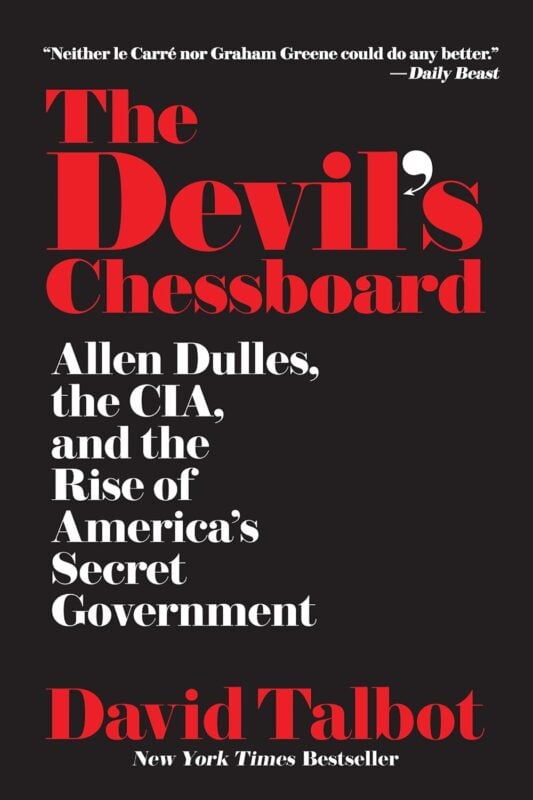
Under Dwight Eisenhower, the CIA expanded its covert reach. Operation Ajax in Iran and PBSUCCESS in Guatemala showcased the agency’s ability to topple governments. These missions succeeded tactically and cemented a model: influence foreign nations through subversion, bribes, and propaganda rather than warfare. But success bred overconfidence. The CIA began investing in psychological operations and paramilitary ventures, treating ideology as a battlefield. Leaders like Allen Dulles prioritized action over intelligence. They pursued results that would affirm American superiority, often at the expense of reliability and precision.
Bay of Pigs and the Illusion of Control
John F. Kennedy inherited a covert apparatus optimized for deniability and disruption. The Bay of Pigs invasion in 1961, aimed at ousting Fidel Castro, exposed the agency’s operational naivete and political miscalculation. Planners overestimated Cuban opposition to Castro, underestimated logistical challenges, and expected last-minute U.S. military intervention that never came. The debacle embarrassed Kennedy, who resolved to reevaluate the CIA’s role. He appointed John McCone as director, demanding analytic rigor. Yet the agency’s preference for clandestine action persisted, reinforcing internal cultures of secrecy and ambition.
Vietnam and the War on Truth
Under Lyndon Johnson, the CIA delivered intelligence filtered through political expectations. Analysts reported what superiors wanted to hear. Field data from Vietnam contradicted official optimism, but dissenting views rarely reached policymakers. Covert programs like Phoenix—designed to neutralize the Viet Cong infrastructure—blurred lines between intelligence and targeted killings. Internal debates about the war’s viability were suppressed. The CIA's credibility deteriorated as it appeared complicit in executive deception. The agency struggled to navigate truth in a war that defied clean victory, measurable progress, or moral clarity.
Domestic Scandal and External Blowback
The 1970s brought exposure. Revelations of assassination plots, mind control experiments, and illegal surveillance led to congressional investigations and the Church Committee. Public trust eroded as Americans saw the CIA as an unaccountable instrument of executive will. During Richard Nixon’s presidency, the agency resisted White House attempts to involve it in Watergate. Nixon's view of the CIA as a disloyal bureaucracy accelerated institutional decay. Successors Gerald Ford and Jimmy Carter struggled to rebuild its image. Legal constraints tightened, but the agency remained reactive, unsure whether its mandate centered on gathering intelligence or shaping outcomes.
Afghanistan and the Mirage of Triumph
The Soviet invasion of Afghanistan in 1979 seemed to offer strategic clarity. Under Ronald Reagan, the CIA armed and financed Islamist fighters—the mujahideen—through Pakistani intermediaries. Billions flowed into covert operations. American officials viewed the Afghan campaign as a chance to bleed the Soviet Union. When the Red Army withdrew in 1989, policymakers claimed victory. Yet the agency failed to anticipate that many of the fighters it empowered would later turn against the United States. The victory in Afghanistan did not reflect improved intelligence; it reflected strategic happenstance.
The Collapse of the Soviet Union
The CIA missed the biggest geopolitical shift of the century. Soviet collapse came without warning. Analysts failed to detect economic decay, political dissent, and structural weaknesses inside the USSR. Intelligence relied heavily on satellite imagery and signals intercepts—tools suited for military surveillance but incapable of gauging ideological fragility or elite fragmentation. Postmortem assessments revealed that CIA officers had access to the data but lacked interpretive frameworks. Cold War habits lingered even as the world changed.
A Shrinking Service in a Globalized World
In the 1990s, post–Cold War complacency set in. Budget cuts, hiring freezes, and bureaucratic sclerosis reduced the agency’s global presence. The Clinton administration emphasized technical intelligence, sidelining human sources. Field officers who remained operated with diminished resources and institutional support. When al-Qaeda struck U.S. embassies in Africa in 1998 and the USS Cole in 2000, the agency flagged rising danger but failed to influence policy. Fragmented coordination with the FBI and White House undercut its operational utility.
September 11 and Institutional Crisis
The attacks of September 11, 2001, marked a turning point. The CIA had identified al-Qaeda’s intent, monitored several hijackers, and issued internal alerts. But warnings went unheeded. Bureaucratic inertia and interagency mistrust left critical gaps. The Bush administration demanded rapid action. In response, the CIA assumed a paramilitary role. It ran black sites, used torture euphemized as “enhanced interrogation,” and rendered suspects across borders. In Iraq, it provided faulty assessments about weapons of mass destruction. Analysts faced immense pressure to conform. The agency’s reports shaped a war that would undermine its credibility and reshape global perception.
The Rise of the Drone and the Decline of Strategy
As the wars in Iraq and Afghanistan dragged on, the CIA pivoted toward targeted killings. Armed drones became its signature weapon. Operations in Pakistan, Yemen, and Somalia sought to decapitate terrorist networks. Kill lists replaced capture plans. Tactical effectiveness obscured strategic drift. The agency focused on killing adversaries faster than they could regenerate, a mission measurable in body counts but disconnected from political outcomes. Human intelligence receded further. Covert action became default policy.
Intelligence in a Democracy
Weiner’s research shows that the CIA has struggled to fulfill its core duty: providing presidents with honest, independent assessments of foreign realities. When the agency spoke truth to power, it faced isolation. When it echoed executive desires, it fostered disaster. Structural problems persist: politicized leadership, weak congressional oversight, and institutional cultures that reward conformity over insight. Intelligence demands epistemic humility, but the CIA’s culture incentivized confident assertion. Leaders feared irrelevance more than error.
The Cost of Secrecy
Every major intelligence failure had roots in secrecy. Closed loops formed when data, motives, and interpretations converged within insulated networks. Secrecy limited adversarial review, inhibited course correction, and shielded error. When the agency erred, it often buried findings. Operational momentum replaced deliberative judgment. Weiner shows that secrecy offered tactical advantage but undermined strategic clarity.
What Should Intelligence Do?
The book presses a central question: What is the proper mission of intelligence in a republic? Intelligence must inform action, but action must remain subordinate to democratic deliberation. Covert operations without public scrutiny risk turning republics into empires. Intelligence must forecast threats, but also interpret opportunities. It must serve elected officials, not manipulate them. Legacy of Ashes makes clear that intelligence is more than information. It is judgment under uncertainty, discipline under pressure, and responsibility without acclaim.
Why This History Matters
Understanding the CIA’s history means grappling with how nations perceive threats and respond to fear. It means asking what happens when institutions built for knowledge turn into engines of intervention. Weiner’s work shows that the agency’s trajectory mirrored America’s—expansive, idealistic, improvisational, and often reckless. The CIA was never an independent force; it was a mirror held up to presidential ambition, congressional neglect, and public indifference. The failures of intelligence were not merely bureaucratic—they were political, moral, and constitutional.
This history sharpens the stakes of today’s debates about surveillance, secrecy, and state power. Intelligence is not a tool of power. It is a test of character.