The Irregulars: Roald Dahl and the British Spy Ring in Wartime Washington
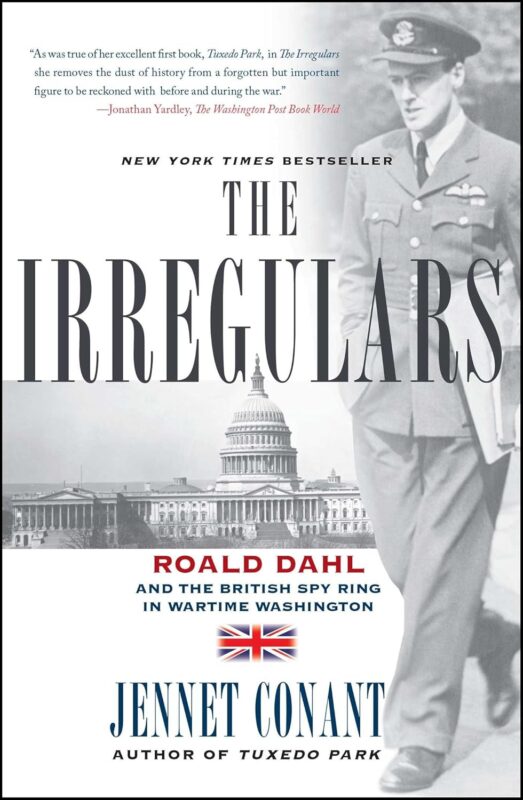
The Irregulars: Roald Dahl and the British Spy Ring in Wartime Washington by Jennet Conant recounts a crucial, clandestine episode in the global struggle against fascism, centering on a celebrated children’s author thrust into a world of espionage, high society, and political intrigue. Roald Dahl, known worldwide for his stories, served as an influential British intelligence operative in Washington, D.C., during World War II. Through this compelling biography, Jennet Conant reconstructs the underground campaigns, alliances, and personal exploits that shaped American intervention and the postwar intelligence landscape.
A Shadow Network in the Capital
British Security Coordination (BSC), directed by William Stephenson—codenamed “Intrepid”—built a far-reaching spy apparatus in North America. Churchill’s government tasked BSC to break through American isolationism, sway policymakers, and guide the United States toward decisive engagement against Nazi Germany. The BSC’s mission required secrecy, innovation, and relentless adaptation. From its headquarters in Rockefeller Center, BSC orchestrated sabotage, propaganda, and covert diplomacy with bold ambition. What operational strategies drove this extraordinary effort?
Espionage operated through relationships. British intelligence depended on charm, wit, and access to power. BSC recruited figures from outside traditional intelligence circles—writers, actors, journalists, and entrepreneurs—who could move easily among the political and social elite. In Washington, these “Irregulars” carried the spirit of Sherlock Holmes’s Baker Street helpers, approaching information-gathering with creative improvisation and discretion.
Roald Dahl’s Entry Into the Game
Dahl arrived in America as an RAF pilot-turned-diplomat, recovering from battle injuries and searching for purpose. His height, striking appearance, and natural charisma distinguished him in diplomatic circles. Officially an assistant air attaché, Dahl quickly encountered the BSC’s network and recognized his own talents suited the subtle arts of influence and seduction. He entered the drawing rooms of power brokers, publishing magnates, and the First Lady herself. As he navigated Washington society, Dahl reported sensitive conversations, political gossip, and strategic intelligence to his BSC contacts.
His ability to ingratiate himself with major figures—Vice President Henry Wallace, Secretary of the Treasury Henry Morgenthau, heiress Evalyn Walsh McLean, and congresswoman Clare Boothe Luce—provided unique opportunities to shape perceptions and relay actionable intelligence. In cultivating Charles Marsh, a Texas newspaper tycoon, Dahl secured entry into circles where policy and opinion converged. By leveraging these relationships, Dahl advanced the BSC’s campaign to overcome resistance within the U.S. government and public.
Social Warfare and Propaganda
Washington during wartime radiated prosperity, optimism, and uncertainty. For Americans, the conflict felt distant, and many prioritized comfort and routine over the grim realities in Europe. BSC and its agents penetrated this social sphere, deploying sophisticated propaganda and influence operations. They placed stories in major newspapers, persuaded leading columnists to amplify the British cause, and countered narratives of American non-intervention. Public opinion in the United States, deeply divided by isolationist currents, proved vulnerable to orchestrated persuasion.
BSC agents, many drawn from literary and creative backgrounds, mastered the mechanisms of American media. They recruited Drew Pearson, Walter Lippmann, and Walter Winchell—columnists with national reach—ensuring that stories favorable to Britain gained traction. This was not mere information dissemination; BSC shaped public emotion, framed the stakes of the conflict, and laid psychological groundwork for political change. How do narratives constructed in salons and newsrooms reshape the destiny of nations?
Roald Dahl’s unique talents as a writer gave him an edge in crafting persuasive messages and identifying vulnerabilities in opponents’ rhetoric. His reports, laced with detail and wit, offered the BSC not only valuable information but strategic recommendations for exploiting opportunities. British intelligence’s blending of social infiltration and mass communication proved decisive in turning the tide of American opinion.
Amateur Spies and Professional Outcomes
The Irregulars in Conant’s account exemplify the improvisational spirit required in modern intelligence. Most lacked formal training in espionage. Noël Coward, a playwright and actor; Ian Fleming, later creator of James Bond; David Ogilvy, future advertising executive—all entered intelligence through talent, audacity, and social mobility rather than formal vetting. Their skills in observation, conversation, and persuasion allowed them to adapt rapidly to the unpredictable demands of clandestine work.
Dahl’s irreverence and iconoclasm appealed to Americans wary of traditional British aristocracy. He skirted the edges of protocol, often clashing with his embassy superiors while endearing himself to American hosts. His social agility and confidence allowed him to survive and thrive in a world where shifting alliances and rapid adaptation meant the difference between success and exposure.
BSC’s leadership recognized that influence flowed through human networks as much as bureaucratic channels. They empowered their agents to innovate, to improvise, and to seize opportunity wherever it emerged. The convergence of talent and timing created an “invisible fortress” of support for Britain within American political and social life.
Foundations of the Modern Intelligence Partnership
The BSC’s activities in Washington catalyzed the formation of the U.S. Office of Strategic Services (OSS), the forerunner of the CIA. British operatives cultivated relationships with key figures in Roosevelt’s administration, persuading them of the necessity for a unified, coordinated intelligence service. William “Wild Bill” Donovan, chosen to lead the OSS, owed much of his vision and access to BSC’s example and advocacy.
As Churchill pressed Roosevelt for deeper cooperation, BSC demonstrated the strategic value of intelligence sharing, joint operations, and flexible, deniable intervention. The alliance forged during these years endured through the Cold War, shaping the architecture of global intelligence for generations. Yet the methods and moral ambiguity embedded in these origins raised enduring questions. How far should democracies go in the service of survival?
Ethics and Legacy of Espionage
Jennet Conant documents both the audacity and controversy surrounding the BSC. British operatives wielded extraordinary powers, employing subversion, sabotage, and manipulation with little oversight or accountability. Official records, often classified or suppressed, left the story open to mythmaking, debate, and historical contest. Stephenson, the “Quiet Canadian” at the center of BSC, later became a figure of legend and dispute, his exploits celebrated and criticized in equal measure.
The ethical boundaries of the BSC’s campaign remain sharply contested. Agents co-opted journalists, orchestrated smear campaigns, and plotted against both Nazi sympathizers and legitimate dissenters. Their actions, driven by the urgent needs of war, laid the foundation for the postwar intelligence community but also complicated U.S.-British relations and fostered an enduring culture of secrecy. Does the justification of means by ends erode the foundations it seeks to defend? Can the public ever fully reconcile the necessity of deception with democratic ideals?
Roald Dahl, after the war, became a fabulist in the literary sense, channeling his experiences in intelligence into fiction. Alongside Fleming and Ogilvy, Dahl transformed the arts of persuasion, narrative, and myth into peacetime pursuits—yet the boundaries between fact and fiction, story and truth, remained blurred by their wartime service.
Original Sources and Narrative Tension
Conant’s account draws on newly discovered correspondence between Dahl and Marsh, internal embassy memos, diaries, and interviews with key participants. The narrative assembles firsthand voices, candid reflections, and strategic calculations, exposing the personal dimensions of espionage and the human stakes at the heart of political conflict.
The unreliability of memory, the pressure of secrecy, and the incentives for self-mythologizing make historical reconstruction difficult. Spies emerge from war practiced in deception, storytelling, and the art of omission. Even decades later, the Official Secrets Act and lingering loyalties inhibit full disclosure. Yet the evidence reveals a network animated by personal ambition, loyalty, improvisation, and—at its core—a drive to shape the fate of nations.
Enduring Impact on World Affairs
The Irregulars and the British Security Coordination did not simply influence the outcome of World War II; they redefined the role of intelligence, propaganda, and personal relationships in modern statecraft. Their efforts redirected the trajectory of American engagement, established the structures of transatlantic intelligence, and seeded both the alliances and controversies that persist in international affairs. The story resonates wherever democracies confront existential threats and must choose between transparency and survival.
The personal journey of Roald Dahl, from fighter pilot to literary icon, mirrors the unpredictable arc of history itself. Conant’s detailed narrative anchors this story in place, time, and personality, making the stakes and struggles palpable for the reader. The clandestine battles fought in Washington’s parlors and offices echo across the decades, reminding us that the boundaries between war and peace, truth and fiction, remain ever unstable—and that the decisions made in shadowed rooms shape the course of history as surely as the movements of armies.
How do personal relationships transform global events? In The Irregulars, Jennet Conant demonstrates that the answer lies at the intersection of talent, opportunity, and the relentless pursuit of influence—an answer as relevant today as it was in the desperate spring of 1942.