New Lies For Old
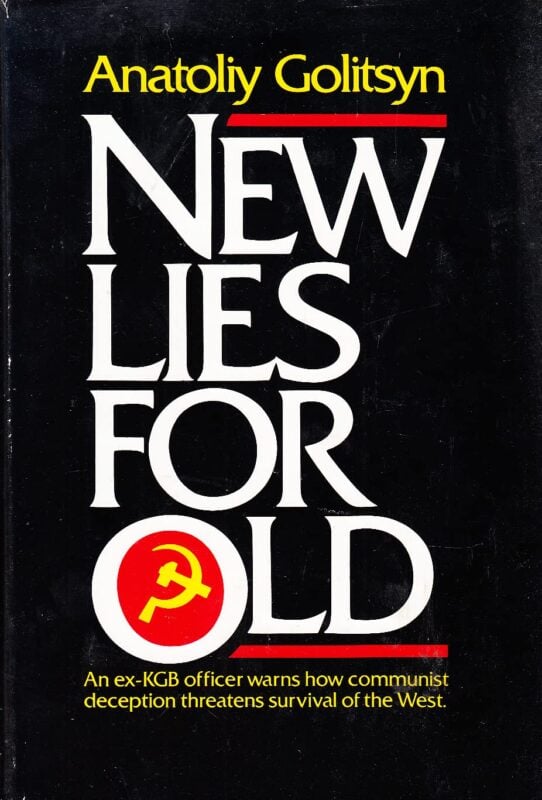
New Lies For Old: The Communist Strategy of Deception and Disinformation by Anatoliy Golitsyn reveals a framework in which Soviet and Communist bloc regimes used deception as a core strategy, executing complex disinformation campaigns designed to shape global events and manipulate Western analysis. Golitsyn, drawing on years of insider experience in Soviet intelligence, develops a methodology that traces the origins, structures, and operational tactics of this long-range program. Through detailed analysis, he advances a view of the Cold War marked by calculated strategic theater, where information operations create decisive advantages and alter the perceptions and decisions of adversaries.
Origins and Intentions of Communist Disinformation
The book situates its thesis within a historical narrative. Soviet leaders, recognizing that Western analysts depend on visible, documentable facts, imposed systems that filter and distort all outward-facing information. The regime uses its control over media, political processes, and intelligence services to engineer the image of internal evolution, crisis, or strength as needed to advance strategic goals. The institutionalization of disinformation forms a permanent feature of Communist political warfare. State power flows from the ability to decide what the outside world believes about events inside the bloc.
Golitsyn roots Communist disinformation in Marxist-Leninist doctrine, emphasizing that dialectical methods guide both overt and covert activity. This philosophical basis does not merely inform party ideology but shapes the operational reality of Soviet intelligence, where every action is justified by its contribution to the long-term revolutionary process. By organizing society as a closed system, the regime severs the normal links between cause and effect that guide external observation, then weaponizes this opacity through active measures and calculated leaks.
Western Vulnerability and Methodological Errors
Golitsyn exposes the systemic vulnerability of Western institutions. Democratic systems, with their culture of transparency, legal accountability, and open media, generate analysis from a proliferation of sources. Yet this openness proves susceptible to manipulation. The book highlights recurring patterns—acceptance of staged “splits” within the Communist movement, over-reliance on apparent dissident testimony, and misreading of power struggles as signs of liberalization or weakening.
The Communist apparatus, recognizing Western hunger for inside information, manufactures opposition groups, dissident movements, and staged disputes, each crafted to draw the West into a false interpretive framework. Golitsyn catalogs cases where Western policy veers based on such planted signals, granting the Soviet bloc leverage in international negotiations, propaganda campaigns, and intelligence operations. He characterizes this phenomenon as strategic disinformation—a continuous, evolving program intended to distort Western strategy by shaping the very sources it relies on.
Patterns of Deception: Weakness, Evolution, Facade, and Strength
Communist regimes design their disinformation along two principal axes: projecting either weakness and evolution or constructing a facade of strength. In times when the long-term policy requires reassurance or strategic patience from adversaries, the regime presents an image of internal crisis, reform, or ideological moderation. Western observers see a society in flux, a party divided, or a leadership faltering. Concessions and reforms appear authentic, fueling hopes for change and reducing vigilance. The NEP (New Economic Policy) under Lenin serves as Golitsyn’s archetypal case, with liberalization used as camouflage while internal consolidation proceeds.
Conversely, when internal crisis looms, or when the projection of unity will deter intervention, the regime adopts the “facade and strength” model. Outwardly, the state displays impenetrable unity, economic progress, and ideological certainty. The media trumpet successes, statistics swell, and propaganda floods every channel. Meanwhile, access for foreign journalists shrinks, and any evidence of instability is buried under managed events and manufactured data.
Manipulation of Opposition: The Trust Operation
Golitsyn provides detailed accounts of disinformation operations engineered by Soviet intelligence, including the legendary Trust operation of the 1920s. Soviet security services created a false anti-Soviet resistance, attracting real dissidents and emigre support, then channeled their efforts into dead ends while simultaneously harvesting intelligence. This operation extended beyond mere counterintelligence; it shaped the perceptions of Western intelligence agencies, directed émigré policy, and neutralized threats before they could organize effective opposition. By demonstrating control over both real and simulated adversaries, the regime mastered the dynamics of perception and response.
By repeating this method—fostering controlled opposition, generating false leads, and manipulating narratives—the Soviet apparatus protected its internal stability while exporting discord and confusion. Golitsyn argues that this tradition continues, adapting to each historical moment and absorbing lessons from both successes and failures.
Staged Disputes and International Strategy
The book asserts that major events often seen as ideological or geopolitical ruptures were in fact coordinated elements of strategic deception. The Soviet-Yugoslav “split,” the Sino-Soviet schism, and the rifts with Albania and Romania receive forensic analysis. Golitsyn details evidence, patterns, and operational anomalies that support his claim: these splits allowed the Communist bloc to project diversity, flexibility, and internal dissent, thereby disarming Western critics and winning over wavering allies or third-world states.
Disinformation also extends into Western domestic politics. Soviet and allied intelligence agencies invest resources in exploiting the openness of Western societies, infiltrating media, influencing public debate, and shaping academic discourse. Golitsyn describes the emergence of Eurocommunism as a deliberate campaign to project independence and moderation among Western Communist parties. By cultivating the appearance of pluralism and democratic adaptation, these parties gain legitimacy and access, while covertly maintaining alignment with Soviet strategic aims.
Methodological Revolution: The Dialectical Approach
Golitsyn critiques Western methodology as reactive, source-driven, and insufficiently dialectical. He advocates a new analytic method that integrates the Communist commitment to long-term, strategic dialectics. Only by tracing apparent contradictions, cycles, and reversals back to strategic intent can Western analysts pierce the veil of disinformation. The book insists that intelligence and academic disciplines reform their approaches, embedding an awareness of calculated deception into every assessment.
Golitsyn’s alternative methodology rejects the temptation to accept phenomena at face value. He urges a constant search for hidden coordination, long-term objectives, and the operational logic of the regime. By reconstructing Communist policy as a sequence of adaptive campaigns, each shaped by dialectical thought and operational discipline, the West can begin to detect the underlying reality beneath layers of manufactured crisis, reform, or conflict.
Consequences for Western Policy and Security
The book argues that the cumulative effect of decades of disinformation has warped Western policy formation. Decision-makers, relying on distorted assessments, fail to respond effectively to strategic shifts, underestimating threats or misjudging opportunities. Disinformation infiltrates the highest levels, shaping diplomatic initiatives, economic policy, and military posture. Western security, in Golitsyn’s analysis, depends on a fundamental reevaluation of its premises about Communist behavior.
He proposes concrete steps: Western governments must reassess their sources, revise their analytic frameworks, and build institutions capable of sustained counter-disinformation. Defense alliances require reinforcement, intelligence services need reorientation, and policymakers should assume the likelihood of active deception in any engagement with Communist states. This is not merely a matter of tactics, but of strategic survival.
Long-Term Vision and the Future of Communist Strategy
Golitsyn extends his analysis beyond the historical moment, projecting the evolution of Communist strategy into new phases. As regimes adapt to changing global contexts, their operational art evolves. The strategic objective—the expansion of Communist influence and the eventual convergence of systems under Communist terms—remains constant. The methods, however, shift with the requirements of the international situation, technological advances, and the lessons learned from Western response.
He warns that apparent periods of détente, reform, or liberalization may signal new stages in the dialectical campaign, rather than genuine transformation. By anticipating these shifts and embedding skepticism into the analytic process, the West can regain strategic initiative. Golitsyn closes with a call to vigilance, insisting that the preservation of free societies depends on their capacity to recognize, understand, and ultimately defeat the machinery of organized deception.
Implications for Research, Scholarship, and Public Understanding
The book’s challenge extends to the academic and public spheres. Sovietology, Kremlinology, and the broader field of Communist studies must move beyond source-driven empiricism. Scholars, journalists, and analysts need to develop interdisciplinary, historically informed frameworks that foreground deception as a structural component of Communist governance. The operational logic of disinformation demands methodological innovation—pattern recognition, strategic inference, and a willingness to revise settled interpretations.
Public debate benefits from this perspective by acquiring the tools to assess international developments critically. Golitsyn encourages readers to treat high-profile events, leadership changes, and policy shifts as possible components of a strategic whole. The book does not foster cynicism; instead, it advocates disciplined curiosity, strategic logic, and intellectual rigor.
Conclusion: Strategy as Destiny
The Communist strategy of deception and disinformation, as articulated by Anatoliy Golitsyn, constitutes a distinct mode of political warfare. It emerges from ideological commitment, institutional capability, and historical learning. This strategy shapes not just events, but the frameworks through which adversaries perceive and respond. By dissecting its mechanisms, tracing its lineage, and exposing its operational art, Golitsyn provides a roadmap for analysts, policymakers, and citizens. The book stands as a detailed argument for methodological vigilance and strategic adaptation—a manual for seeing through the labyrinth of appearances that define the global struggle for power and influence.

About the Book
https://youtu.be/uf1upHHvY3c