The Secret Founding of America

The Secret Founding of America by Nicholas Hagger reconstructs the American story from the first Atlantic plantings to the constitutional settlement of 1787, then follows the consequences of that settlement into nineteenth- and twentieth-century state power. Hagger presents America as a terrain contested by three public religious formations—Separatists, Puritans, and Catholic colonizers—alongside a fourth formation that operates through lodges, symbols, and networks: Freemasonry, joined later by Enlightenment Deism and an Illuminati strain associated with Adam Weishaupt.
A Skeleton, a Fort, and a Founding Question
Hagger opens with an investigative narrative anchored in Jamestown and the archaeology of the early seventeenth century. He situates his approach through Bartholomew Gosnold, the 1602 voyager who named Cape Cod and Martha’s Vineyard and then acted as a “prime mover” for the 1606–07 venture that produced the Jamestown settlement. Hagger frames John Smith as a secondary figure during the venture’s early months and builds his case through local East Anglian research, Otley Hall in Suffolk, and Jamestown Rediscovery archaeology under Dr William Kelso. Kelso’s recovery of the Jamestown Fort and hundreds of thousands of artifacts drives a central question: who organized the machinery that moved ships, people, provisions, and purpose across the Atlantic in 1607? Hagger treats the search for Gosnold’s burial and contested DNA verification as more than an archaeological episode; it becomes a method for asking how America’s public origin story forms, how it selects heroes, and how it obscures planners, patrons, and organizing ideologies.
The Planters and the Visible Religious Foundations
Hagger’s first major movement maps the initial coastal settlements through religious and imperial identities. He recounts the Leiden Separatists’ trajectory into the Mayflower voyage: William Bradford’s community, John Carver’s leadership, Captain Christopher Jones’s command of the Mayflower, and the uneasy coalition of “Saints” and “Strangers” forged under pressure. He tracks the repair failures of the Speedwell, the delayed departure, the Cape Cod landfall, and the Mayflower Compact’s creation of a “Civil Body Politic,” then follows the explorations, confrontations with native groups, Plymouth Rock’s storm shelter, and the lethal first winter that halved the settlers through disease and scurvy. He locates political form inside covenant form by treating the Compact as a civil translation of church covenants, then carries the story into the peace with Massasoit, Squanto’s agricultural guidance, and the harvest celebration that later hardens into Thanksgiving tradition.
In Massachusetts Bay and Connecticut, Hagger turns to Puritan governance as a deliberate fusion of church authority and civil authority. He centers John Winthrop’s sermon A Modell of Christian Charitie and its “Citty upon a Hill” frame, then follows the Massachusetts Bay Company’s charter dynamics, the Cambridge Agreement, the relocation of corporate control to New England, and the emergence of representative mechanisms inside a religious franchise restricted to church members. He links the colony’s constitutional experiments to later American constitutional language, then follows dissent and discipline through figures such as Anne Hutchinson and Roger Williams, whose arguments about magistrates and religion foreshadow later church–state disputes. He extends the planting story through the Connecticut Fundamental Orders drafted with Roger Ludlow’s legal training and through the violence of the Pequot War under Captain John Mason, which Hagger treats as a sign of how theological certainty can drive state force.
Hagger also keeps the Catholic imperial thread visible. He situates Spanish Florida as a Catholic venture that competes with English plantings, then positions French and Dutch entries—New Netherland under the Dutch West India Company, the fur commerce described through Isaak de Rasières, and early trade contacts with Plymouth—as part of a wider struggle for the Atlantic littoral.
The Hidden Founders and the Lodge Infrastructure
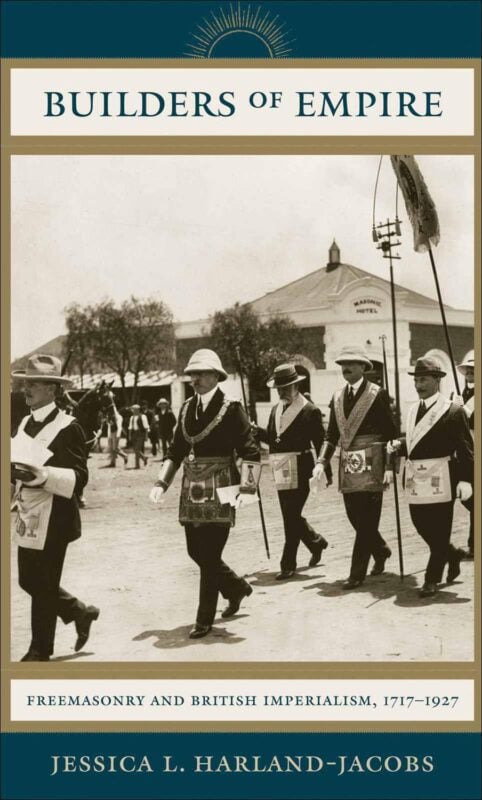
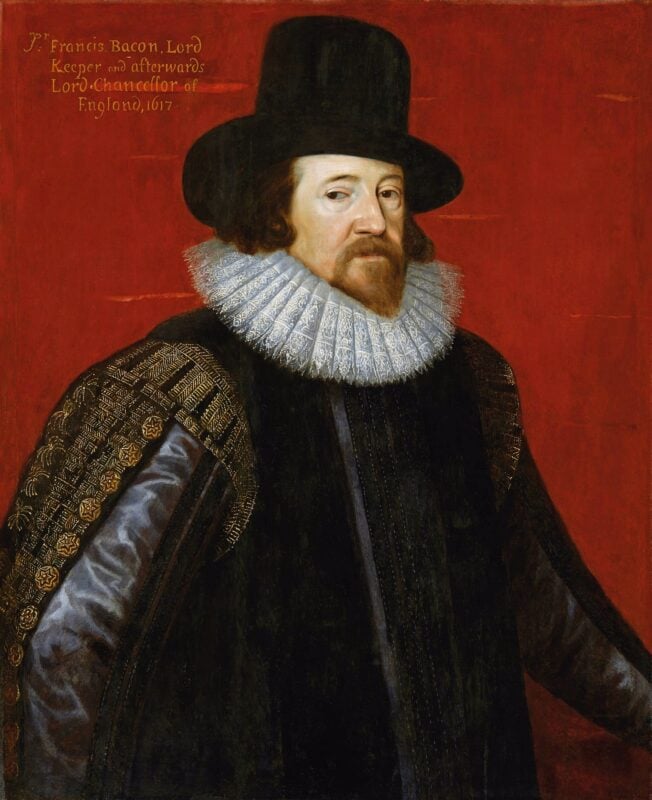
Hagger’s second movement asserts a deeper organizing layer that operates alongside religious planting: Freemasonry as a network that supplies hierarchy, confidentiality, ritual cohesion, and political coordination in a society that lacks inherited European structures. He traces purported origins through claims about ancient lineages, then narrows to English developments linked to Francis Bacon and to forms of esoteric, Rosicrucian, and Templar-inflected currents that, in his telling, move through court politics and into colonial ventures. He frames lodges as meeting-places that allow dissenters to exchange ideas, build alliances, and organize resistance under conditions where colonial authorities punish overt defiance.
From that base, Hagger shifts to the constitutional era. He presents Freemasonry as present by the time of the Boston Tea Party and treats it as a practical mechanism for coordinating revolutionary action. He then introduces Enlightenment Deism as the intellectual solvent that reshapes the founders’ view of Christianity, clergy authority, and the role of churches in government. He names Benjamin Franklin, John Adams, Thomas Jefferson, Thomas Paine, James Madison, George Washington, and Alexander Hamilton as central figures who, in his account, pursue religious liberty so that reason can identify truth. He links that commitment to a constitutional choice: the framers construct a state that stands apart from church control so that government protects competing sects while refusing to privilege Catholicism, Anglicanism, or Puritan theocracy. Hagger anchors this stance in Madison’s assertion that religion and government retain greater purity when they mix less, and he pairs it with Paine’s attack on church–state entanglement as a corrupting bond. He also describes Scottish Enlightenment pathways into colonial education, naming Francis Hutcheson, Thomas Reid, Dugald Stewart, David Hume, Adam Smith, Donald Robertson, and John Witherspoon as key transmitters of moral philosophy, resistance theory, and common-sense reasoning into American leadership formation.
German Illuminati and the Architecture of Symbols
Hagger’s narrative intensifies when he introduces the Bavarian Illuminati founded in 1776 and led by Adam Weishaupt. He describes Weishaupt as moving through Jesuit formation, legal training at Ingolstadt, and revolutionary contact networks that include a claimed meeting with Robespierre. Hagger then connects Weishaupt’s strategy to infiltration: Weishaupt joins the Masonic lodge Theodore of Good Counsel in Munich, then drives a merger strategy that conceals Illuminati aims inside existing lodge structures. Hagger treats secrecy as a governing tactic, then follows the movement of symbols into American public iconography.
A key passage centers on a seal design linked to Weishaupt’s program: a 13-layer pyramid with a missing capstone, a radiant triangle containing an all-seeing eye, and the date 1776. Hagger reads the pyramid’s 13 layers as a deliberate mapping onto the 13 colonies, the phrases Annuit Coeptis and E Pluribus Unum as coded references to initiation degrees and Templar memory, and the phoenix as an emblem of Atlantis reborn in the New World. He frames this as an ideological blueprint that aims at union, expansion, and a longer arc of governance beyond the immediate revolution. He extends the Illuminati theme through claims about later initiations of Franklin, Jefferson, Adams, and Paine after the Revolution, then treats their later intellectual climate as a channel through which Illuminati-inflected ideals shape constitutional aftermath and the structure of the early republic.
Consequences, State Machinery, and a Continuing Agenda
Hagger’s third movement argues for an enduring Masonic imprint on American governance, especially through state offices, military influence, judicial networks, and public rituals. He emphasizes Washington’s lodge record and correspondence with grand lodges, including exchanges with the Grand Lodge of Massachusetts signed by Paul Revere and the Masonic funeral rites conducted at Mount Vernon in December 1799. He treats oath-taking on Masonic Bibles as a sign of institutional continuity and lists later presidents whom he associates with Masonic degrees and lodge affiliations, including Jefferson, Madison, Monroe of Williamsburg Lodge No. 6, Jackson of Harmony Lodge No. 1 in Tennessee, Polk of Columbia Lodge No. 31, Buchanan of Lodge No. 43 in Pennsylvania, Andrew Johnson of Greenville Lodge No. 119 with Scottish Rite advancement, and others.
Hagger then anchors the post–Civil War segment in Andrew Johnson, Albert Pike, and the consolidation of Scottish Rite influence. He describes Johnson’s reception of Scottish Rite degrees at the White House and frames Pike as a key doctrinal voice through Morals and Dogma. He cites a later Pike letter circulated to multiple Supreme Councils that frames a dualistic theology and names Lucifer as a superior principle of light, then interprets this as a concealed doctrine restricted to higher degrees. He connects this doctrinal claim to a broader argument: lodge structures unify federal power after the Civil War and extend control through industrial expansion and bureaucratic consolidation.
The final chapter carries Hagger’s thesis into contemporary geopolitics and global governance. He frames the modern United States as the apex of national power while he questions how much independent agency presidents retain amid behind-the-scenes agendas. He introduces “the Syndicate” as an outgrowth of the constitutional founding and Deist leadership culture, then claims it seeks a United States of the World built through regional blocs that absorb nation-states into federal-continental structures. He situates this within late twentieth- and early twenty-first-century policy debates by referencing George W. Bush’s War on Terror, Bush’s alignment with ideas associated with Natan Sharansky’s The Case for Democracy, and the influence of neo-conservative circles and Middle Eastern oil strategy. Hagger presents this as the mature expression of a long arc that begins with planting logistics, grows through lodge-based revolutionary coordination, and hardens into institutional routines of power, symbol, and ambition.
Documentary Spine from Covenant to Constitution
Hagger closes by supplying constitutional and proto-constitutional documents as appendices, creating a continuous documentary trail from Winthrop’s Modell of Christian Charitie and the Fundamental Orders through Anderson’s Constitutions (1723), the Albany Plan of Union (1754), the Declaration of Independence, the Articles of Confederation, the Federal Constitution, and the Bill of Rights. He positions these texts as a spine that lets readers track how religious covenant language, Enlightenment reasoning, and organizational frameworks converge into a durable state form.