Restoring the Temple of Vision: Cabalistic Freemasonry and Stuart Culture
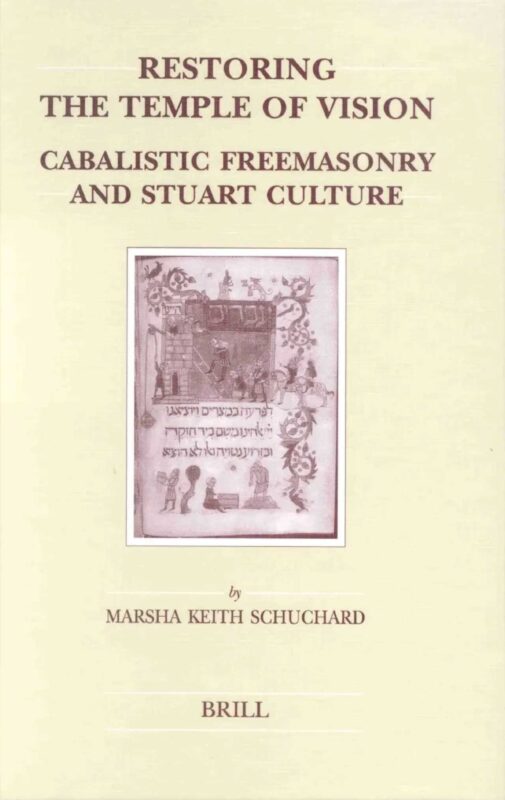
Restoring the Temple of Vision: Cabalistic Freemasonry and Stuart Culture by Marsha Keith Schuchard investigates the historical formation of cabalistic Freemasonry within the political, intellectual, and religious culture of Stuart Britain, tracing a complex network of Jewish mysticism, Rosicrucian symbolism, architectural traditions, and dynastic politics that shaped early modern European esoteric culture. The study reconstructs a long historical continuum that connects the symbolism of Solomon’s Temple, medieval stonemason guild traditions, Jewish cabalistic visualization, and the ideological programs of the Stuart monarchy, revealing how architecture, ritual, and political theology converged within secretive fraternal institutions.
Origins of Temple Mysticism and Architectural Vision
Schuchard establishes a historical foundation that reaches back to ancient Israel and the symbolic traditions surrounding Solomon’s Temple. Jewish architectural mysticism created a conceptual model in which sacred structures mirrored the cosmos, and builders functioned as mediators between divine order and physical space. Biblical accounts describe master craftsmen such as Bezalel and Hiram Abif as figures endowed with divine wisdom who translated celestial designs into material architecture. This sacred craft linked geometry, metallurgy, and ritual knowledge with priestly traditions and esoteric cosmology.
Jewish guild traditions organized skilled artisans into tightly structured fraternities that preserved ritual knowledge, technical expertise, and symbolic teachings about temple construction. Builders learned sacred measurements, symbolic ornamentation, and cosmological correspondences embedded in architectural forms. Such guilds cultivated the belief that the temple represented a microcosm of the universe, with its measurements and materials expressing divine harmony.
Temple symbolism therefore formed an enduring intellectual structure that later reappeared in medieval building guilds, Renaissance mystical philosophies, and early modern Masonic rituals.
Jewish Visionary Traditions and Mystical Architecture
The book presents Jewish mystical traditions as a crucial source for later Masonic symbolism. Texts such as Ezekiel’s prophetic vision of a reconstructed temple introduced elaborate architectural imagery tied to divine revelation and cosmic order. Jewish mystics developed techniques of visualization that allowed initiates to imagine heavenly structures and divine presences through meditative contemplation.
Cabalistic literature preserved these visionary practices through symbolic diagrams, sacred numerology, and ritual language. Visualization functioned as a method for approaching divine knowledge. Practitioners imagined the temple structure, celestial spheres, and divine emanations as interconnected layers of sacred architecture.
Schuchard interprets these traditions as intellectual ancestors of the “temple symbolism” that later dominated Freemasonry. The lodge room itself reproduced the conceptual framework of Solomon’s Temple, turning ritual space into a symbolic reconstruction of sacred architecture.
Jewish Craft Guilds and the Transmission of Sacred Knowledge
Ancient Jewish craftsmen operated within guild structures that resembled later European building fraternities. Guild membership required apprenticeship, mastery of technical skills, and familiarity with symbolic traditions associated with temple construction. These guilds preserved ritual secrecy and ceremonial language that marked stages of advancement.
Jewish artisans also interacted with broader Mediterranean intellectual traditions. Greek Pythagorean mathematics influenced Jewish architectural theory, especially through numerical symbolism and geometric design. Philosophers such as Philo of Alexandria connected creation, architecture, and cosmic harmony through numerical relationships that echoed both Jewish and Greek traditions.
Within this environment Jewish builders integrated mathematical knowledge with mystical symbolism. Sacred numbers, geometric forms, and cosmological concepts shaped temple design and ritual imagination.
Medieval Continuities Between Jewish Mysticism and Masonry
Schuchard argues that medieval stonemason guilds inherited elements of Jewish temple symbolism through cultural transmission across the Mediterranean world. Gothic cathedral builders employed geometric symbolism, sacred proportions, and symbolic architectural features that mirrored earlier temple traditions.
These guilds organized themselves into fraternities that guarded professional secrets and ritual traditions. Apprentices advanced through stages of instruction while masters preserved specialized knowledge of design techniques, structural mathematics, and symbolic ornamentation.
The concept of the “temple” remained central within this tradition. Builders viewed cathedrals as sacred structures reflecting divine harmony, and guild rituals preserved symbolic references to the temple of Jerusalem.
In this cultural environment architectural knowledge, mystical symbolism, and ritual secrecy converged into a powerful craft identity that later informed Freemasonry.
The Scottish Context and the Rise of Masonic Culture
The narrative shifts toward medieval and early modern Scotland, where Schuchard identifies a distinctive environment that preserved temple symbolism and architectural mysticism. Scottish stonemason lodges developed complex organizational structures that combined practical building knowledge with symbolic traditions connected to Solomon’s Temple.
Scottish builders employed visualization techniques related to the classical “Art of Memory,” a system that trained individuals to store knowledge through imagined architectural spaces. Practitioners mentally constructed symbolic buildings and populated them with images that represented intellectual concepts.
These mnemonic systems resembled cabalistic visualization practices that imagined sacred architecture as a pathway to spiritual insight. Scottish lodges therefore became environments where architectural knowledge, symbolic ritual, and mystical contemplation intersected.
The Stuart Monarchy and the Politics of Temple Restoration
Schuchard places the Stuart dynasty at the center of the transformation of these traditions into a broader cultural movement. Stuart monarchs embraced the symbolism of Solomon as an ideal king who united political authority with sacred wisdom.
James VI of Scotland and I of England cultivated an image as a “Mason King” whose rule embodied the restoration of sacred harmony within the realm. Court ceremonies, architectural projects, and intellectual patronage reinforced this symbolic identity.
Royal masques, elaborate theatrical spectacles staged at court, frequently incorporated temple imagery, Rosicrucian symbolism, and hermetic philosophy. Architects, engineers, and scholars associated with the court translated mystical ideas into visual performances that dramatized themes of cosmic order and political reconciliation.
Through these spectacles the Stuart court transformed temple symbolism into a public expression of royal ideology.
Rosicrucian Thought and Esoteric Networks
The early seventeenth century witnessed the emergence of Rosicrucian manifestos that described a hidden brotherhood devoted to spiritual reform and scientific knowledge. Schuchard situates Rosicrucian thought within the same intellectual environment that shaped cabalistic Freemasonry.
Rosicrucian writers promoted the vision of a universal reformation that combined alchemy, cabalistic mysticism, and natural philosophy. Scholars across Europe interpreted these texts as invitations to join a spiritual fraternity dedicated to knowledge and harmony.
Members of the Stuart intellectual circle embraced these ideas, integrating them with existing traditions of temple symbolism and Masonic craft identity.
The resulting synthesis produced an intellectual culture in which architecture, science, mysticism, and politics formed a single symbolic framework.
Freemasonry, Science, and the Royal Society
Schuchard also explores the relationship between early Freemasonry and the emerging scientific community of seventeenth-century England. Intellectuals involved in natural philosophy frequently participated in Masonic or Rosicrucian networks that encouraged collaboration across religious and national boundaries.
These networks contributed to the intellectual environment that later produced the Royal Society. Scientific experimentation, architectural design, and symbolic ritual all drew upon shared traditions of mathematical harmony and cosmological order.
In this context Freemasonry functioned as both a professional fraternity and a philosophical society that promoted intellectual exchange and spiritual inquiry.
Jacobite Exile and the Expansion of Masonic Traditions
The political upheavals of the late seventeenth century transformed these traditions. The deposition of James II during the Glorious Revolution forced Stuart supporters into exile across Europe.
Jacobite refugees carried with them Masonic rituals, temple symbolism, and cabalistic philosophies developed during the Stuart era. Lodges founded by these exiles in France, Scandinavia, and other regions became centers for the continuation of Stuart-inspired esoteric traditions.
Within these lodges Masonic ceremonies incorporated elaborate theatrical elements, symbolic architecture, and cabalistic teachings that preserved the intellectual heritage of Stuart culture.
These diaspora communities shaped the evolution of high-degree Masonic systems that later spread across Europe and the Americas.
The Cultural Legacy of Cabalistic Freemasonry
Schuchard concludes by presenting cabalistic Freemasonry as a cultural phenomenon that united multiple intellectual traditions. Jewish mysticism, Renaissance hermetic philosophy, medieval craft guilds, and Stuart political ideology merged into a symbolic system centered on the restoration of a visionary temple.
This symbolic temple represented spiritual knowledge, religious tolerance, and intellectual collaboration. Masonic ritual dramatized the reconstruction of this sacred structure through ceremonies that combined architectural imagery, biblical symbolism, and philosophical teachings.
The legacy of these traditions extended far beyond seventeenth-century Britain. Writers, artists, and philosophers throughout Europe engaged with the symbolic language of temple restoration and mystical architecture.
Through its reconstruction of hidden networks of scholars, artisans, and political actors, the book presents Freemasonry as a dynamic cultural force that shaped early modern intellectual history and preserved ancient traditions of visionary architecture within modern Western thought.