Ordo ab Chao: Volume Three: Synarchy

Ordo ab Chao Volume Three Synarchy by David Livingstone unveils a panoramic historical narrative that links mystical ideologies, secret societies, and geopolitical strategies in a coherent, assertive thesis of elite coordination across centuries. The book constructs its case through genealogical networks, ideological affiliations, and symbolic programs that converge in a worldview shaped by synarchist ambition. Saint-Yves d’Alveydre’s Synarchy provides the ideological grammar, while the unfolding of events reveals the methodical application of that grammar to history’s most consequential institutions.
The Machinery of Synarchy
Saint-Yves d’Alveydre conceptualized Synarchy as a hierarchical, occult-driven political order that reconciles all ideological oppositions into an elite-directed harmony. His influence flowed through European courts, carried by his marriage into the House of Keller and alliances with Russian and Danish royalty. These dynastic connections gave him access to figures such as Tsar Alexander III and Queen Louise of Hesse-Kassel, embedding Synarchy in the strategic calculus of Europe's ruling families.
The Romanovs emerge as central figures in this order. Their elevation intertwined with John Dee’s son Arthur and the British Secret Service. Masonic networks, Rosicrucian orders, and mystical movements intersect in their rise and fall, creating a multi-generational chain of ideological continuity. Through the Knights of Malta, the Sovereign Order of Saint John of Jerusalem (SOSJ) carried Synarchist themes into Russian courtly structures, training elites in the Corps of Pages and embedding esoteric allegiances in military hierarchies.
The Great Game and Geopolitical Synarchy
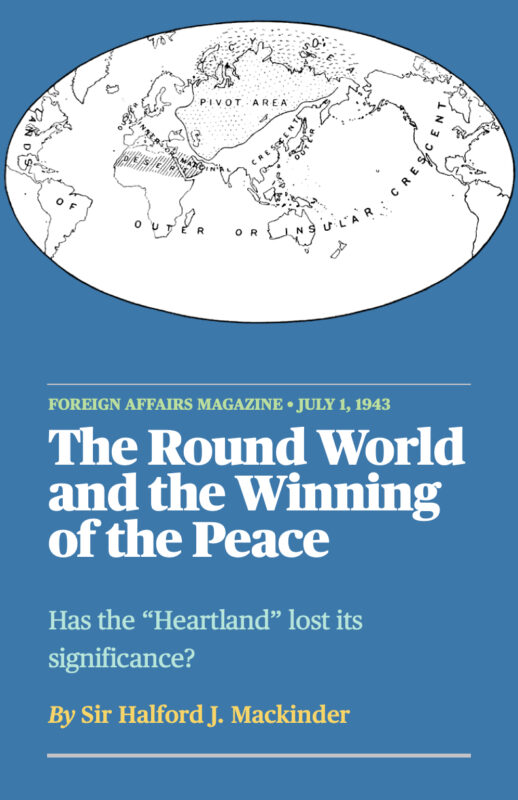
The Great Game, a contest between British and Russian empires for Central Asia, provided the geopolitical staging ground for Synarchist strategies. Livingstone situates this rivalry within the Hegelian Dialectic, not as abstract theory but as a practical tool for manipulating global affairs through staged conflict and synthesis. Halford Mackinder’s Heartland Theory and Alfred Mahan’s sea power doctrine institutionalized the geographic coordinates of this conflict. Russia’s terrestrial dominance and Britain’s naval supremacy became archetypes of land and sea wolves, converging in Eurasia—the chosen battlefield of Synarchist empire.
The struggle extended through the Cold War and the Clash of Civilizations, reconfigured as a perpetual dialectic between East and West. Livingstone positions this antagonism as the visible expression of an occult script rooted in Lurianic Kabbalah, where good and evil exist in dialectical interdependence and are resolved in divine synthesis—tikkun.
Occult Genealogies and Dynastic Power
From the House of Romanov to the House of Saxe-Coburg and Gotha, Livingstone traces the bloodlines that carry esoteric traditions into statecraft. These dynasties—interlinked through marriages, mystical societies, and secret orders—formed the political infrastructure of Synarchy. The genealogy of the British royal family unfolds as a matrix of Masonic influence, Rosicrucian heritage, and Illuminist affiliation. Members served as Grand Masters, initiated fellow monarchs, and disseminated ideological programs through aristocratic salons and lodges.
Queen Victoria, through strategic marriages, became the grandmother of European royalty. Her descendants, allied with the Romanovs and Danish kings, formed an elite cabal whose unity derived not only from blood but from shared esoteric doctrine. The influence of figures like Prince Charles of Hesse-Kassel, an Illuminati member and ally of the Rosicrucian Comte de St. Germain, reinforced the metaphysical legitimacy of these dynasties.
Mysticism, Imperial Ambition, and the Russian Court
The Russian imperial court functioned as both a geopolitical actor and mystical laboratory. Rasputin, Papus, and Maître Philippe all served Tsar Nicholas II and Alexandra, offering esoteric guidance and healing. The court’s obsession with prophecy, spiritualism, and occult ritual aligned it with the theosophical ambitions of figures like Helena Blavatsky, whose vision of a Eurasian empire guided by esoteric wisdom found advocates in Russian intelligence and diplomacy.
Lama Agvan Dorjieff and Prince Esper Ukhtomskii personified the convergence of Buddhism, Theosophy, and Russian imperialism. Their attempts to position Russia as the prophesied Shambhala, spiritual savior of Asia, culminated in alliances with the Dalai Lama and designs for Tibetan autonomy under Russian protection. These ambitions, antagonistic to British interests, precipitated the violent British invasion of Tibet in 1903–1904.
Protocols, Plots, and Manufactured Narratives
The Protocols of the Elders of Zion appear not as an anomaly but as an instrument of Synarchist strategy. Livingstone argues that Papus first compiled the core content as a warning to the Tsar about Masonic conspiracies, later appropriated and augmented by Russian intelligence under Pyotr Rachkovsky. This narrative absorbed elements from Maurice Joly’s Dialogue in Hell, Hermann Goedsche’s Biarritz, and other 19th-century texts, creating a synthetic document whose purpose was psychological and symbolic rather than factual.
The Protocols became a device to fuse anti-Semitic sentiment with fears of Masonic and Illuminist plots. These themes gained traction through figures like Sergei Nilus, who appended them to his apocalyptic writings on the Antichrist, and Jacob Brafman, who framed the Kahal as a subversive parallel government. The goal was to craft a totalizing myth of hidden governance that justified authoritarian response and religious revival.
Ariosophy and the Nazi Synthesis
The Nazi movement adopted Ariosophy—a racialized, esoteric form of nationalism—as a metaphysical justification for its political program. Drawing from the Kabbalah of Luria and the teachings of Helena Blavatsky, Nazis envisioned the culmination of history in the emergence of the Übermensch, a human god. Nietzsche’s vision of will to power and elite sovereignty, particularly his admiration for Giuseppe Mazzini’s dream of European unity, became operationalized through National Socialist ideology.
The Nazis saw themselves as completing the mission of the Third Reich, successor to the Holy Roman and German Empires. Their doctrine merged nationalism, esotericism, and synarchist control into a single project of global transformation. Within this framework, Synarchy no longer functioned as hidden governance alone but as the overt architecture of a total society, guided by mystical science and racial destiny.
Sexology, Eugenics, and Biological Hierarchies
Livingstone explores the transition from esoteric hierarchy to biological engineering through the rise of eugenics and sexology. He profiles how elite circles institutionalized these disciplines to regulate reproduction, control sexuality, and redefine human nature. The influence of Magnus Hirschfeld, Alfred Kinsey, and others placed sexuality under scientific management, with the goal of constructing a new human order. These efforts echoed Synarchist themes of spiritual transformation through material control.
Eugenics, particularly, expressed the desire for purification and perfection—themes embedded in Ariosophical mysticism. By asserting a science of heredity and degeneracy, elites justified policies of sterilization, marriage restriction, and ultimately genocide. These projects framed human bodies as the raw material of a greater cosmological order, subject to the designs of those who claimed higher knowledge.
Cultural Vanguard and Symbolic Warfare
Modern art, surrealism, and the avant-garde became instruments of elite subversion and psychological transformation. Livingstone interprets movements like Dada, Futurism, and Surrealism as deliberate attacks on reason, form, and continuity—practices designed to fracture collective consciousness and prepare it for reprogramming. André Breton, Salvador Dalí, and other figures aligned with occult traditions and revolutionary politics. Their works served not only as aesthetic rebellion but as psychological weapons in an ongoing cultural war.
This cultural strategy extended into education, media, and social norms, orchestrated by institutions aligned with Frankfurt School ideologies. These networks promoted relativism, deconstruction, and identity dissolution as pathways to liberation, but under Livingstone’s analysis, these were mechanisms of elite control, designed to destabilize inherited structures and render populations malleable.
Toward Total Control: Surveillance and Governance
In its final chapters, the book addresses the legacy of Synarchist ambition in modern governance. The Cold War, with its staged ideological oppositions, institutionalized global surveillance and technocratic administration. Intelligence agencies, multinational corporations, and supranational institutions reflect the operational structure of Synarchy. Their interlocking directors and invisible mandates carry forward the dream of elite harmonization.
Livingstone identifies the convergence of digital surveillance, behavioral science, and predictive algorithms as the next phase of this project. As governance migrates from visible law to invisible influence, the Synarchist imperative—control through synthesis—reaches its logical apex. This system seeks not domination through force alone but transformation of the very categories through which power is perceived.
The Arc of Historical Engineering
Through interwoven narratives of mysticism, strategy, and bloodline, Ordo ab Chao Volume Three Synarchy presents a coherent vision of elite continuity. From the courts of the Romanovs to the cultural laboratories of the twentieth century, the book traces how esoteric doctrine becomes political architecture. It reveals the mechanism by which secret knowledge translates into public law, and how ideological dialectics camouflage coordinated action. The elite, through ritual, genealogy, and strategy, do not merely shape history—they design it.