The Man Who Led Columbus to America
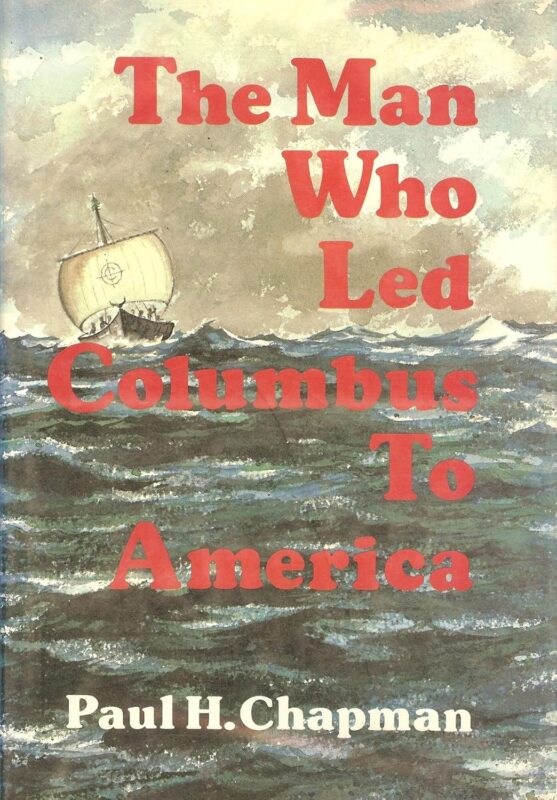
The Man Who Led Columbus to America by Paul H. Chapman uncovers the navigational strategy behind Christopher Columbus's historic Atlantic crossing. Chapman presents evidence that Columbus relied on pre-existing knowledge from the 6th-century voyages of Saint Brendan the Navigator. The book interlaces historical texts, maritime practices, and environmental data to trace how Brendan’s journey provided a template for Columbus’s route plan, revealing a foundation of intentional planning rooted in ancient transatlantic travel.
Ancient Knowledge of Ocean Routes
Chapman anchors his thesis in the navigational text Navigatio Sancti Brendani, a widely circulated medieval manuscript. This document describes Saint Brendan’s sea voyage in detailed geographic and temporal terms. Chapman argues that Brendan's expedition, long dismissed as myth, reflects empirical exploration. Brendan set out from the west coast of Ireland, navigating through the Faeroes, Azores, and eventually reaching the Americas via trade winds and ocean currents. The manuscript’s descriptions of fjords, flora, fauna, and climate match identifiable Atlantic locations.
Saint Brendan constructed his vessel using leather-bound wooden frames—a currach suited for high-seas exploration. Chapman explains how this technology enabled wide-range navigation, countering assumptions about medieval ship limitations. Brendan’s voyage, embedded in oral and written tradition, became foundational knowledge preserved by monastic scribes and disseminated through Latin and vernacular manuscripts. By the 15th century, this material saturated the intellectual environment of European navigators, including Columbus.
Route Planning and Trade Wind Mastery
Columbus’s first transatlantic expedition in 1492 followed a meticulously designed four-leg route. Chapman analyzes this path using nautical charts and wind current data. Instead of sailing directly west from Spain, Columbus sailed south to the Canary Islands to capture the steady northeast trade winds. From there, he traveled west to the Bahamas, riding the North Equatorial Current and avoiding the equatorial doldrums. His return route exploited the westerlies by sailing north to catch the Azores Current and prevailing winds back to Europe.
This loop aligns with the same environmental corridors Saint Brendan reportedly followed. Chapman plots both routes, demonstrating that Columbus’s success required pre-existing knowledge of these wind systems. The precision of this plan, executed before meteorological science formalized the concept of trade winds, demands a credible source. Chapman posits that Brendan’s legacy provided this information.
Technical Precision in Navigation
Chapman draws from his own experience as a World War II navigator to dissect the complexities of pre-modern sailing. He explains how ancient mariners used celestial bodies to track latitude. The use of Polaris as a fixed reference point allowed accurate estimations of north-south positioning. Columbus recorded these methods in his log, and Chapman aligns them with descriptions in the Navigatio.
He also explores the structure of square-rigged versus lateen-rigged sails. Square-rigged ships could not sail against the wind and required favorable wind patterns. Columbus’s ships, largely square-rigged, had to follow wind corridors. Chapman notes that Columbus changed one ship from a lateen to a square rig in the Canaries, confirming anticipation of specific wind directions. This adaptation would be impossible without advanced forecasting based on prior knowledge.
Evidence from Early Maps and Cross-Cultural Records
Chapman supplements his thesis with cartographic evidence. He examines Ptolemaic projections and medieval portolan charts. These maps contain speculative western landmasses, sometimes labeled as “St. Brendan’s Isle.” He locates Brendan references in Genoa and Lisbon—both cities central to Columbus’s training. Chapman identifies overlaps between Brendan’s voyage descriptions and features depicted on pre-Columbian maps.
In addition to European sources, Chapman references Icelandic sagas. These narratives recount encounters with “Westmen,” an Icelandic term for Irish seafarers, in the North Atlantic and even mainland America. These cultural intersections reinforce Brendan’s presence in transatlantic lore.
Chronology and Validation through Geography
Chapman reconstructs Brendan’s itinerary using modern pilot charts, matching reported observations with known locations. Brendan describes islands with volcanic activity, floating icebergs, tropical birds, and freshwater springs. Chapman visits the Faeroes, Azores, and Iceland to validate these claims. In the Faeroes, he identifies wildflowers Brendan described, contradicting previous skeptics who cited their absence. He confirms volcanic references in Iceland with experts who considered naming Surtsey after Brendan.
Each segment of Brendan’s voyage concludes with a match to a real location. Chapman uses day-counts and distances to estimate sailing speeds, confirming plausibility with comparative data from modern voyages in similarly constructed vessels.
Ecclesiastical Context and Monastic Transmission
Brendan’s voyage emerged from monastic culture, where spiritual exile and pilgrimage drove seafaring exploration. Chapman explores this ethos, framing Brendan’s voyage as both an act of faith and scientific discovery. Monks copied the Navigatio across centuries, embedding it in theological and geographic discourse. By Columbus’s time, the story had gained wide circulation across Europe. Chapman highlights Columbus’s own devoutness, noting his engagement with sacred texts and visions.
Columbus's environment fostered a reverence for ancient knowledge. His contemporaries studied Latin texts and venerated saints like Brendan. The idea of reaching paradise by sea, as Brendan reportedly did, fused spiritual longing with geographic ambition. Chapman shows that this fusion produced the intellectual conditions for Columbus’s plan.
Reassessment of Columbus's Sources
Historians have long debated how Columbus determined his route. Chapman challenges theories based on luck or divine inspiration. He identifies a structural problem: square-rigged ships dependent on wind could not randomly stumble upon the Americas. Chapman argues that Columbus’s success depended on a forecasted round-trip route informed by environmental conditions. Without such knowledge, survival would be unlikely.
The book synthesizes navigation science, textual exegesis, and historical geography. Chapman reconstructs a system of knowledge transmission—beginning with Brendan’s voyage, preserved by clerics, enhanced by cartographers, and executed by Columbus. This chain explains both the route’s precision and its historical origin.
Brendan's Influence on Portuguese and Spanish Mariners
Chapman explores Brendan’s influence on Iberian seafarers. He documents that the Portuguese named a cape after Brendan during their circumnavigation of Africa. Spanish records continue referencing Brendan’s Isle into the 18th century. The presence of Brendan manuscripts in Lisbon and nearby monasteries during Columbus’s residence strengthens the argument for knowledge transmission. Chapman contends that this embedded lore shaped maritime training and mapmaking practices.
He also connects Columbus’s extended time in Madeira and the Azores with ongoing Brendan traditions. Local narratives about western lands influenced the intellectual framework Columbus inherited. Chapman locates multiple converging points where Columbus could have encountered Brendan’s story—each reinforcing his exposure to the route.
A Synthesis of Navigation, Myth, and Strategy
The book’s central claim rests on the convergence of myth and strategy. Chapman reveals a layered structure of discovery: Brendan’s route encoded geographic truths beneath symbolic language. Later generations, reading both literally and allegorically, extracted practical knowledge. Columbus decoded this synthesis, embedding medieval myth into Renaissance action.
This synthesis anchors Chapman’s historiographical intervention. He does not seek to displace Columbus as a discoverer. He reframes the voyage as the culmination of centuries of navigational learning. Brendan, through disciplined observation and transmission, enabled the eventual contact between Europe and the Americas.
Implications for Maritime History
Chapman’s analysis reshapes the narrative of Atlantic exploration. He asserts that early Christian navigators achieved transoceanic crossings centuries before modern recognition. Brendan's voyage, preserved and transmitted across generations, underpinned later feats of navigation. Columbus’s journey depended on this legacy.
The implications extend to historical method. Chapman models an interdisciplinary approach—combining textual analysis, cartographic study, and environmental data. He affirms the value of medieval knowledge and argues for a reassessment of its scientific rigor. His synthesis offers a template for understanding how ancient narratives encode real-world expertise.
Legacy of an Overlooked Navigator
Chapman’s work elevates Saint Brendan as a foundational figure in Atlantic exploration. His voyage, once dismissed as legend, emerges as a source of empirical maritime knowledge. The Man Who Led Columbus to America reconstructs this legacy through layered evidence and disciplined reasoning. Chapman affirms that the path to the New World began in an Irish monastery, sailed west into the trade winds, and returned centuries later with the ships of Columbus.