Robert Morris: Inside the Revolution
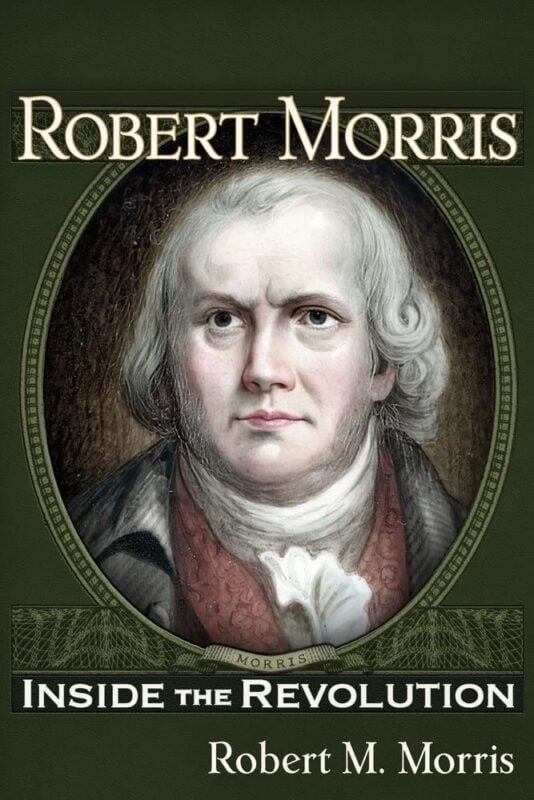
Robert Morris: Inside the Revolution by Robert M. Morris recovers a foundational figure in American history whose contributions have long been overshadowed. This biography rewires the revolutionary narrative through the financial genius and executive leadership of Morris, who signed the Declaration of Independence, Articles of Confederation, and the Constitution, yet remains largely excluded from standard historical accounts. With detailed documentary references and contextual insight, the book repositions Morris not only as the financier of the Revolution but as a central architect of the nation’s institutional and economic infrastructure.
Preface to Power
Robert Morris emerged from colonial Philadelphia’s commercial elite, trained as a merchant and financier before entering politics. His early career reflects the interconnectedness of transatlantic trade, including interactions with the slave economy, which he would later attempt to mitigate through legislation. His appointment to the Pennsylvania Committee of Safety in 1775 placed him alongside Benjamin Franklin in organizing defenses, procuring arms, and building naval assets. As Vice President of the committee, he not only equipped militia but structured Philadelphia’s river defenses, anticipating British incursions.
Revolutionary Finance
When the Continental Congress faced financial ruin, it was Morris who systematized procurement, floated loans, and funded Washington’s campaigns. He created promissory instruments known as “Morris Notes” and founded the Bank of North America in 1781, the first de facto central bank of the United States. He orchestrated the Yorktown Campaign by raising funds with no federal infrastructure. Every dollar counted, and he often used personal credit to sustain the war effort.
Behind the Curtain of Military Glory
Morris’ mastery of logistics filled a vacuum that neither Congress nor the military could address. While Washington planned battles, Morris secured ships, rations, and pay for the army. He administered vast networks of agents, often outmaneuvering foreign and domestic saboteurs. His signature was as instrumental to the Revolution as Washington’s sword or Franklin’s quill. His administrative role turned decentralized rebellion into coordinated national resistance.
Architect of Federal Power
After independence, Morris transitioned to Superintendent of Finance, a role akin to a proto-Treasury Secretary. He pushed for a stronger federal system and pioneered tax collection frameworks, even appointing tax receivers for individual states. His efforts anticipated the later structure of federal taxation and national fiscal management. Morris believed in economic freedom through financial accountability—a stance that would eventually cost him politically.
Political Warfare
Despite his accomplishments, Morris became a lightning rod for partisan attacks. His firm stance against unregulated war profiteering and speculative corruption earned him powerful enemies. Thomas Paine and other propagandists labeled him a “profiteer,” despite clear evidence to the contrary. These attacks reflect a deeper division over executive power and federal authority in the nascent republic, with Morris representing pragmatic governance over ideological purity.
From Executive Action to Economic Collapse
Morris left public office in 1784 and returned to private enterprise, eventually overextending his investments. The Financial Panic of 1797 devastated his holdings. Without the protective policies later extended to corporate elites, Morris was imprisoned for debt. His fall from grace was used by adversaries to obscure his earlier triumphs. Unlike later political figures rescued by bailouts, Morris bore the full cost of his ambition—a lesson in the risks of unbuffered capitalism.
Erased from the Canon
Historians largely omitted Morris from mainstream accounts. David Ramsey’s 1789 “History of the American Revolution” mentioned him only once, despite Morris’ extensive service. Later authors followed suit. The erasure reflects both partisan bias and structural inertia in historiography, compounded by the loss or dispersion of many primary documents. What survives has been painstakingly reconstructed, restoring Morris to his rightful place in the American founding.
Philosophical Core
Morris envisioned a republic of economic opportunity, underpinned by free enterprise and personal responsibility. He rejected monopolistic and slave-based models in favor of a productive middle class. He crafted a tax system that sought minimal burden—two days’ work to pay a year’s federal tax. His principles reflect an Enlightenment-rooted conviction: that financial architecture is the skeleton of political freedom.
Legacy Beyond Collapse
Despite imprisonment and political defeat, Morris’ innovations endured. The frameworks he established in finance, taxation, and governance seeded the institutional evolution of the United States. His failure was not due to flawed vision but premature timing. He stood as a transitional figure—an executor of revolutionary aims and designer of federal mechanisms before the republic had consolidated its will.
Conclusion: A Necessary Reintroduction
Robert Morris: Inside the Revolution revives a man whose name has been ghosted from textbooks but carved into the economic and constitutional foundations of the United States. His pen moved the machinery of revolution and the gears of early American statecraft. Rediscovering Morris is not merely a historical correction; it reorients our understanding of what made the Revolution succeed, and what sustains a republic beyond victory. His story teaches that revolutions succeed not only by banners and bullets, but by ledgers, letters, and loans. Who pays for liberty when no one else will? Morris answered with his fortune, his reputation, and finally, his freedom. The republic he helped build is the receipt.