The Rockefeller File

The Rockefeller File by Gary Allen exposes the strategic ascent of one of America’s most powerful families, portraying a meticulously constructed empire that transcends wealth to influence global politics, finance, media, and education. Allen asserts that the Rockefeller dynasty, through intergenerational planning and strategic philanthropy, seeks nothing less than world governance structured to serve its interests.
The Myth of Economic Innocence
The book opens by challenging the public narrative maintained by the Rockefellers. During his Vice Presidential confirmation hearings, Nelson Rockefeller denied extensive family control over the U.S. economy. Allen systematically dismantles this claim by detailing the vast and opaque structure of trusts and foundations created to obscure the family's wealth. These financial vehicles, according to Allen, are designed not only to evade taxes but to concentrate control while appearing to relinquish it.
Strategic Philanthropy as Power Lever
Philanthropy emerges as a tactical front in Allen’s exposition. What masquerades as altruism is revealed as a sophisticated method of influence. The Rockefeller Foundation and other charitable arms have consistently funded educational, religious, and media initiatives that reinforce a collectivist ideology—one that Allen claims is diametrically opposed to the free market principles the Rockefellers are presumed to champion. These philanthropic efforts are not benevolent endowments but strategic investments to mold public opinion and policy.
Media Manipulation and Mediacracy
Allen introduces the concept of a "mediacracy" where media outlets, often beneficiaries of Rockefeller philanthropy or indirect control, propagate narratives that align with Rockefeller interests. This control is not exerted through overt ownership but through the nuanced influence of foundation funding and editorial alignment. Key journalists and media executives often have ties to Rockefeller-funded institutions, creating a feedback loop that stifles dissent and promotes globalist agendas.
The Council on Foreign Relations and Political Puppeteering
Central to Allen’s argument is the Council on Foreign Relations (CFR), described as the operational brain of the Rockefeller octopus. Allen contends that CFR members occupy critical roles in U.S. administrations, regardless of party, shaping foreign and domestic policy to fit the Rockefeller vision of a New World Order. This think tank, according to Allen, is not merely advisory but directive, implementing strategies that erode national sovereignty in favor of international governance structures.
The Strategy of Surrender
Allen devotes chapters to "Surrender by Consent" and "Surrender by Conquest," outlining a dual-pronged approach to diminish U.S. autonomy. The former involves ideological subversion—embedding internationalist principles into American education, media, and policy. The latter refers to direct political maneuvers and agreements, such as disarmament treaties and trade policies, that transfer power from national to supranational entities. Allen warns that both methods aim to incapacitate American self-determination.
Oil, Finance, and Global Leverage
Tracing the lineage of Standard Oil, Allen reveals how the Rockefellers leveraged oil profits into financial dominance. Their control over major banks and insurance companies extends their influence over both economic stability and political agendas. Allen underscores how oil and finance are not merely sectors of the economy but tools for geopolitical manipulation. The Rockefellers’ stakes in energy companies and international banks enable them to orchestrate global supply chains and economic dependencies.
Rockefeller Influence in Warfare and Diplomacy
Allen links the Rockefellers to strategic involvement in global conflicts. He cites their role in funding both sides of wars and using diplomatic channels like the State Department to secure oil interests under the guise of national policy. The CIA, according to Allen, acts as an enforcement arm for these interests, supporting regimes and operations that align with Rockefeller objectives, often under the banner of anti-communism.
The New World Order Agenda
At the heart of Allen’s thesis is the Rockefeller ambition to establish a New World Order—a supranational regime blending socialism and corporate capitalism. Through organizations like the United World Federalists and Atlantic Union, the Rockefellers promote federalism on a global scale, advocating for policies that dilute national borders and elevate centralized control. Allen describes this vision as both fascist and socialist, unified by a desire for unaccountable power.
The Federal Reserve and Monetary Control
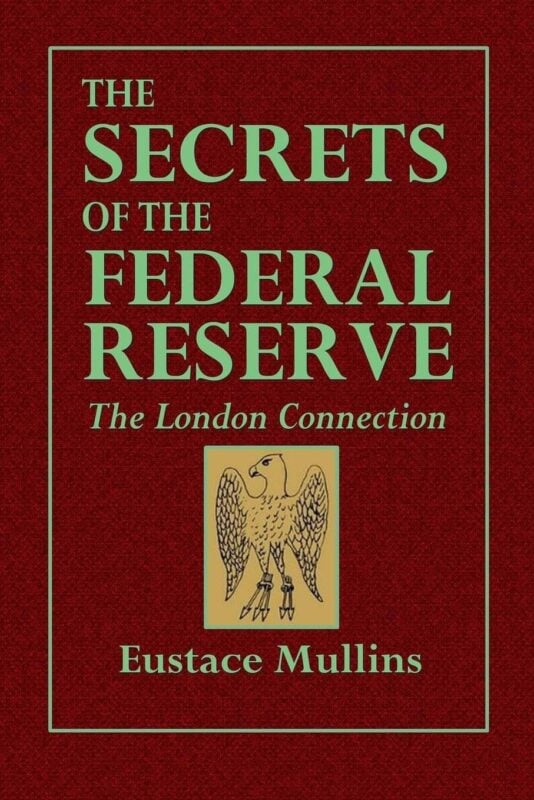
Allen devotes significant attention to the Federal Reserve, tracing its origins to a secretive meeting at Jekyll Island, which included Rockefeller agents. He argues that the Federal Reserve system institutionalizes Rockefeller control over U.S. monetary policy. This influence extends through appointments to key financial posts and interlocks with private banks, ensuring that economic policy aligns with Rockefeller interests, not public welfare.
Conclusion
Allen concludes with a stark warning: the Rockefeller agenda is nearing fruition. Decades of strategic positioning have built a scaffold of control around American institutions. Only public awareness and political resistance can prevent the final consolidation of power. Allen insists that dismantling Rockefeller influence in government is essential to preserving democratic freedoms.