…and forgive them their debts: Lending, Foreclosure and Redemption From Bronze Age Finance to the Jubilee Year
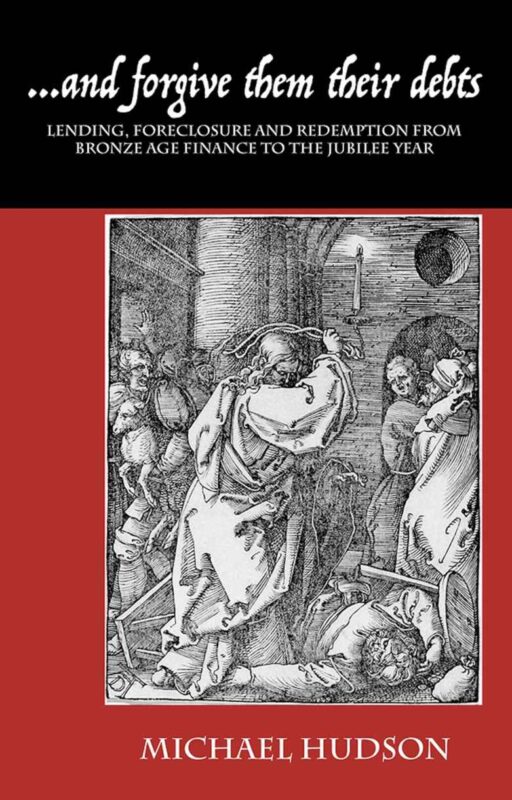
…and forgive them their debts: Lending, Foreclosure and Redemption From Bronze Age Finance to the Jubilee Year by Michael Hudson excavates the ancient roots of debt and debt cancellation, tracing the evolution of finance, power, and economic renewal from the earliest Sumerian city-states through the biblical tradition and into the formation of Western legal and economic systems.
Debt Jubilees: Origins and Mechanisms
Ancient rulers institutionalized periodic debt jubilees as a core instrument of governance. Sumerian and Babylonian kings proclaimed debt amnesties at key moments: the ascension to the throne, the end of war, the rebuilding of temples, or after crop failures. These jubilees focused on agrarian and personal debts that burdened the citizenry, liberating bondservants and restoring forfeited lands to their original families. Rulers structured these proclamations to sustain the economic base, preserve the integrity of the tax system, and guarantee a military of freeholders loyal to the palace. The edicts spared commercial debts among traders, recognizing the productive capacity inherent in entrepreneurial exchange. Royal proclamations, inscribed in law, anticipated creditor resistance by closing loopholes, ensuring enforcement, and deterring usury that might fracture the social order.
Social Order and Economic Stability
The architecture of ancient economies depended on the interdependence of palace, temple, and rural smallholder. Agrarian debts arose less from loans than from unpaid fees, taxes, and rents owed to the palace or temple officials. Failure to cancel these arrears after natural disasters, war, or periodic crisis threatened to dissolve the subsistence base, strip away military manpower, and destabilize royal authority. Kings annulled these debts not to equalize wealth, but to guarantee a minimum standard of living for self-supporting families. They targeted wealth accumulation only when it undermined social cohesion or disrupted tax revenues and corvée obligations. Babylonian scribes understood compound interest as a force that outpaces the productive capacity of agriculture. As debts accrued beyond the ability of rural families to pay, only sovereign intervention restored the economic balance, reestablishing social and fiscal order.
Creditors and Political Power
As credit became increasingly privatized, wealthy local headmen and merchants expanded their power. Unchecked, creditor stratagems turned rural debt into a lever for privatizing land and reducing citizens to bondage. Kings confronted this expansion by reinforcing jubilee proclamations, restricting foreclosure on self-support land, and nullifying transfers executed under distress. The collision between centralized authority and local creditor interests defined the arc of Near Eastern and Mediterranean economic history. The balance of power determined whether societies renewed themselves through systemic debt forgiveness or hardened into creditor oligarchies that appropriated land and labor.
Transition to Classical Antiquity
The structural logic of debt amnesties dissolved in Greece and Rome. Political revolutions, often led by populist “tyrants,” briefly revived the logic of cancellation and redistribution, but the consolidation of land, legal privilege, and religious authority by creditor elites ensured that debt and land loss became permanent. The sanctity of contract eclipsed the customary right to economic renewal. As land concentrated into fewer hands, the citizen-army shrank, tax revenues declined, and societies resorted to hiring mercenaries. Historians documented how the unchecked rise of creditor classes, enabled by changes in law and custom, generated economic polarization and sowed the seeds for social breakdown and external conquest.
Biblical Legacy and Spiritualization
The tradition of debt cancellation passed into Mosaic Law, woven into the heart of the Jewish and Christian moral imagination. Leviticus institutionalized the Jubilee Year, mandating liberation from debt bondage and restoration of land. Later rabbinical authorities, seeking to adapt to new political realities, introduced the prosbul clause, enabling creditors to sidestep the cancellation cycle. The original, systemic goal of social renewal receded as religious authorities spiritualized the concept, transforming economic absolution into a symbol of divine forgiveness and eschatological hope. Jesus’s inaugural sermon invoked the Jubilee, aligning his mission with ancient calls for liberty from debt peonage. Over time, Christian doctrine relocated redemption from the fiscal to the spiritual plane, as Roman law entrenched creditor privilege.
Byzantine Restoration and Decline
Byzantine emperors, facing renewed crises of land concentration and military decline, temporarily revived Near Eastern policies, nullifying foreclosures and protecting smallholders from elite appropriation. Legislation barred dynatoi from acquiring village land, restoring productive capacity and tax viability. Success depended on the emperor’s political strength. As the dynatoi regained influence, the cycle repeated: fiscal and military collapse followed renewed concentration of wealth and loss of rural independence.
Modern Echoes: Legal and Financial Inheritance
Roman legal philosophy forms the basis of today’s credit system, upholding the sanctity of debt over debtor protection. Legal frameworks, regulatory regimes, and economic orthodoxy treat debts as inviolable obligations, placing the risk of insolvency squarely on borrowers. The principle that debts which cannot be paid, will not be paid, recurs in moments of crisis—from Latin American defaults to the U.S. housing collapse. Societies face a recurring choice: enforce the full burden of debt, risking mass dispossession and social fracture, or intervene to write down unsustainable claims and restore productive capacity.
Narrative of Institutional Innovation
Temples and palaces functioned as the original creditors, advancing agricultural inputs and organizing distribution through centralized record-keeping. They developed standardized prices, weights, and monetary schedules to manage obligations, tax flows, and social provisioning. The rise of interest-bearing debt marked a distinct break with earlier forms of reciprocal exchange and communal distribution. With the expansion of trade, long-distance merchants negotiated loans in silver for productive enterprise. Mercantile debts faced annulment only in cases of loss—shipwreck, piracy, or robbery—reflecting a pragmatic logic tied to risk, not to social equilibrium. The innovation of interest itself did not arise from “gift exchange” or anthropological reciprocity, but from administrative needs and the management of surpluses.
Myth and Misreading: The Modern Lens
Later historians and economists, influenced by market-centric narratives, misread the role of ancient institutions, projecting modern individualism onto collective structures. Origin myths cast early debt as bilateral exchanges or barter-based advances, obscuring the communal and institutional foundations of the ancient economy. These interpretations downplay the systemic and administrative character of ancient finance, failing to see that economic renewal depended on the sovereign’s periodic restoration of social balance. The persistence of jubilee logic in the textual record, from Sumerian amargi to the Akkadian mīšarum and the Hebrew deror, points to a deeply embedded practice of cyclical renewal.
Recurring Patterns: Debt, Power, and Renewal
Societies build mechanisms for economic reset when the structure of debt threatens collective stability. Debt jubilees, by design, reestablished the conditions for continued production, military defense, and tax collection. Where the structure of power permitted, rulers maintained the balance by intervening decisively against creditor overreach. When creditor classes overthrew or constrained royal power, the concentration of land and loss of social mobility accelerated, producing a downward spiral into debt dependency and eventual collapse. This structural pattern repeats across epochs, irrespective of technological or cultural differences.
Legacy in Law and Political Economy
The inheritance of Roman legal philosophy, favoring creditor rights, sets the framework for modern financial crises. Modern policy debates circle around the ancient question: when do societies intervene to resolve unsustainable debt burdens? The absence of a systematic mechanism for large-scale debt relief transforms personal and collective insolvency into a lever for further concentration of wealth and power. Tax policy, inheritance law, and regulatory oversight echo ancient struggles between public authority and private accumulation. Historical memory, often embedded in religious or cultural symbolism, provides resources for critique and alternatives—pointing to times and places where systemic reset was a recognized necessity, not a matter of utopian idealism.
Clarity of Historical Vision
Hudson’s research establishes the record of periodic, enforced debt cancellation as a durable, systemic response to structural crisis. By tracing the continuity from Sumer to Byzantium, from Mosaic Law to modern legal codes, he demonstrates that economic liberty historically meant freedom from the bondage of unpayable debt, not merely the absence of restraint or regulation. The core of liberty resided in the restoration of self-support land, personal independence, and the practical capacity to participate in the life of the community. When societies institutionalized mechanisms for renewal, they preserved both stability and a measure of justice. The erosion of these practices signals moments of structural breakdown and the triumph of concentrated power.
Search Engine Optimization and Audience Relevance
Michael Hudson’s …and forgive them their debts positions debt jubilees at the heart of ancient economic management, showing their impact on social stability, land tenure, legal tradition, and the structure of Western civilization. By examining how rulers used systematic debt relief to balance the interests of palace, temple, smallholder, and creditor, Hudson offers a compelling narrative for historians, economists, policymakers, and anyone seeking to understand the origins of debt crises and their solutions. Readers searching for the origins of the Jubilee year, the logic of debt amnesty, or the foundations of Western legal and economic systems will discover precise historical documentation and clear argumentation. This book addresses questions such as: How did ancient societies avoid debt-driven collapse? What role did debt jubilees play in the creation of law and order? How have legal and religious traditions encoded and transformed the logic of economic renewal? Why does the history of debt cancellation matter for today’s economic debates?
Convergence and Contemporary Lessons
The pattern that emerges from Hudson’s synthesis is one of structural convergence: when unchecked, debt expands until it overwhelms the capacity to pay, forcing society to choose between systemic write-down or social disintegration. The legacy of ancient practice lives on in today’s crises, demonstrating that the politics of debt relief, land restoration, and legal authority remain central to the ongoing negotiation of economic life. Hudson’s account delivers a detailed, authoritative narrative, bridging deep history and present reality, inviting readers to reimagine solutions grounded in the practical wisdom of the ancient world.