The Lost Science of Money
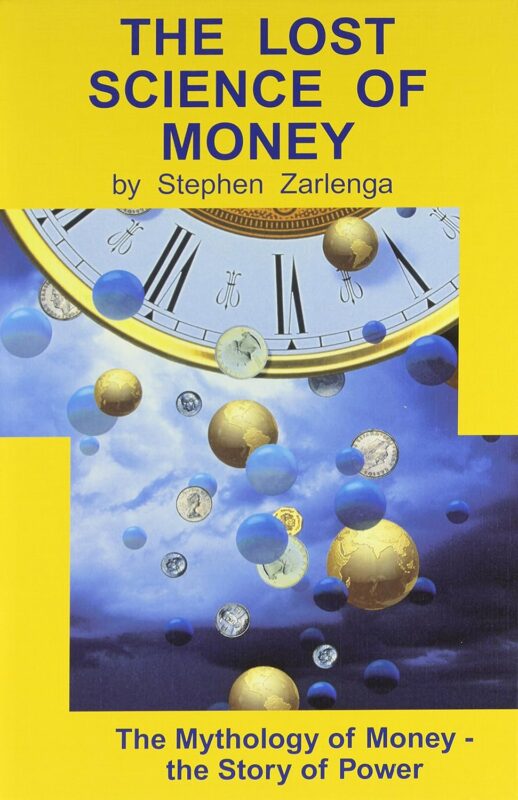
The Lost Science of Money by Stephen A. Zarlenga reveals the foundational dynamics behind the structure and control of money throughout human civilization. Zarlenga establishes a thesis that money originates not from markets or commodities, but from laws enacted by society to serve collective needs. This legal nature of money defines who wields power and how economies function. The book traces monetary development across empires, republics, and modern nation-states, demonstrating that societies that understood and asserted public control over money achieved prosperity and social cohesion.
Money as a Legal Institution
Zarlenga dismantles the notion that money arises naturally from trade or barter. Instead, he identifies money as a social construct formalized through legal declarations. It functions when a governing authority defines a unit of account and enforces its use for payments. This transformation from barter goods to abstract legal tender marks a civilization’s maturity. By controlling the money supply, lawmakers determine access to resources, structure taxation, and orchestrate infrastructure. Money becomes a tool for civilization, not a side effect of commerce.
Historical Evidence from Rome to America
The Roman Republic codified money through state-issued bronze coins, creating a stable system that fueled urban growth and military strength. Rome’s monetary integrity dissolved when oligarchic forces privatized coinage and exploited lending. Zarlenga presents this transition as a critical turning point. In the Middle Ages, English monarchs exerted monetary authority to stabilize realms, until merchant-bankers imposed systems that created public debt through private issuance. In colonial America, local governments issued paper currencies that enabled economic independence, leading to a flourishing economy which the British Parliament moved to suppress.
The Greenback Lesson
During the U.S. Civil War, President Lincoln issued Greenbacks—government-created currency that funded the Union without interest-bearing debt. This act broke the stranglehold of private banking and proved that public money could finance national emergencies effectively. Zarlenga frames Greenbacks as a pivotal example of how sovereign issuance empowers a democracy to act decisively. After the war, the reversion to bank-controlled money eroded these gains. The dominance of debt-based issuance entrenched financial institutions as de facto rulers over fiscal policy.
Monetary Myths and Economic Collapse
Zarlenga confronts long-standing economic theories that mystify the origins and purpose of money. He critiques Adam Smith’s portrayal of money as a neutral medium of exchange. He challenges Milton Friedman’s monetarism for ignoring the institutional foundations of money creation. These myths serve elite interests by obscuring how banks create money through loans, charge interest, and consolidate power. Zarlenga shows that major financial crises—including the Great Depression—resulted from unchecked private issuance and speculative leverage, not from real shortages or market cycles.
Who Should Issue Money?
Control over money determines who allocates national resources. Zarlenga proposes that elected governments, accountable to citizens, should hold exclusive authority to create and regulate money. This responsibility must reside with legislatures, not private banks or unelected central bankers. Money creation then becomes a public utility—a service that supports economic life instead of extracting wealth from it. This framework eliminates interest-bearing national debt and aligns financial power with public goals.
The Sovereign Money Proposal
Zarlenga advocates for a Sovereign Money system, where the government directly issues currency free from debt and without reliance on bond markets. Under this model, the Treasury would credit money into existence for infrastructure, education, health, and public welfare. Banks would lend only existing money, not fabricate deposits through loans. This structural change simplifies the financial system, strengthens fiscal autonomy, and prevents speculative bubbles. Sovereign Money reestablishes the democratic principle that governments, not financiers, guide national economies.
Power, Morality, and Monetary Systems
Every monetary system encodes a moral structure. When banks create money for profit, the system prioritizes short-term returns over social welfare. When governments issue money as a public good, the economy reflects collective priorities. Zarlenga asserts that monetary reform is not merely technical—it is moral. It confronts entrenched systems of control and demands a rethinking of justice in economic terms. The existing model generates inequality by design. A reformed system fosters shared prosperity by construction.
Education and Myth-Busting
The mythology surrounding money shields the public from understanding its power. Economists often obscure rather than clarify monetary function. Zarlenga calls for a new framework of economic education rooted in legal history, public finance, and empirical case studies. Understanding money’s origins as a legal tool empowers citizens to demand reform. Clarity dismantles manipulation. Transparency undermines privilege. By tracing monetary systems across cultures, the book equips readers to question assumptions and challenge authority.
Consequences of Inaction
Without structural reform, economies cycle through booms and busts engineered by financial speculation. Public debt escalates while infrastructure crumbles. Inequality deepens as interest payments extract wealth from producers and consumers alike. Zarlenga warns that this trajectory is not accidental—it is systemic. Only by reclaiming the money power can nations regain sovereignty. The consequences of delay include fiscal paralysis, democratic erosion, and economic injustice. Monetary reform is the gateway to broader transformation.
Strategic Action and Legislative Pathways
Zarlenga outlines steps toward implementation: public education, legislative advocacy, alliance-building across political lines, and model legislation like the NEED Act. Reform must occur through democratic institutions, not executive fiat or technical adjustment. Broad coalitions of labor, business, academia, and civil society must pressure lawmakers to act. Public control of money is both feasible and historically grounded. The question is not whether reform is possible, but whether the political will exists to reclaim the public trust.
Toward a Human-Centered Economy
Money must serve humanity. It should fund clean energy, universal education, sustainable agriculture, and equitable housing. Zarlenga’s vision frames money as a bridge to human potential rather than a barrier of debt and scarcity. By redesigning the monetary system to reflect democratic values, societies can unlock dormant capacities and redirect human effort toward shared flourishing. The book closes with a call to awaken this potential by understanding money’s origins, reclaiming its power, and embedding its function within moral governance.