National Suicide: Military Aid to the Soviet Union
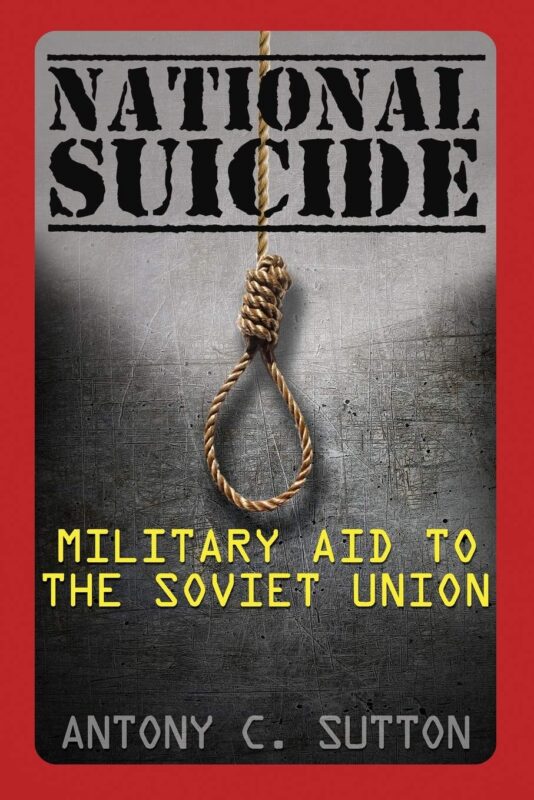
Antony C. Sutton’s book National Suicide: Military Aid to the Soviet Union exposes the systematic transfer of American technology and industrial support to the USSR during the 20th century. Sutton documents how this flow of expertise and machinery directly empowered Soviet military expansion, enabled conflicts like the Vietnam War, and undermined the foundational interests of the United States. The argument moves from historical analysis to detailed evidence of industrial cooperation, corporate complicity, and strategic misjudgment at the highest levels of American policymaking.
Origins of a Hostile Arsenal
Beginning in the aftermath of the Bolshevik Revolution, U.S. industrialists and government actors enabled the Soviet regime to consolidate power by transferring critical technological resources. Sutton traces these decisions to early 20th-century policies that favored economic engagement under the assumption of eventual liberalization. Instead, Soviet authorities used these transfers to build infrastructure designed for rapid militarization. Soviet officials, including Stalin, acknowledged that U.S. firms had built the majority of large-scale industrial operations in the USSR. Military needs defined these developments from the start. Soviet planners explicitly stated that every element of industrialization served defense purposes.
The Mechanism of Technological Transfer
American support extended beyond raw materials or consumer goods. Sutton identifies a pattern of exporting manufacturing systems, production know-how, and precision engineering tools essential for developing weapons, vehicles, and logistical networks. Plants built in Kharkov, Chelyabinsk, and Gorki turned out tanks and armored vehicles powered by engines reverse-engineered from American prototypes. The Soviets replicated Caterpillar tractors, Ford trucks, and Rolls-Royce jet engines, all acquired through contracts signed under trade programs marketed as peaceful.
The distinction between civilian and military technology collapsed under analysis. Machinery designed for automobiles and farming could fabricate missile components. Dual-use technology provided a legal and rhetorical cover for transfers that ultimately expanded Soviet combat capabilities. American export laws, though existent, lacked enforcement. Policymakers acted as if these boundaries were irrelevant or secondary to diplomatic and commercial goals.
Economic Interests in Strategic Conflict
Sutton asserts that financial and political elites shaped U.S. policy to maintain trade with the USSR despite accumulating evidence of its military consequences. Committees like the Committee for Economic Development promoted unconditional economic engagement. Major corporate actors—many with investments in Soviet projects—occupied key roles in policymaking. These alliances created a policymaking apparatus incapable of addressing national security risks arising from technological dependency.
Reports minimized or ignored the strategic implications of trade. Business leaders and think tanks dismissed military applications of transferred goods. In doing so, they preserved access to Soviet markets and contracts while exporting the risk to American soldiers and taxpayers.
The Vietnam War as a Case Study
Sutton’s argument gains force through the empirical correlation between trade increases and U.S. casualties in Vietnam. As American exports to the Soviet Union climbed, so did deaths and injuries among U.S. troops. Soviet-built trucks, tanks, and artillery supplied North Vietnam. Aircraft downed by Soviet-guided missiles, made functional with imported electronics and propulsion systems, marked the material convergence of trade and warfare.
The Soviet merchant fleet, used to transport arms, consisted primarily of ships built with Western equipment. Radar, diesel engines, and navigational systems bore serial numbers linking them to U.S. and European firms. Sutton provides appendices listing technical specifications of these vessels. The Soviet supply chain flowed through Western-built infrastructure from factory floor to battlefield.
Persecution Within, Expansion Without
The domestic repression within the USSR proceeded in lockstep with its external aggression. Sutton details systemic persecution of religious minorities, dissidents, and ethnic groups. He recounts testimonies from Jewish scientists, Christian pastors, and Lithuanian Catholics subjected to torture, imprisonment, and psychiatric abuse. These events occurred concurrently with American initiatives to strengthen trade ties.
At no point did increased economic cooperation result in political liberalization. On the contrary, economic support enabled the state apparatus to deepen internal control while advancing global influence. The argument links domestic totalitarianism with external military adventurism—both supported materially through Western complicity.
The Détente-Aggression Cycle
Sutton introduces the concept of the “Détente-Aggression Cycle” to explain the strategic rhythm of Soviet policy. During détente, the USSR extracted technical, economic, and political concessions. These gains financed the next phase of aggression. Sutton identifies historical cycles, from early famine relief through Lend-Lease during World War II to Cold War trade pacts. Each instance follows the same pattern: diplomatic outreach, material transfer, military buildup, and renewed expansion.
This cycle persisted because U.S. policymakers misread Soviet intentions. Sutton blames mystical idealism and bureaucratic inertia. He highlights the consistent failure of U.S. agencies to interpret Soviet actions within the framework of declared Marxist-Leninist goals. Official documents, treaties, and public statements from Soviet leaders plainly stated their objectives: class conflict, global revolution, and confrontation with capitalist powers.
The Role of Classified Information
Crucial records remain classified decades after the events they describe. Sutton points to Operation Keelhaul—an allied repatriation of Soviet defectors post-WWII—as a case study in secrecy and betrayal. He argues that the continued censorship of such events prevents public scrutiny and sustains destructive policies. Congressional investigations uncovered disturbing evidence but failed to alter executive behavior.
Even when data became available through leaks or hearings, institutional momentum favored continuity. Strategic assessments filtered through departments with vested interests in maintaining trade relations diluted or buried actionable conclusions. Sutton sees this as symptomatic of a state apparatus disconnected from empirical analysis.
Strategic Implications for Foreign Policy
The book closes by asking what course remains when a nation enables its adversary’s military ascendancy. Sutton warns that future engagements will repeat the same mistakes unless the structural relationship between trade and warfare is redefined. He proposes a framework grounded in empirical data and strategic intent.
The solution begins with revoking policy assumptions that assign moral neutrality to economic exchange. Trade with coercive regimes inherently affects the strategic balance. Any transaction involving tools, machines, or technical knowledge must account for end-use implications. Sutton calls for laws with enforcement teeth and a political culture that prioritizes national security over corporate gain.
The Structural Convergence of Trade and Warfare
Sutton’s thesis builds toward a comprehensive understanding of how economic policy interacts with geopolitical conflict. The flow of tools and knowledge from American factories to Soviet weapons systems followed a chain of causality. Business interests formed one link, government policy another, and battlefield outcomes the terminus. This structure remained hidden only to those who refused to trace the connections.
The convergence of commercial ambition and military defeat defines the era Sutton analyzes. Soviet tanks rolled across Vietnamese terrain powered by engines designed in Detroit. Missiles guided by systems refined in California downed American pilots. These events did not occur in separate silos—they emerged from the same supply chain.
Strategic Literacy and National Responsibility
Sutton demands that readers confront the implications of his evidence. He draws a line from conference rooms in Washington and boardrooms in New York to the jungles of Southeast Asia. Soldiers paid for policies crafted by men who never faced the consequences. The burden of proof, he argues, lies with those who advocate continued engagement.
He issues a direct challenge: assess Soviet conduct by its results, not its rhetoric. Evaluate trade not by its intentions, but by its outcomes. The historical record provides the data. The pattern reveals itself in blood, steel, and silence.
Conclusion: Breaking the Cycle
National Suicide presents more than a critique—it outlines a call for transformation. Sutton frames this challenge within a moral and strategic imperative. The survival of democratic systems requires clear vision and structural reform. To break the cycle, policy must align with evidence. Technology must serve security. Economic strength must not subsidize hostile power. The future depends on choosing truth over delusion, and structure over ideology.