Family of Secrets: The Bush Dynasty, the Powerful Forces That Put It in the White House, and What Their Influence Means for America
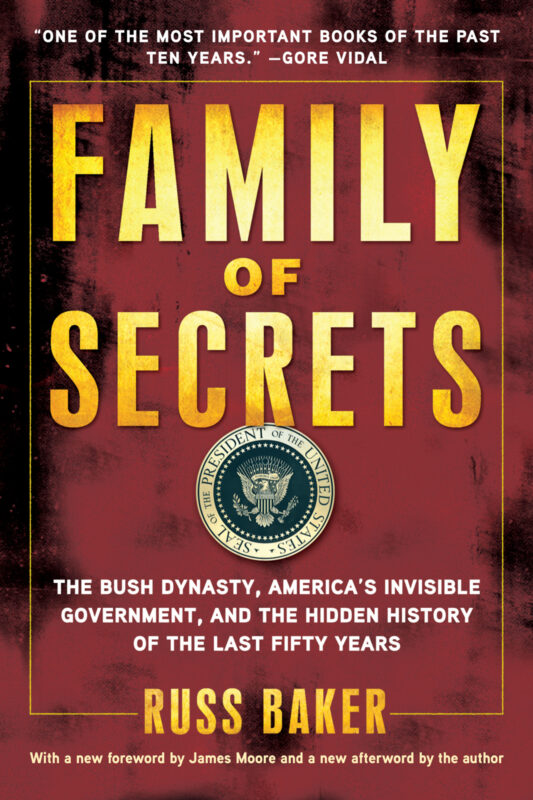
Family of Secrets: The Bush Dynasty, the Powerful Forces That Put It in the White House, and What Their Influence Means for America by Russ Baker investigates the covert history of the Bush dynasty and reveals a parallel structure of American power that operates outside democratic oversight. Through rigorous documentation, Baker traces the political ascent of George H.W. Bush and George W. Bush to an embedded nexus of oil interests, intelligence operations, and elite networks that have shaped U.S. policy for decades.
The Hidden Resume of George H.W. Bush
George H.W. Bush’s public biography omits a covert chapter. An FBI memo dated November 29, 1963, places him at the CIA years before his public appointment as director in 1976. The document identifies “Mr. George Bush of the Central Intelligence Agency” as a recipient of sensitive post-assassination briefings following President John F. Kennedy’s death. Bush denied involvement, attributing the reference to another man. However, the alleged namesake, George William Bush, proved to be a low-level file clerk who denied receiving intelligence briefings and lacked clearance for such activity. The CIA's inability to reconcile the contradiction, coupled with its belated and implausible clarification, signals deeper entanglements.
In 1975, a CIA memo emerged connecting Bush to “Project WUBRINY,” a covert proprietary operation in Europe. The document noted Bush’s knowledge of the program through his business partner Thomas Devine, a former CIA officer. The operation functioned under the guise of Zapata Offshore, the oil company Bush founded in the 1950s. Devine’s dual role in intelligence and business reinforces the pattern of intelligence operatives transitioning seamlessly into civilian sectors to maintain operational cover.
Zapata Offshore: Business or Intelligence Front?
Zapata Offshore provided Bush with a mechanism for international travel and private meetings under a corporate pretext. Its early investors included the Harriman network, a financial and political powerhouse connected to the CIA and Skull and Bones at Yale. Zapata’s strategic focus and timing—emerging amid Cold War escalations—allowed for plausible dual use. CIA documents confirm that Zapata’s cofounder, Thomas Devine, continued intelligence-related travel well into Bush’s congressional tenure. One documented case describes Devine accompanying Congressman Bush to Vietnam under renewed top-secret clearance. This sustained operational linkage contradicts Bush’s later insistence that his CIA affiliation began only in 1976.
Interlocking Dynasties and Institutions
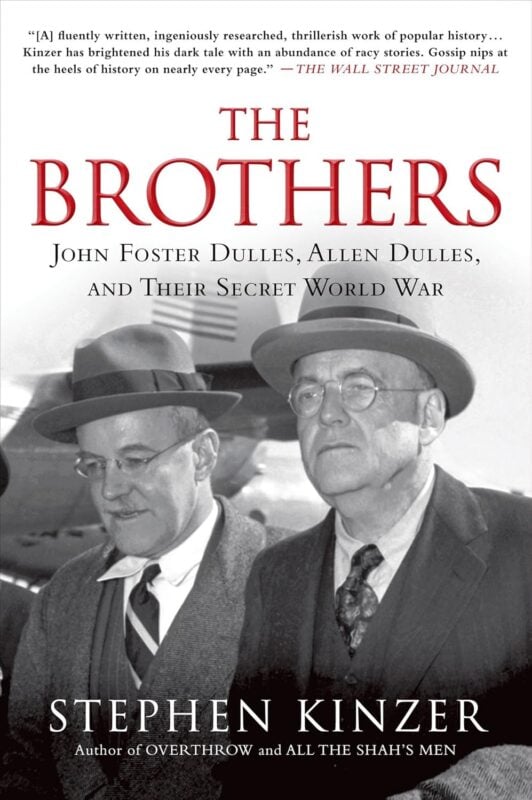
The Bush family’s integration with the CIA began through Prescott Bush’s connections with Brown Brothers Harriman, a bank deeply tied to intelligence and foreign policy formation. Prescott's partner Averell Harriman served in high diplomatic posts while maintaining ties to intelligence operations. These relationships placed the Bushes within a closed system where policy, finance, and covert operations converged. George H.W. Bush’s recruitment into intelligence aligns with a pattern of Yale-educated elites entering clandestine roles through trusted networks like Skull and Bones.
George W. Bush inherited more than a name. His Air National Guard service, protected from scrutiny, his rise through oil partnerships with Saudi-connected financiers, and his elevation to the presidency reflect mechanisms that manage talent, shield liabilities, and coordinate institutional support. The narrative of an underqualified scion ascending through merit collapses under the weight of documented patronage and strategic grooming.
Kennedy, Nixon, and the Architecture of Secrecy
The Kennedy assassination forms a central fault line. George H.W. Bush’s inability to account for his whereabouts during the event, despite a record of his presence in Dallas and calls to the FBI, raises questions about foreknowledge or involvement. The book examines figures like George de Mohrenschildt, a close friend of both Lee Harvey Oswald and the Bush family. The convergence of these circles in Dallas points to a concentration of covert and political activity in proximity to the assassination.
Watergate further illustrates the book’s thesis. Operatives involved in the break-in, such as E. Howard Hunt, maintained ties to CIA operations involving Cuba, Latin America, and political sabotage. The removal of Nixon, portrayed as a corrective action against executive overreach, is reconsidered as an internal purge to protect deeper secrets. Nixon’s knowledge of CIA activities, particularly regarding Cuba and Kennedy, may have made him a liability. The Bush family, positioned close to key players, emerged unscathed and ascendant.
Reconstructing George W. Bush’s Rise
George W. Bush's narrative begins with academic mediocrity and failed business ventures. Despite this record, he received investment from James Bath, a figure linked to Saudi investors, including the bin Laden family. These early financial ties positioned Bush for political viability. His tenure as Texas governor, marked by strategic land deals and favorable media, reflected managed advancement.
During his presidency, policies that benefited energy companies, defense contractors, and financial institutions mirrored the interests of those backing his rise. The Iraq War, justified on discredited intelligence, aligned with long-term geopolitical and corporate goals. Domestic policies that favored deregulation, surveillance, and privatization mirrored the ideological goals of the hidden state described throughout the book.
The Deep Structure of Governance
Family of Secrets identifies a durable infrastructure of governance operating beneath electoral politics. Intelligence networks, multinational corporations, and financial elites form a recursive feedback loop that selects, supports, and defends compliant leaders. Political parties serve as presentation mechanisms rather than structural differentiators. Media narratives, filtered through ownership and access constraints, reinforce the surface story.
Russ Baker provides names, documents, and timelines to support claims, creating a narrative of structural continuity. The Bush dynasty exemplifies the convergence of private ambition with systemic power. The dynasty’s ascent required strategic silences, obfuscations, and narrative control, maintained across generations.
The Role of Media and Historical Memory
The book critiques mainstream journalism for missing—or avoiding—the connections that define the Bush legacy. Investigations into George W. Bush’s National Guard service, his ties to Saudi money, and his policy shifts were often fragmented or buried. Baker’s investigation reconstructs the fuller picture by integrating financial records, obscure documents, and overlooked testimonies.
Historical memory, shaped by official records and public storytelling, fails when it isolates events from institutional patterns. Family of Secrets argues for a recalibration of historical interpretation to include covert networks, parallel decision-making processes, and elite self-preservation mechanisms.
Democracy and Its Discontents
The Bush family’s trajectory poses a fundamental question: What forces shape American leadership? Elections offer procedural legitimacy, but the selection, grooming, and protection of candidates often occur outside public view. Intelligence affiliations, corporate backers, and legacy admissions to elite institutions create a pathway distinct from civic engagement.
George W. Bush’s presidency, with its wars, surveillance expansions, and economic collapses, represents not merely personal failure but systemic intent. The policies that defined his administration originated from a long history of influence that predates his birth. His role was to execute a vision shaped by predecessors, advisors, and funders whose goals required secrecy, continuity, and plausible public justification.
The Permanence of the Unseen
Family of Secrets concludes that the Bush dynasty functions as a vessel for a hidden continuity of American power. This continuity uses intelligence affiliations, corporate networks, and political patronage to shield operations from democratic interference. The legacy of the Bush family, understood through this lens, reveals a durable architecture of influence that continues to shape policy, constrain reform, and manage dissent.
Through documented connections, strategic absences, and corroborated anomalies, Russ Baker compels a reevaluation of American political history. The book challenges readers to trace policy outcomes back to institutional interests and to recognize patterns that persist across administrations. The democratic façade remains, but the control mechanisms operate elsewhere.