The Plot to Seize the Whitehouse: The Shocking True Story of the Conspiracy to Overthrow FDR
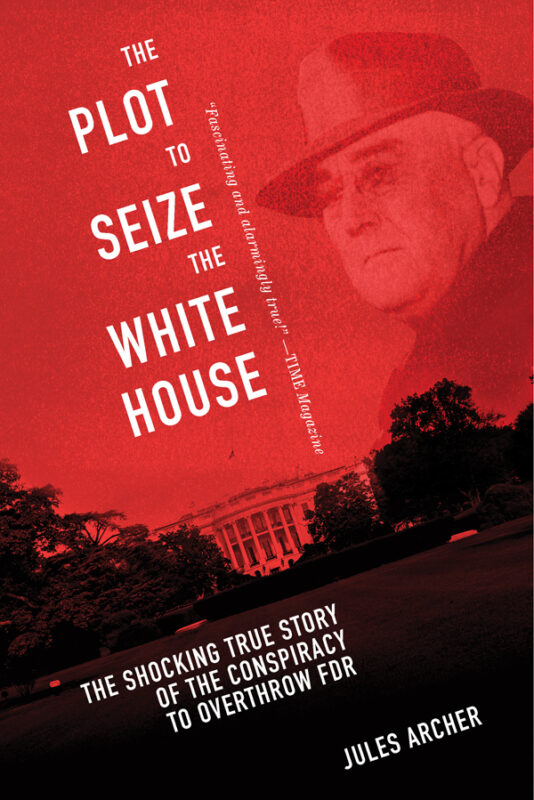
The Plot to Seize the White House by Jules Archer begins with a seismic claim: during the early 1930s, a group of wealthy American businessmen plotted to overthrow the U.S. government and install a fascist regime, recruiting Major General Smedley D. Butler as their figurehead. What unfolds is a chilling account of ambition, manipulation, and the fragile intersection between military loyalty and political power. Archer presents detailed evidence, personal testimonies, and congressional hearings to reconstruct a conspiracy so audacious that its exposure became a near-forgotten footnote in American history.
Economic Crisis and Political Turmoil
The Great Depression shattered public confidence in traditional institutions. Franklin D. Roosevelt’s New Deal policies promised recovery, but they also threatened entrenched financial interests. Business leaders saw Roosevelt’s abandonment of the gold standard and expansion of government control as a direct challenge to their wealth and influence. They sought a mechanism to reverse this trend and protect their economic dominance. In this volatile environment, Archer identifies the conditions under which discontented elites began to imagine radical alternatives.
Smedley Butler: The Reluctant Savior
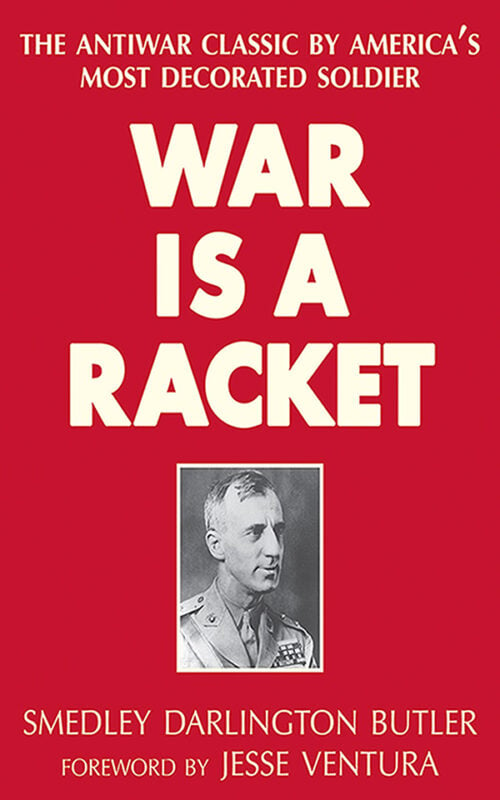
Smedley D. Butler had retired from the Marine Corps with two Medals of Honor and a reputation for honesty, patriotism, and fierce support for veterans. He had publicly condemned the exploitation of soldiers for economic gain, asserting that war served corporate interests. In 1932, he stood with the Bonus Army—World War I veterans demanding early payment of their promised bonuses—offering moral support after the federal government violently dispersed them. His visibility and credibility made him a symbolic focal point for veterans nationwide. To those seeking to mobilize military strength against Roosevelt, Butler seemed the perfect choice.
The Conspirators Make Contact
Archer describes how Gerald C. MacGuire, a bond salesman and American Legion official, approached Butler with increasing urgency. MacGuire represented a network of financiers, including Grayson M.-P. Murphy and Robert S. Clark. He offered Butler substantial funds and a leadership role in a proposed organization modeled on France’s Croix de Feu, a veterans' group that had influenced right-wing policies during political instability. The plan involved raising a paramilitary force of 500,000 men, funded by millions in private capital. This force would either coerce Roosevelt into appointing a "Secretary of General Affairs" or displace him entirely.
Manufacturing Legitimacy
To cloak the plot in legitimacy, the conspirators emphasized constitutional rhetoric. They framed their organization as a patriotic response to Roosevelt’s overreach. They sought to invoke fears of inflation and Communism to justify intervention. Archer explains how they used the American Legion and other veterans' networks to seed support and prepare the public for a leadership shift under the guise of national salvation. The plan included coordinated media campaigns and orchestrated demands for economic conservatism—especially the restoration of the gold standard.
Resistance and Exposure
Butler played along long enough to extract critical information. Rather than reject the plan outright, he listened, questioned, and tracked its development. He used his contacts to verify claims and gather evidence. When confident in the plot’s scale and credibility, he testified before the McCormack-Dickstein Committee, a congressional panel tasked with investigating subversive activities. His testimony detailed meetings, documents, and funding sources. Although the committee verified his account, the report’s release was subdued. The press, aligned with corporate interests, downplayed the findings. The Justice Department declined to prosecute the conspirators.
The Myth of Silence
Archer critiques the historical amnesia that followed. American textbooks rarely mention the plot. Butler’s courageous defiance never became a foundational narrative. The accused conspirators retained their reputations. Archer sees this silence as strategic. By erasing the attempted coup from public memory, elite institutions preserved their legitimacy. The book challenges readers to confront the vulnerability of democratic systems to private coercion. When the plot failed, it was not due to structural resilience, but to the personal integrity of one man.
The Role of the Media
Mainstream newspapers dismissed the affair as fantasy. Archer examines how outlets like Time and The New York Times characterized Butler’s testimony as sensational or unreliable. Editorials shifted attention away from the coup's financial backers and toward Butler’s supposed eccentricity. This media strategy discredited the messenger without addressing the message. Archer sees this dynamic as emblematic of the press's role in protecting established power, especially during moments of systemic threat.
Financial Elites and Authoritarian Sympathies
Many of the plot’s alleged supporters had expressed admiration for European fascist regimes. Archer names key figures in banking and industry who praised Mussolini’s economic policies and Hitler’s orderliness. They saw Roosevelt’s social programs as dangerous experimentation and his regulatory reforms as unacceptable intrusions. For these men, fascism offered a model of elite rule under the veneer of nationalism. Archer draws a direct connection between these ideological preferences and the operational details of the plot.
Structural Enablers
The American Liberty League, formed shortly after the failed coup, included many of the same backers. Though it operated publicly as a political advocacy group, its leadership echoed the themes of the conspiracy: opposition to the New Deal, defense of property rights, and warnings about class warfare. Archer positions the League as a legal continuation of the ideological goals behind the failed plot. It worked to shape public opinion and policy through influence rather than coercion, showing how the strategy of elite resistance adapted after the exposure.
Legacy and Relevance
Archer insists the events of 1933–1934 should inform present understandings of political vulnerability. He emphasizes that no legal consequences followed, and the conspirators continued to shape American economic and political life. The book raises urgent questions. What protects democracy when those sworn to uphold it seek to overthrow it? How does financial power evade accountability? Archer concludes that democratic institutions do not operate on autopilot. Their survival depends on constant vigilance and the courage to confront betrayal, even when it hides behind the language of patriotism.
Narrative as Intervention
The structure of Archer’s work mirrors the buildup and unraveling of the plot. He withholds judgment as long as Butler did, allowing facts to accumulate and stakes to rise. The reader experiences the gradual realization of the plot’s scope alongside the protagonist. This method emphasizes the credibility of Butler’s claims and highlights the contrast between his moral clarity and the conspirators’ strategic calculation. Archer’s narrative strategy insists on taking the historical moment seriously, compelling readers to recognize the plot’s internal logic and external implications.
Political Consequence as Choice
By choosing not to prosecute, the government allowed a precedent of elite immunity. Archer does not speculate about alternative histories. He focuses instead on the decisions made and their consequences. Institutions that fail to act on credible threats weaken their authority. Public silence signals permission. The book’s central claim is not that a coup nearly succeeded, but that democratic fragility persists unless citizens and leaders alike act to defend its principles.
Smedley Butler’s Enduring Role
Butler emerges not as a military icon, but as a civic guardian. His defiance transcended partisanship and career ambition. Archer celebrates his independence, his loyalty to veterans, and his refusal to weaponize military legitimacy against elected leadership. In Butler’s refusal lies the book’s core message: one individual, with clarity and conviction, can halt the advance of authoritarian designs. But such resistance requires not only moral courage but public awareness. Archer’s book attempts to provide that awareness.
Conclusion as Demand
The Plot to Seize the White House does not close with resolution. Archer offers no comfort, only challenge. The facts have been documented. The conspirators named. The betrayal exposed. The absence of consequences remains. What are the stakes of forgetting? What happens when political memory fades while financial power endures? Archer demands recognition of a moment when the future tilted on the decisions of a single man. That moment recurs wherever ambition eclipses principle, and silence replaces scrutiny.


https://youtu.be/Cc6kw6N1_kw