War Is a Racket: The Antiwar Classic by America’s Most Decorated Soldier
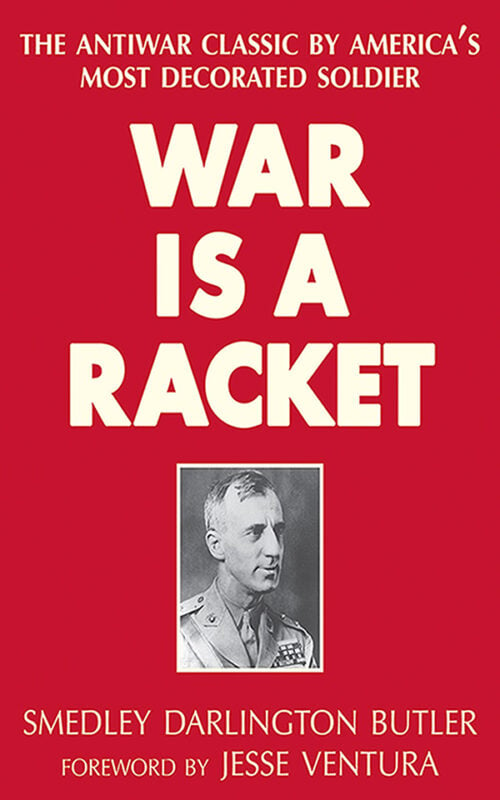
War Is a Racket by Smedley Butler explodes the illusion that war serves a patriotic or moral purpose by exposing the financial motives that drive conflict and shape its outcome. Smedley Butler, the most decorated Marine in U.S. history, wrote from direct experience, having led campaigns across multiple continents. His central claim emerges with unsparing clarity: war constitutes an organized racket, engineered for the profit of a narrow elite who accumulate fortunes while the public absorbs the loss in blood, taxes, and social upheaval.
The Machinery of War Profiteering
Butler tracks the origins of war wealth to a select group of bankers, industrialists, and speculators. Their fortunes swell as national emergencies generate lucrative contracts and manipulate financial markets. During World War I, at least 21,000 new millionaires and billionaires appeared in the United States—an outcome visible in income tax returns, Senate investigations, and economic records. DuPont, the powder manufacturer, averaged six million dollars in annual profit before the war; during the conflict, this number soared to fifty-eight million. Steel, copper, leather, nickel, sugar—industries across sectors multiplied their earnings through government contracts, often with profits ranging from hundreds to thousands of percent above normal.
War as a Racket: Structure and Logic
A racket, Butler insists, operates through deception and concentration of benefit. The few profit, the many pay. War appears noble in public speeches and headlines, but a small inside group designs the mechanisms, guides decision-makers, and reaps the surplus. The typical citizen, conscripted by policy and propaganda, endures the real consequences. This imbalance reveals the racket’s architecture: those who pay seldom share in the gains.
Propaganda, Patriotism, and Manufactured Consent
To secure the necessary bodies for war, governments deploy powerful propaganda. Butler recounts the machinery: campaigns that glorify military service, create medals, stage parades, and flood society with slogans. The campaign generates shame for those who refuse enlistment and hero worship for those who serve. Clergy invoke divine sanction for violence. Citizens are taught that fighting serves a higher good, but the real reason centers on dollars and cents.
Industrial Contracts and the Absurdity of Excess
Contracts for equipment and supplies further reveal the perverse incentives at play. Manufacturers sold the U.S. government millions of pairs of shoes and mosquito nets—far beyond the actual needs of the troops. Hundreds of thousands of leather saddles were purchased despite no American cavalry operating overseas. Airplane and engine makers collected over a billion dollars for hardware that never reached the battlefield. These expenditures flowed from taxpayers into the accounts of business owners, who pushed for more war production, knowing that increased conflict meant increased profit.
The Bankers’ Game
Bankers, less visible but even more powerful, orchestrate financial gains through the manipulation of bonds and loans. Liberty Bonds, sold to the public at face value, were later bought back by bankers at depressed prices, then resold at a profit when market conditions shifted. These engineered cycles enabled financiers to pocket both the public’s original investment and the government’s payouts, multiplying wealth for a select few while the population faced taxation and inflation.
Human Cost and the Fabric of Sacrifice
Butler insists on a direct reckoning with the consequences for those who serve and their families. Veterans fill hospitals—both physically and mentally destroyed. Families suffer heartbreak as they lose sons, brothers, and fathers to death, disability, and trauma. Soldiers received thirty dollars a month—less than a day’s wage in some factories—while half that pay was immediately deducted for dependents and insurance. Even the medals, parades, and rituals cannot mask the economic and emotional devastation carried by those who fought and those who waited at home.
Escalation and Repetition
As war ends, the machinery does not halt. Disarmament conferences convene, but the same forces who profit from conflict lobby for increased armaments, lobbying Congress for larger navies and more advanced weapons systems. Butler observes that military planners justify these expansions under the guise of defense, though the operational pattern places American military assets far from its own shores, signaling intention and inviting escalation abroad. This logic creates a cycle: preparation for war generates profit, which motivates new conflict, which in turn demands further preparation.
Conscript Capital and Industry: Butler’s Solution
Butler advances a radical proposal to disrupt this cycle. Before drafting soldiers, the government must conscript capital, industry, and labor. Executives, directors, bankers, and workers in war-related industries would receive the same pay as a private in the trenches. Their families, like those of the soldiers, would live on the same allowance and buy government bonds with their meager salaries. Conscripted wealth would choke off the profit motive. If those who benefit most from war confront the same risks and privations as those who fight, Butler predicts the appetite for conflict would collapse.
Voting Rights and War Decisions
A second structural reform targets the decision to go to war. Only those eligible to fight should vote on declarations of war. Butler observes that politicians, financiers, and industrialists face no danger in combat. If war’s advocates must subject themselves—or their kin—to risk, the calculus changes. This plebiscite, limited to those called upon to serve, roots the decision in the bodies that bear its costs.
Military Force as National Defense
Butler demands a strict legal boundary for U.S. military power. Forces must serve national defense within a defined geographic range. Naval vessels restricted to 200 miles from the coastline, aircraft to 500 miles, and the army to territorial borders would prevent offensive adventures abroad. This policy, he argues, would have averted past entanglements and future provocations. Defense by definition becomes credible and limited, decoupling military expansion from economic speculation.
The Causal Sequence of Policy, Profit, and Suffering
Butler threads these arguments into a causal sequence: economic interest shapes policy; policy drives propaganda; propaganda mobilizes the population; contracts enrich the few; losses devastate the many; aftermath sets the stage for future cycles. Each step in the sequence produces structural outcomes, visible in economic data, social suffering, and historical recurrence.
Historical Evidence and the Record of Inquiry
Senate documents, economic investigations, and personal observation all corroborate Butler’s claims. Congressional investigations into the munitions industry revealed profit rates of up to 7,856% for coal companies, and multiples in the hundreds and thousands for steel, leather, chemicals, and other firms. Even government attempts to regulate wartime profit skirted the real issue—proposing “limitations” that failed to address the root incentive.
National Debt and the Economic Legacy of War
The book traces the expansion of U.S. national debt from just over one billion dollars in 1898 to more than twenty-five billion by the end of World War I. The population paid this sum through decades of taxation, their children and grandchildren inheriting the burden. The expansion of debt links directly to foreign interventions and the contracts they generate. Butler asserts that foreign entanglements, masked as patriotic duty, create a financial legacy that limits future prosperity and autonomy.
Secrecy, Manipulation, and the Absence of Accountability
Decisions to enter war occur in secret meetings among elite policymakers and foreign envoys. Butler recounts the events leading up to the U.S. entry into World War I, when a commission of Allied representatives met with the President and his advisors, articulating the stakes in financial terms—debts owed to American banks, manufacturers, and exporters. Had the public witnessed these deliberations, Butler asserts, the push for war would have faltered.
Legacy and Ongoing Relevance
Butler closes his account with a call for vigilance and action. He urges citizens to recognize the true architecture of war—to study the flow of money, contracts, and influence—and to demand structural reform. Only by eliminating the profit incentive, empowering those who fight to make the decision, and limiting the projection of force can a society safeguard its people from being manipulated into conflict for private gain.
Disarmament: The Challenge of Implementation
Butler addresses the persistent call for disarmament conferences. He sees these meetings as ineffective, since the participants—professional soldiers, admirals, diplomats, and behind-the-scenes business interests—have a vested interest in perpetuating the war system. Each nation attends, seeking advantage, negotiating armament limits that favor their industries, and rarely achieving genuine reduction. Real disarmament, Butler claims, would require scrapping the ships, planes, guns, and tanks—an outcome that economic interests systematically resist.
Peace Through Scientific Progress
In the postwar era, Butler observes a shift in the mechanisms of warfare. The next conflict will deploy chemical and biological weapons, with scientists mobilized for destruction rather than construction. He asserts that if society redirected scientific talent to peaceful and productive purposes, the gains in prosperity and well-being would dwarf anything achieved through war. The diversion of intellectual capital toward violence serves only those who profit from suffering.
A Final Rejection of War
Butler concludes by affirming the necessity of rejecting the war system in its entirety. He asserts that society cannot insulate itself from the economic, social, and moral consequences of conflict while permitting a structure that rewards the few and sacrifices the many. The logic of the racket—profit for the inside group, loss for the general population—perpetuates itself unless directly confronted. Through conscription of wealth, restricted suffrage on war, and geographic limits on force, society can break the cycle.
War Is a Racket stands as a direct challenge to the underlying motives of conflict, documenting with precision how the machinery of profit shapes policy, mobilizes the public, and delivers devastation on a national scale. Smedley Butler’s analysis draws from a lifetime of service and observation, offering a roadmap for reform and an urgent warning for those determined to safeguard democracy from the corrosive influence of war profiteering.