Behind the Lodge Door: Church, State and Freemasonry In America
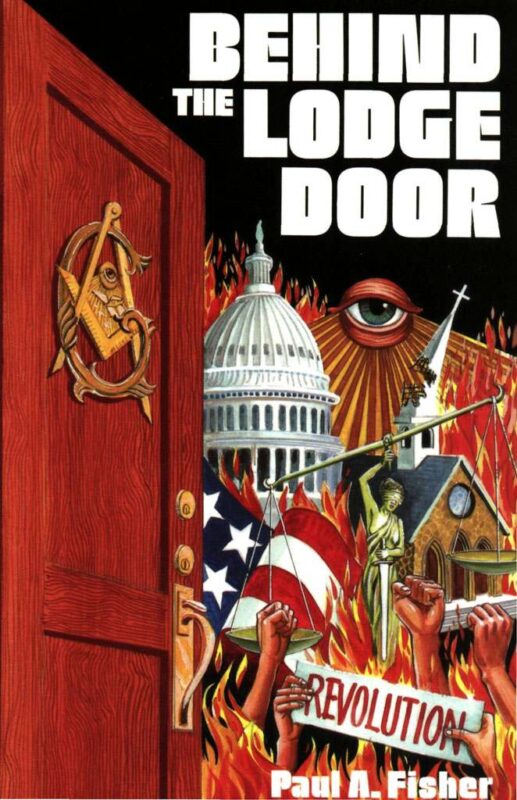
Behind the Lodge Door: The Church, State and Freemasonry in America by Paul A. Fisher investigates how Freemasonry shaped American law, culture, and the pivotal separation between church and state. Fisher’s research reveals a network of Masonic influence within the U.S. Supreme Court and government, where fraternal alliances and personal philosophies converged to shape critical rulings on religion, education, and public life. Through archival findings, legal analysis, and historical synthesis, Fisher documents a pattern of Masonic ascendancy and asks how this legacy informs contemporary American identity.
Masonic Influence and the Supreme Court
In the mid-20th century, a pronounced shift emerged within the United States Supreme Court. Fisher uncovers that, from 1941 to 1971, Freemasons and those sympathetic to Masonic ideals formed a majority of the Court. Their presence, rooted in both fraternity and ideology, affected decisions that continue to define the legal contours of church and state. Fisher’s research into justices’ private papers and Masonic correspondence exposes the ties that bound these figures and the values they advanced. This confluence did not arise incidentally. Presidential appointments, notably under Franklin D. Roosevelt, increased Masonic representation, creating a period of judicial activism that advanced secularism within public institutions.
The 1947 Everson v. Board of Education decision stands as a watershed. The Court’s opinion, relying on Thomas Jefferson’s phrase “a wall of separation between church and state,” created new precedent. Fisher demonstrates that this language, never grounded in the original legislative record of the First Amendment, became the touchstone for subsequent rulings. The Everson case denied public funding for religious schools and established a doctrinal separation that excluded religious expression from government life. Fisher traces the causal path from this decision to bans on prayer in public schools, restrictions on religious education, and prohibitions against public financial aid to parochial institutions. The judicial majority, informed by both personal conviction and Masonic affinity, steered the Court toward a rigorously secular interpretation of the Constitution.
Personal Philosophies and Judicial Bias
Fisher’s examination of the private beliefs of key justices reveals a consistent pattern. He details how several justices openly espoused agnosticism, Unitarianism, or other non-traditional religious perspectives. Justice Felix Frankfurter’s diaries, correspondence, and published commentary show a preference for secular values and a skepticism toward religious authority. Frankfurter, who described himself as a “reverent agnostic,” repeatedly signaled a desire to limit religious influence in public education and civic life. His close relationships with other liberal justices and with Unitarian clergy reinforced this orientation.
Justice Hugo Black, author of the majority opinion in Everson, cultivated personal and philosophical ties with Unitarianism. His support for “liberal religion” and his affiliation with Unitarian churches deepened his commitment to a secular public sphere. Fisher documents how Black’s participation in Unitarian services, contributions to Unitarian causes, and friendship with Unitarian pastor A. Powell Davies became a matter of record. The book demonstrates how this network of affinity extended to other justices, creating an ideological bloc that consistently advocated for the separation of church and state.
Freemasonry’s Ideological Program
Freemasonry, as described by Fisher, operates through secrecy, ritual, and a defined system of moral and philosophical instruction. The fraternity espouses a universal creed—rooted in the “Fatherhood of God and Brotherhood of Man”—and positions itself as a force for enlightenment, rationalism, and progress. Fisher presents evidence from Masonic publications, rituals, and speeches to show how these principles translate into social and political engagement.
Masonic doctrine teaches solidarity among members, enforces secrecy with binding oaths, and incentivizes mutual advancement in professional and public life. The promise of fraternity attracts influential leaders, who then leverage their connections to shape outcomes within key institutions. Fisher argues that this system fosters internal loyalty and can create networks of influence that override other allegiances. The book outlines how these dynamics played out within the Supreme Court, Congress, and the broader landscape of American politics.
Historical Conflict With the Catholic Church
Fisher recounts a long-standing historical conflict between Freemasonry and the Catholic Church. Papal condemnations of Masonry, beginning with Pope Clement XII’s In Eminenti in 1738, set the stage for centuries of tension. The Church identified Masonry as a secret society with subversive aims, accusing it of advancing rationalism, anti-clericalism, and revolutionary ideology. Fisher documents how these charges found expression in both European and American contexts, where Masonic lodges often became centers for anti-Catholic agitation and political activism.
In the United States, this animosity shaped debates about education, religious liberty, and the role of faith in public life. Masonic leaders opposed parochial school funding, promoted secular curricula, and sought to marginalize Catholic influence in government. Fisher cites examples from legislative battles, court decisions, and media campaigns to show the continuity of this struggle. The narrative weaves together episodes from the French Revolution, the rise of Deism, and the American Revolution, illustrating how Masonic philosophy competed with Christian orthodoxy for cultural authority.
Masonic Networks in American History
Freemasonry’s influence extends beyond the judiciary. Fisher’s investigation tracks the fraternity’s involvement in the American Revolution, noting the prominent roles played by Benjamin Franklin, George Washington, and other founders. Lodges provided forums for organizing revolutionary activity, disseminating propaganda, and forging alliances. Fisher cites historical accounts of the Boston Tea Party, which originated from a Masonic gathering at the Green Dragon Tavern. He presents Freemasonry as an engine of revolutionary change, mobilizing members in support of independence and Enlightenment principles.
This tradition of civic engagement continued into the 19th and 20th centuries. Masonic influence permeated political parties, social organizations, and the press. Fisher details the establishment of Masonic newspapers, the operation of fraternal charities, and the cultivation of elite networks. These efforts contributed to a culture of mutual advancement and a preference for secular, rationalist policies in public affairs. Fisher asserts that Masonic values—emphasizing universalism, tolerance, and moral autonomy—shaped the development of American identity.
Legal Precedent and Social Transformation
Legal doctrine evolved as Masonic and Unitarian principles gained ascendancy. Fisher demonstrates how judicial reliance on precedent (stare decisis) entrenched the Everson framework, making the “wall of separation” the dominant paradigm for interpreting the First Amendment. Courts prohibited released-time religious education, banned public funding for parochial schools, and protected secular humanism as a form of religion under the Constitution. Fisher traces these rulings to the personal beliefs and alliances of justices, highlighting the cumulative effect on American society.
As legal restrictions on religious expression intensified, public institutions shifted toward a secular orientation. Schools removed prayer, religious symbols, and faith-based instruction. Government agencies adopted policies that marginalized traditional religious practices. Fisher contends that these changes did not reflect a neutral application of Constitutional principles, but rather the outcome of sustained ideological advocacy by Masonic networks and their allies.
Media Silence and Cultural Conditioning
Fisher scrutinizes the role of the media in shaping public perception of Freemasonry. He observes that, despite extensive historical documentation and high-profile scandals—such as the Propaganda Due (P-2) affair in Italy—mainstream coverage of Masonic influence remains limited. Journalists often avoid substantive discussion of the fraternity’s goals, operations, and impact on public life. Fisher attributes this silence to the effectiveness of Masonic secrecy and the widespread belief in the fraternity’s benevolence.
He analyzes the mechanisms by which society becomes conditioned to disregard or dismiss concerns about secret societies. Masonic rituals foster a sense of exclusive knowledge and internal solidarity. The promise of advancement within the organization provides incentives to maintain discretion and loyalty. Fisher argues that this dynamic perpetuates a culture in which critical scrutiny of Masonic activity rarely emerges in public debate.
Call for Transparency and Public Accountability
Fisher asserts that democratic societies require openness, critical inquiry, and accountability. He argues that secret societies—by design—undermine these values. The concentration of influence among Masonic members within the judiciary, government, and civil society raises structural questions about transparency and fair representation. Fisher contends that public institutions should be free from covert allegiances and that citizens have a right to understand the forces shaping their laws and culture.
He challenges readers to reconsider the boundaries between private association and public service. The evidence of coordinated action among Masonic justices and officials, he asserts, creates a compelling case for greater scrutiny. Fisher maintains that only through robust debate, open access to information, and vigilance can society ensure the integrity of its institutions.
Legacy and Contemporary Relevance
The patterns Fisher traces in Behind the Lodge Door remain visible in contemporary debates about the role of religion in American life. Judicial philosophy, church-state relations, and the influence of private organizations continue to animate legal and political controversies. Fisher’s account invites ongoing examination of how hidden networks and personal beliefs intersect with public responsibility.
He situates the story of Freemasonry and the Supreme Court within a broader narrative of American transformation. The convergence of legal, cultural, and fraternal currents shaped the development of secularism, religious liberty, and national identity. Fisher closes with a call to action, urging renewed commitment to the principles of transparency, reasoned argument, and participatory democracy.
Behind the Lodge Door offers a meticulously researched, structurally assertive analysis of how Freemasonry shaped pivotal developments in American legal and cultural history. Fisher provides a compelling case for the enduring significance of transparency and accountability in public life. The book stands as an invitation to explore the hidden forces that have shaped, and continue to influence, the character of American society.