The Illuminati
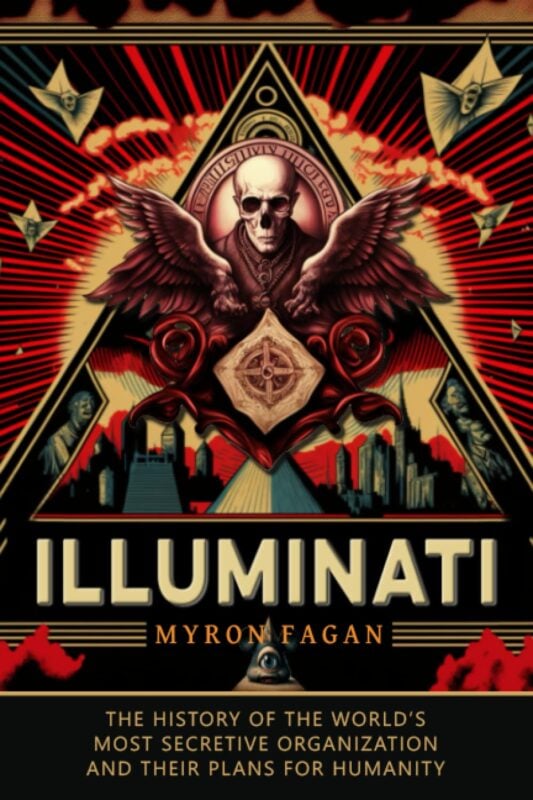
The Illuminati by Myron Fagan explores the origins, mechanisms, and ambitions of a secret order that seeks to direct world events from behind the scenes. Fagan traces the rise of the Illuminati to Adam Weishaupt’s founding of the organization in 1776, where powerful banking families, especially the Rothschilds, began funding a program to subvert governments and religious institutions across Europe and America. Weishaupt, a law professor trained by Jesuits, crafted a system that required the destruction of traditional authorities, the manipulation of political and economic life, and the recruitment of key figures in influential spheres. Fagan advances the claim that the Illuminati’s program shaped revolutions, engineered financial systems, and continues to influence contemporary power structures.
Genesis of the Illuminati and the Rothschild Strategy
Adam Weishaupt’s formation of the Illuminati in Bavaria marks a pivotal event. The Rothschild banking dynasty commissioned Weishaupt to modernize centuries-old schemes for controlling nations. By dividing societies along political, religious, and economic lines, the Illuminati devised a playbook to generate discord, weaken institutions, and prepare the ground for a new order. Fagan explains how Weishaupt completed his blueprint on May 1, 1776, which remains a day of celebration among communist nations due to its foundational significance. The plan required Illuminati agents to arm opposing factions, provoke conflicts, and ensure governments collapsed under the strain of orchestrated upheaval.
The Rothschilds emerged as the financial engineers of the conspiracy. Fagan recounts the ways the family manipulated national economies by seizing opportunities in war and crisis, as after the Battle of Waterloo, to amass unprecedented power. Nathan Rothschild’s legendary coup in the British stock market, where he spread false news of Napoleon’s victory to trigger panic and buy up stocks at pennies on the pound, consolidated their control over British finance and set a template for future conquests. The Rothschilds extended their influence by underwriting governments, buying political loyalty, and leveraging economic crises to extract concessions.
Infiltration and the Manipulation of Secret Societies
Fagan reveals that when Bavarian authorities uncovered the Illuminati’s plot, the order went underground. Weishaupt and his associates infiltrated Freemason lodges, creating an inner circle within the wider network of Masons. The Illuminati exploited the organizational secrecy and influence of Freemasonry, recruiting only those Masons who demonstrated internationalist sympathies and ideological compliance. The text identifies historical figures, including John Robison and John Quincy Adams, who sounded alarms about the Illuminati’s subversive activities, as well as Thomas Jefferson and Alexander Hamilton, who became entangled in the group’s plans. The ability to embed operatives within secret societies allowed the Illuminati to recruit from among the powerful, establish international networks, and operate with near-impunity.
Fagan draws a direct line from Illuminati machinations to the outbreaks of revolution and war across Europe. The French Revolution, the Napoleonic Wars, and a succession of 19th- and 20th-century conflicts follow a pattern of engineered violence, with Illuminati agents fomenting unrest, providing resources, and exploiting outcomes to increase their leverage. The group’s long-term approach ensures that even when immediate objectives fail, successors continue the work until conditions favor renewed action.
Control of Media and Shaping Public Opinion
The Illuminati’s enduring influence rests on control of mass communications. Fagan documents how international banking interests—Rothschild affiliates and American partners like Kuhn, Loeb & Co., Goldman Sachs, and others—systematically acquired newspapers, magazines, wire services, and movie studios. The resulting media cartel serves as an engine for propaganda, shaping perceptions, suppressing dissent, and scripting narratives that promote globalist, collectivist, and liberal ideals. Fagan attributes major policy shifts and social trends to media campaigns orchestrated by Illuminati-controlled outlets. Through selective reporting, manufactured crises, and cultural manipulation, the conspirators persuade the public to support wars, accept encroachments on liberty, and view the erosion of sovereignty as progress.
How do the masters of communication preserve their authority despite technological shifts and apparent diversity in the information landscape? Fagan suggests that the depth of ownership, the cultivation of journalists, and the placement of compliant editors allow the Illuminati to adapt quickly and steer the conversation even in times of apparent upheaval.
The Council on Foreign Relations and American Power
Fagan examines the Illuminati’s infiltration of American institutions, focusing on the Council on Foreign Relations (CFR) as the principal vehicle for their agenda. Founded after World War I, the CFR draws its membership from political dynasties, Wall Street, academia, and media. Fagan describes the CFR as a “shadow government” with the power to select presidents, dictate foreign policy, and steer the legislative agenda toward global integration. The author provides examples of prominent American leaders who either served the CFR or advanced its priorities, noting the prevalence of name changes and genealogical concealment to obscure the organization’s origins.
The CFR operates through a hierarchy of committees, think tanks, and policy groups, issuing recommendations that rapidly translate into executive actions, legislative initiatives, and judicial interpretations. By embedding trusted agents in every branch of government, the Illuminati ensure that vital decisions align with their blueprint for one-world governance.
Engineering of the Federal Reserve and Income Tax
The conversion of the United States into a pillar of Illuminati strategy required control over the nation’s finances. Fagan details Jacob Schiff’s mission as a Rothschild agent to penetrate Wall Street, acquire partnerships in Kuhn, Loeb & Co., and forge alliances with banking magnates like J.P. Morgan and John D. Rockefeller. Schiff’s campaign led to the secret 1910 meeting at Jekyll Island, where the blueprint for the Federal Reserve System emerged.
With the election of Woodrow Wilson—engineered by Illuminati operatives and secured through political manipulation—Congress passed the Federal Reserve Act and the 16th Amendment, which authorized a federal income tax. Fagan demonstrates how the Federal Reserve, controlled by private bankers, gained authority to issue currency, manipulate interest rates, and direct credit, rendering the American government financially dependent. The income tax, justified as a means of public benefit, facilitated the redistribution of wealth, funneled resources into Illuminati-controlled foundations, and shielded vast fortunes from public scrutiny.
Division and Social Engineering
Fagan highlights the Illuminati’s deliberate strategy to inflame social tensions and divide the population into hostile camps. The establishment of organizations such as the NAACP and the Anti-Defamation League, both led by individuals chosen by banking elites, provided the infrastructure to manufacture and exploit grievances. Fagan describes the orchestration of racial discord, the staging of demonstrations, and the manipulation of legal victories as tools to undermine unity and render society vulnerable to external direction.
Literary and artistic productions, including Israel Zangwill’s influential play “The Melting Pot,” reinforced narratives of victimhood and social guilt, providing ideological justification for policies that furthered the conspirators’ objectives. Propaganda in schools, universities, and mass entertainment conditioned generations to embrace internationalism, reject traditional loyalties, and internalize the logic of perpetual revolution.
Recruitment and Indoctrination of Future Leaders
The Illuminati’s program for continuity hinges on the recruitment of talented youth through prestigious scholarships and specialized schools. The Rhodes Scholarship and similar initiatives identify individuals with the aptitude and ambition to lead, immersing them in internationalist doctrine. Fagan tracks the careers of prominent Rhodes Scholars, including policymakers and diplomats who steered national agendas toward global governance.
Illuminati-run academies in Europe, such as those in Gordonstown, Scotland, and Anavryta, Greece, educate the children of nobility and elites, instilling values that align with the one-world project. Graduates occupy critical positions in government, military, academia, and finance, ensuring that the machinery of influence remains under centralized, ideologically aligned control.
The United Nations and the Blueprint for Global Governance
The formation of the United Nations represents, in Fagan’s analysis, the fulfillment of Illuminati objectives for a centralized world authority. He traces the evolution from the failed Congress of Vienna and the League of Nations to the postwar establishment of the U.N., which incorporated the mechanisms necessary to override national sovereignty. The U.N. serves as the administrative hub for programs in disarmament, education, population control, and human rights, all supervised by technocratic elites loyal to the underlying plan.
The structure of the U.N.—its Security Council, specialized agencies, and network of NGOs—provides a framework for regulatory power unconstrained by democratic accountability. Fagan argues that as member states cede authority to international bodies, the Illuminati’s vision of a one-world government approaches realization.
Instruments of Social Control: Foundations, Media, and Courts
Fagan delineates the interlocking mechanisms that sustain Illuminati dominance. Tax-exempt foundations channel the wealth of banking dynasties into research, advocacy, and policy initiatives, bypassing public oversight. Media conglomerates, directed by aligned executives, set the boundaries of debate and mobilize public sentiment. The judiciary, especially the Supreme Court, interprets the Constitution in ways that advance the dissolution of traditional norms, opening the way for unprecedented changes in law and society.
The coordinated action of these instruments ensures that resistance remains fragmented and that new crises generate opportunities for further consolidation of power. Cultural trends, political scandals, and policy shifts converge in a process that Fagan describes as strategic convergence—evidence of a long-term plan executed with patience and adaptability.
Patterns of Persistence and Strategic Patience
Fagan underscores the importance of generational continuity in Illuminati operations. The movement accepts gradual progress, delegating responsibilities across networks and timeframes to ensure that setbacks become opportunities for recalibration. Each war, financial crisis, and legislative campaign builds on previous efforts, bringing the world closer to the convergence of political, economic, and cultural authority in supranational hands.
Call to Inquiry and Awareness
Fagan challenges readers to recognize the visible patterns of manipulation and mobilize against the expansion of unaccountable power. The author urges rigorous investigation, independent verification, and resistance to psychological conditioning. By mapping the structures, agents, and methods of the Illuminati, Fagan sets out a program for awareness and action, positioning knowledge as the first step toward reclaiming autonomy. The ongoing relevance of these themes poses the central question: who directs the course of history, and what can citizens do to reclaim agency in the face of coordinated, secretive influence?