Dallas ’63: The First Deep State Revolt Against the White House

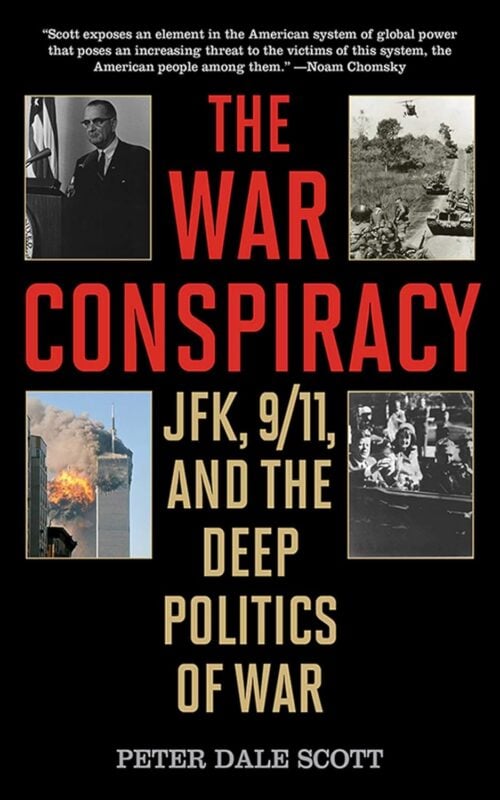
Dallas '63 by Peter Dale Scott investigates the assassination of President John F. Kennedy as a definitive act of state power, embedded in a broader pattern of covert operations, geopolitical control, and institutional subversion. This book asserts that Kennedy’s death on November 22, 1963, was not a standalone event but a structural pivot in American history, orchestrated through a collaboration of intelligence factions, criminal syndicates, and military actors driven by their own imperatives. Scott introduces the concept of “deep events”—state-involved actions whose true authorship remains hidden beneath layers of official misdirection and archival suppression.
The assassination is presented as the first overt manifestation of the American deep state asserting dominance over the elected executive. Scott identifies a convergence of geopolitical interests opposed to Kennedy’s foreign policy direction—particularly his moves toward detente with the Soviet Union and Cuba, his steps to withdraw from Vietnam, and his challenge to the authority of the CIA. In these actions, the president positioned himself against embedded forces with the means and will to remove him. The crime itself becomes intelligible through its consequences: not chaos but control, not revolution but continuity under the influence of invisible governance.
The Architecture of Covert Power
Scott traces the institutional evolution of covert agencies whose influence expanded through Cold War justifications. He examines the post-WWII rise of the CIA, the role of military intelligence, and the symbiosis between these institutions and private interests across finance, energy, and organized crime. He defines the deep state as a networked domain of influence—unofficial, extra-constitutional, yet structurally embedded in state operations. This configuration does not rely on a single chain of command; it functions through overlapping relationships, mutual interests, and shared imperatives.
The assassination of Kennedy did not require the coordination of every member of every agency involved. It required the alignment of actors whose incentives intersected: a president resisting war in Vietnam, questioning covert operations in Cuba, and proposing radical changes to Cold War policy had become an obstacle. Scott details how factions within the CIA manipulated intelligence to associate Lee Harvey Oswald with Soviet and Cuban contacts, creating a framework for immediate suspicion and preemptive containment. The cover-up, already in motion before the shots were fired, served to stabilize the narrative and prevent investigation into deeper institutional complicity.
Mexico City and the Engineered Trail
Scott devotes significant analysis to Oswald’s alleged activities in Mexico City. He investigates the manipulation of surveillance records and the manufactured connection between Oswald and Valeriy Kostikov, a KGB officer. These fabrications triggered alarm within intelligence circles and created a diplomatic pretext for rapid narrative closure. According to Scott, this trail was deliberately planted to generate fear of nuclear confrontation, enabling swift acceptance of the lone gunman explanation and the suppression of deeper inquiry.
This engineered connection forced President Johnson to act quickly to contain the potential crisis. Johnson’s rapid formation of the Warren Commission responded not to evidentiary logic but to geopolitical necessity. The specter of Soviet or Cuban involvement—however thinly constructed—created sufficient pressure to silence dissent and coerce compliance among those charged with investigating the assassination. The false narrative itself became a tool of statecraft, useful not because it convinced, but because it constrained alternatives.
Deep Politics and Competing Power Centers
The book introduces the theory of dyadic deep politics—a system where Wall Street interests and radical right-wing factions operate in tension yet symbiosis. Scott presents these forces not as ideologically identical but as structurally interdependent, competing for influence yet reinforcing the covert state’s primacy over the constitutional order. This dyad shaped foreign and domestic policy during the Cold War, opposing detente, civil rights, and executive independence.
Scott analyzes actors such as William Pawley, a businessman and intelligence liaison with deep connections to anti-Castro exiles and covert operations. He identifies Pawley as a key figure in fostering Cold War paramilitary strategies and suggests his involvement in framing anti-Cuban narratives that justified interventionist policies. The use of false flag operations, including Operation Northwoods and fabricated Cuban plots, created the conditions for mobilizing public and institutional support for militarized policy agendas.
Organized Crime, Intelligence, and Structural Collusion
Scott documents the intimate overlap between CIA assets, organized crime figures, and military contractors. He challenges the separation between criminal and official sectors, showing how shared operational goals created functional alliances. He examines the activities of Jack Ruby, often dismissed as a fringe player, and places him within a network of political enforcers, labor intermediaries, and mob-connected intelligence assets. Ruby’s prison statements, misreported and poorly transcribed by official sources, contain references to high-level figures with connections to Texas oil interests and ultraconservative groups.
Scott’s analysis does not rely on a singular orchestrator but tracks institutional patterns. He identifies multiple centers of power capable of shaping outcomes, suppressing evidence, and guiding public perception. The lack of a unified conspiracy strengthens his claim: assassination was not the result of rogue elements but of aligned interests across distinct sectors of influence. The suppression of Oswald’s Mexico City impersonation, the redaction of CIA communications, and the strategic destruction of Secret Service and White House Communication Agency tapes constitute a deliberate removal of evidentiary pathways.
Watergate, Iran-Contra, and 9/11 as Structural Echoes
The narrative extends beyond Dallas to encompass a sequence of political shocks: Watergate, the October Surprise of 1980, Iran-Contra, and 9/11. Scott argues that these events display recurring patterns—manipulation of intelligence, suppression of public inquiry, and the expansion of executive secrecy. In each case, the constitutional state yielded to the prerogatives of covert power. The result was not merely scandal or embarrassment but structural transformation. These deep events restructured governance, normalized surveillance, and redefined the relationship between public and secret state functions.
Scott identifies the Continuity of Government (COG) planning apparatus as a central node in this transformation. Initially developed for nuclear emergency scenarios, COG planning evolved into a permanent infrastructure for bypassing democratic processes. He shows how this apparatus expanded its influence during and after crises, acquiring authority over communication, succession, and national security policy without public oversight. Figures associated with the COG network appeared repeatedly across multiple deep events, occupying advisory, enforcement, and operational roles.
The End of Executive Autonomy
By the conclusion of Dallas '63, Scott frames Kennedy’s assassination as the rupture point after which the presidency no longer held decisive control over the intelligence and security apparatus. He details how subsequent presidents—Nixon, Ford, Carter—encountered institutional resistance, forced resignations, or political sabotage after challenging entrenched covert interests. Johnson, by contrast, acquiesced and expanded the Vietnam War, consolidating the trajectory that Kennedy had sought to disrupt. Scott positions this continuity as the clearest evidence of deep state success: policy direction followed institutional momentum, not electoral mandate.
The assassination becomes intelligible as a rational act from the perspective of those who executed it. The elimination of a president who disrupted consensus strategies, refused to escalate militarized conflicts, and sought accommodation with adversaries removed the obstacle to a coherent imperial vision. Scott’s analysis culminates in this recognition: the deep state does not merely influence policy—it creates the conditions under which policy decisions occur.
Redefining Historical Understanding
Dallas '63 demands a reassessment of American political history. It argues for a framework that places covert operations, false narratives, and institutional secrecy at the center of historical causality. The book demonstrates how archival suppression, misinformation, and media compliance coalesce to erase alternative interpretations and reinforce state legitimacy. It presents a method of reading history that privileges convergence, traceable manipulation, and revealed connections over surface narratives.
Scott does not offer speculation; he offers synthesis. His work is grounded in declassified records, documented anomalies, and material evidence. He constructs a theory of power that accounts for both overt policy shifts and concealed operational continuity. Dallas '63 reveals the machinery behind visible governance. It asserts that to understand the trajectory of American politics since 1963, one must study the shadow structures that shape it.