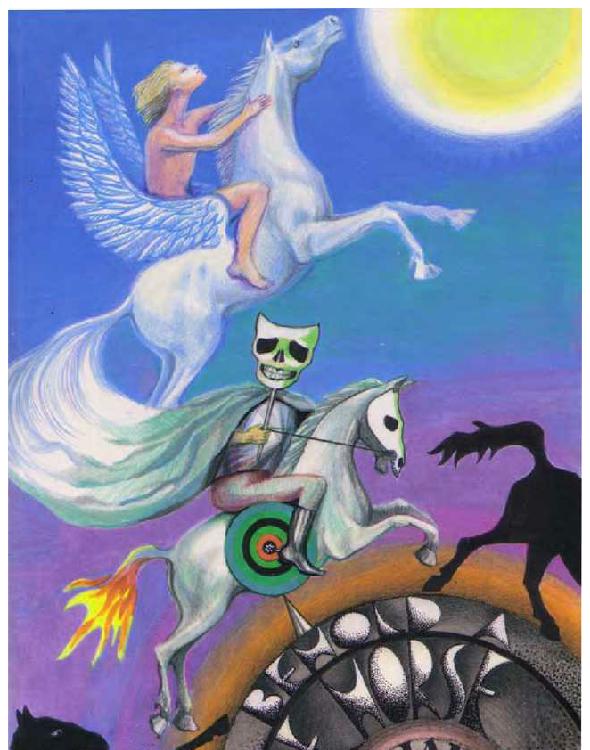
We Are Doomed: Reclaiming Conservative Pessimism

John Derbyshire’s book We Are Doomed delivers a structured argument for pessimism as the core principle of conservative philosophy. From the outset, Derbyshire rejects the optimism pervading modern American discourse, framing it as the root of political delusion and cultural decline. He aligns pessimism with realism, grounding his argument in the inescapable limitations of human nature and the observable deterioration of institutional coherence.
Pessimism as Moral Clarity
Pessimism demands honesty about human behavior and institutional capability. Derbyshire defines it not as despair but as disciplined skepticism. Human nature resists large-scale improvement. Reforms premised on innate goodness or malleability fail because they mistake aspiration for function. Pessimism filters these schemes, exposing their structural weakness before deployment. For Derbyshire, realism affirms that any sustainable order begins by acknowledging constraint.
Optimism, in his view, fosters moral vanity. It encourages social engineering under the guise of progress, resulting in unintended disorder. Derbyshire presents optimism as a philosophy that defers consequence and weakens accountability. By contrast, pessimism necessitates individual effort and small-group responsibility. It motivates private virtue in place of utopian governance.
Origins of the American Creed
Derbyshire traces early American thought to a deeply pessimistic theological and philosophical tradition. He locates this in the Calvinist settlers’ belief in total depravity, predestination, and limited salvation. These settlers saw nature as hostile and society as vulnerable to moral and spiritual decay. Their worldview informed early institutions, producing a government system designed to restrain power and mediate, rather than cure, human fallibility.
The shift began in the 19th century with the rise of Unitarianism and Transcendentalism. Thinkers like Emerson and movements like the Second Great Awakening encouraged optimistic, human-centered views of society. Derbyshire identifies this pivot as foundational to the liberal optimism that now dominates American institutions. Optimism supplanted constitutional realism with the vision of social perfectibility. Pessimism gave way to progressive idealism.
The Cult of Diversity
Derbyshire argues that diversity, as institutional ideology, destabilizes society. He separates the descriptive fact of demographic variety from the prescriptive cult of Diversity. The latter promises moral uplift, economic advantage, and cultural enrichment through increased difference. Institutions enforce this belief through hiring quotas, diversity officers, educational indoctrination, and corporate compliance.
He presents empirical studies, notably Robert Putnam’s, that reveal the inverse: communities high in diversity show lower trust, less civic engagement, and weaker interpersonal connection. Derbyshire interprets this outcome as an expected feature of ethnic heterogeneity. Diversity fosters isolation rather than integration, undermining social capital. Institutional attempts to reverse this through education or propaganda cannot overcome the instinctive pull of ethnic identification.
Narrative Collapse and Fragmentation
In Derbyshire’s view, the consequences of unchecked Diversity extend beyond local disorder. They destabilize the national narrative. Shared identity fragments under the pressure of group grievances and competing cultural demands. Political systems dependent on consensus lose coherence. Policy becomes redistribution, adjudication, and appeasement. The idea of a single American people dissolves into legal pluralism and ideological incoherence.
Derbyshire names this trajectory a form of national unraveling. Without a shared cultural and moral foundation, law cannot sustain legitimacy. Civic rituals become hollow. The state no longer mediates common purpose but arbitrates tribal resentments. As diversity intensifies, state power expands to maintain formal unity. The result, Derbyshire argues, is a brittle authoritarianism masked by the language of inclusion.
Education and the Manufactured Mind
The failure of American education reflects the larger cultural decay. Derbyshire sees modern schooling as an engine of ideological formation, not intellectual development. Curricula avoid hard truths about aptitude, history, and human difference in favor of narratives centered on inclusion and self-esteem. He condemns the rejection of tracking and merit as the imposition of egalitarian myths onto cognitive reality.
Derbyshire presents the SAT, IQ testing, and academic hierarchies as necessary instruments of educational integrity. Their erosion, driven by equity doctrines, masks achievement gaps without closing them. This masking creates a generation of students fluent in slogans but untrained in reason. They become ideal subjects for a managerial elite that governs through sentiment and compliance.
The Sexual Economy of Decline
Sex, once anchored to social continuity through marriage and parenthood, now operates as consumer choice. Derbyshire interprets this shift as a consequence of post-1960s liberation ideology. The divorce of sex from reproduction, and marriage from gender complementarity, renders families unstable and birth rates unsustainable. Societies that fail to reproduce cannot sustain culture, economy, or defense.
He examines demographic trends showing below-replacement fertility across developed nations. For Derbyshire, these patterns reflect a civilization no longer invested in its future. The elevation of sexual autonomy over generational continuity signals cultural exhaustion. Where pessimism would prompt corrective realism, optimism celebrates the trend as liberation from tradition.
Human Nature and the Limits of Reform
Derbyshire explores the findings of sociobiology and evolutionary psychology to reinforce his case. He aligns with thinkers like Edward O. Wilson and Charles Darwin, who regard human behavior as adaptive and bounded. Idealistic systems that ignore these limits—Marxism, radical egalitarianism, or technocratic central planning—produce dysfunction.
For Derbyshire, the proper response is modesty. Political programs should accommodate bias, inequality, and irrationality as permanent features of human systems. Attempts to engineer fairness or equality through state intervention disrupt evolved patterns of cooperation and competition. They yield resentment, inefficiency, and entropy. Pessimism, properly understood, accepts these patterns and navigates within them.
The Mirage of Global Intervention
In foreign policy, Derbyshire critiques the post-Cold War strategy of intervention and democratization. He sees this as another projection of optimism onto unyielding realities. Cultures shaped by clan loyalty, religious absolutism, or tribal identity do not assimilate liberal democracy through ballot boxes or constitutional training. Military power can destroy regimes but cannot install civilizations.
He analyzes U.S. failures in Iraq, Afghanistan, and other theaters as consequences of utopian assumptions. Nation-building efforts substitute ideological templates for ground-level ethnography. The belief that democracy can take root in alien soil stems from the same denial of human nature that distorts domestic policy. Derbyshire urges withdrawal from such experiments and a return to restrained realism.
The Delusion of Immigration as Renewal
Derbyshire regards mass immigration as the most visible expression of national decline. He rejects the framing of immigrants as revitalizers of American dynamism. Cultural distance, educational disparity, and low civic assimilation define contemporary immigration. Policies that import millions of low-skill migrants from incompatible societies dilute national cohesion and strain public services.
He cites Samuel Huntington’s argument that the American creed depends on Anglo-Protestant culture. When that culture erodes, the creed loses traction. Derbyshire insists that immigration policy must prioritize civilizational compatibility over economic demand or emotional narrative. Without borders rooted in cultural logic, national identity becomes a bureaucratic fiction.
The Mirage of Hope
The recurring theme of the book returns in Derbyshire’s closing: hope is a mirage when detached from realism. He describes Barack Obama’s campaign slogan, “The Audacity of Hope,” as the final expression of a delusional worldview. Pessimism does not call for despair but for clarity, for actions grounded in history, psychology, and hard-won experience.
Derbyshire’s vision seeks to conserve what can be conserved, rebuild where possible, and endure what must be endured. He offers no revolution, only orientation. His pessimism does not ask for applause. It demands reckoning. It imposes discipline. It seeks to clear away fantasy and recover the hard ground of order.
What future arises from this realism? The book refuses speculation. It commits only to truth, however unwelcome, and to the cold endurance of men and women who recognize the storm and prepare for it.