The Grand Chessboard – American Primacy and Its Geostrategic Imperatives

The Grand Chessboard by Zbigniew Brzezinski investigates the structure and imperatives of American primacy in the wake of the Soviet collapse, centering global power dynamics on the vast Eurasian continent. Brzezinski opens by tracing the historical rise of America from relative isolation to its role as the sole global superpower, describing a process shaped by industrial acceleration, military expansion, and the assimilation of foreign talent into a culture that privileges innovation and growth. He asserts that the United States achieved a unique status: the first non-Eurasian actor to arbitrate Eurasian affairs and exercise direct influence over global order.
Eurasia: The Geopolitical Axis of History
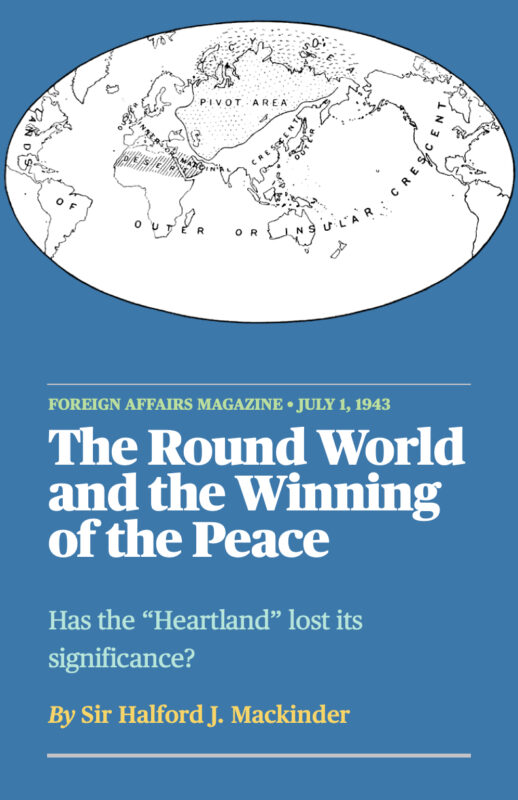
Eurasia forms the axis of modern geopolitics. The concentration of people, resources, and economic power across Europe and Asia renders this continent the center of strategic contest. Brzezinski identifies a fundamental principle: whoever commands Eurasia, with its seventy-five percent share of world population and the bulk of global economic and military capabilities, possesses the platform to shape the world’s future order. He tracks the emergence of major powers within Eurasia—historic empires and contemporary nation-states—and observes that American supremacy results from its unprecedented ability to project force and influence across Eurasian peripheries.
Defining American Hegemony
Brzezinski dissects the mechanisms that differentiate American hegemony from past imperial systems. He stresses that American power operates through the integration of military alliances, economic leadership, and cultural appeal. America deploys military forces on the western and eastern edges of Eurasia, maintains economic dynamism as a locomotive of global growth, and cultivates an influential cultural model that appeals to foreign populations and elites. This pluralistic system eschews direct annexation in favor of institutional networks, coalition-building, and indirect leverage. American leadership mobilizes alliances—NATO in Europe, bilateral treaties in East Asia, and partnerships in the Middle East—creating an architecture that supports its global posture.
Historical Precedents: The Rise and Fall of Empires
The narrative draws from historical empires—Rome, China, the Mongols, Britain—to frame the dynamics of ascendancy, consolidation, and decline. Each case illustrates a pattern: imperial systems grow through organizational superiority, sustained cultural confidence, and dynamic expansion. These empires falter when internal unity erodes, vitality gives way to stagnation, or administrative complexity outpaces the ability to adapt. Brzezinski leverages these precedents to pose a central inquiry: which strategic choices allow a dominant power to sustain its position, and which weaknesses invite fragmentation and defeat?
The Structure of the American Global System
American supremacy manifests through a global system with distinct features. Its military reach extends to the world’s oceans, allowing rapid deployment and sustained operations far from home. Economic innovation and control over information technologies give the United States a decisive edge in productivity and military effectiveness. American culture and education draw students and future leaders from around the world, reinforcing the appeal of the American model and embedding its principles in foreign societies.
Institutionally, the American-led order incorporates collective security frameworks, regional economic cooperation bodies, and specialized agencies such as the International Monetary Fund and World Bank. These organizations function as extensions of U.S. influence, shaping rules, norms, and opportunities in ways that privilege American interests. Brzezinski describes a complex web, not a strict hierarchy, with Washington, D.C., at the center of a network of formal and informal relationships. Foreign states interact with U.S. political institutions, lobby Congress, and seek the favor of American public opinion to advance their own agendas within the constraints of American power.
Geostrategic Players and Geopolitical Pivots
Brzezinski introduces a vital analytical distinction: geostrategic players possess both the capacity and ambition to exert influence beyond their borders, actively shaping regional or global outcomes. These states—examples include Russia, China, Germany, and India—form the core of strategic competition in Eurasia. Geopolitical pivots, in contrast, derive significance from their location and the consequences of shifts in their alignment. Control over these states, or their vulnerability to external pressure, affects the ability of players to achieve strategic objectives. The author insists that U.S. strategy must focus on managing these actors, offsetting their ambitions, and preventing hostile coalitions.
The Management of the Eurasian Chessboard
Brzezinski applies the chessboard metaphor to the management of global order. He envisions a scenario where multiple players—each with different resources, ambitions, and constraints—maneuver across Eurasia’s west, east, center, and south. The United States, positioned offshore, seeks to prevent the emergence of any rival capable of dominating the continent. This management requires selective engagement, coalition-building, and the capacity to shift resources in response to evolving threats.
He identifies critical regions—Western Europe, East Asia, and the Persian Gulf—as “bridgeheads” where U.S. presence must remain robust. These regions anchor American influence, deter adversaries, and enable flexible responses. Control over strategic choke points and relationships with key allies bolster this structure, ensuring that no coalition of Eurasian powers can arise to challenge U.S. primacy.
Limits and Constraints of Power
Brzezinski recognizes the constraints inherent in American power. Domestic democracy restricts the ability of leaders to mobilize for distant, sustained engagements absent direct threats to public well-being. The scale and diversity of Eurasia, coupled with the rising ambitions of regional actors, impose limits on the depth of American influence. Nuclear deterrence, economic interdependence, and technological diffusion further complicate the calculus of intervention.
The author emphasizes that indirect methods—diplomacy, economic incentives, institutional leadership, and cultural attraction—often yield more sustainable outcomes than coercion. The United States must rely on maneuver, consensus-building, and the management of alliances to secure its interests, recognizing that overt domination can provoke resistance and instability.
The Centrality of Culture and Ideals
Cultural influence underpins the American order. Brzezinski observes that American media, education, and lifestyle exert a magnetic effect, especially on the youth of other nations. The diffusion of English as the language of global commerce and information, the appeal of American universities, and the prominence of U.S. entertainment shape aspirations worldwide. Democratic ideals and the rule of law reinforce this soft power, inspiring emulation and aligning foreign societies with the values that support American hegemony.
American leadership further benefits from the entrepreneurial ethos and economic individualism embedded in its culture. As the welfare state model slows in other advanced economies, the flexibility and competitiveness of the American system set a standard for adaptation and success.
Risks, Vulnerabilities, and Strategic Imperatives
Brzezinski cautions against complacency. He underscores the risks of internal division, economic decline, and strategic overextension. The lessons of previous empires highlight the dangers of cultural hedonism, fiscal irresponsibility, and political fragmentation. He argues that the stability of the American-led order depends on the continued unity and vitality of its core, the responsiveness of its institutions, and the ability of its leaders to anticipate and adapt to changing circumstances.
The author insists on three grand strategic imperatives: maintain security dependence among allied states to deter defection and rivalry, keep dependent regions pliant through protection and incentives, and prevent hostile coalitions among adversaries. Effective management of the Eurasian chessboard requires attention to the ambitions of major players and the vulnerabilities of pivotal states, deploying resources where shifts in allegiance or control could tip the balance of power.
The Vision Beyond Hegemony
Brzezinski concludes by projecting a long-term vision that transcends the pursuit of dominance. He asserts that the ultimate goal for American policy lies in shaping a truly cooperative global community, where the exercise of power aligns with the broader interests of humankind. However, this transition must occur from a position of strength, after securing the structures that ensure stability and prevent disorder.
He envisions a phased approach: in the immediate term, preserve American primacy through strategic engagement and alliance management; over the medium and long term, facilitate the emergence of inclusive institutions that encourage shared leadership and cooperation among major powers. The transition to such a system demands careful planning, patience, and a readiness to recalibrate as new actors rise and old certainties dissolve.
Conclusion: The Stakes of Primacy
The Grand Chessboard articulates a comprehensive strategy for maintaining American leadership in a turbulent era. Brzezinski identifies Eurasia as the decisive arena for global power, advocates a deliberate and skillful management of alliances and rivals, and emphasizes the unique attributes that sustain American influence. His analysis blends historical insight with contemporary strategy, calling for vigilance, adaptability, and vision. The stability of the world order—and the prospects for peace, prosperity, and cooperation—depend on the choices that leaders make on this grand stage. How will the next moves shape the future of power? The stakes are as high as the scale is vast, and the moves that matter are those that understand both the board and the deeper currents beneath its surface.