Memoirs Illustrating the History of Jacobinism (Four Parts)
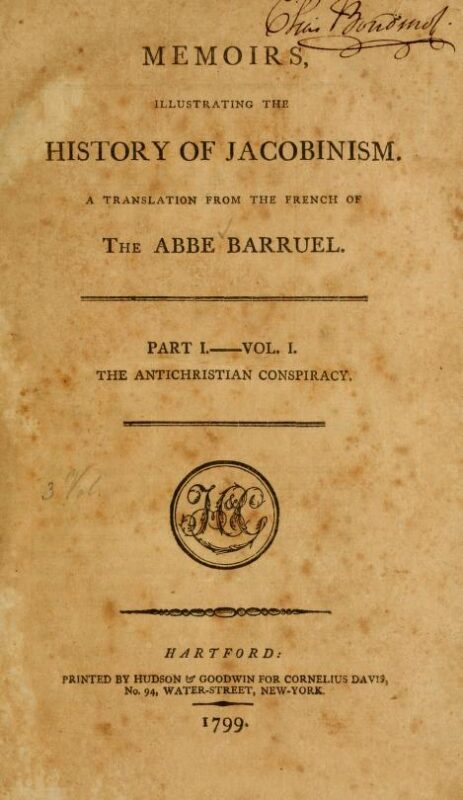
Memoirs Illustrating the History of Jacobinism by Abbé Augustin Barruel traces the origins, machinery, and enduring impact of radical revolutionary movements in eighteenth-century France, rooting their explosive energy in webs of secret societies, anti-clerical philosophies, and the organized ambitions of specific, determined actors. Barruel, a Jesuit priest exiled by the violence of 1792, builds a sweeping argument that links the most turbulent episodes of the French Revolution to the strategic agency of philosophes, Freemasons, and Illuminati. His account reveals the mechanics by which ideas became weapons and secret organizations engineered a new political reality, toppling the pillars of throne and altar.
The Structure of a Conspiracy
Barruel presents a clear structure: three interconnected conspiracies—anti-Christian, anti-monarchical, and anti-social—merge to drive the course of the French Revolution. He asserts that no mass movement arises spontaneously, but instead grows from coordinated intent, advanced by individuals who identify common goals and deploy precise tactics. Within Barruel’s pages, Voltaire, Rousseau, D’Alembert, and the architects of Enlightenment thought do not merely comment on society—they plan its transformation. Their works serve as blueprints, and their salons and correspondence become nodes in a network designed to undermine old certainties.
The machinery of revolution requires both public doctrine and private organization. Barruel maps the propagation of revolutionary philosophy through the Encyclopédie and an escalating flood of anti-Christian literature. As the philosophes develop a critique of monarchy and church, they gain allies among the powerful. Princes, nobles, and magistrates—seduced by the promise of reason, justice, or simple vengeance—join in supporting the cause. The conspiracy grows in both breadth and depth as it attracts supporters at every level of society.
Freemasonry and the Rituals of Transformation
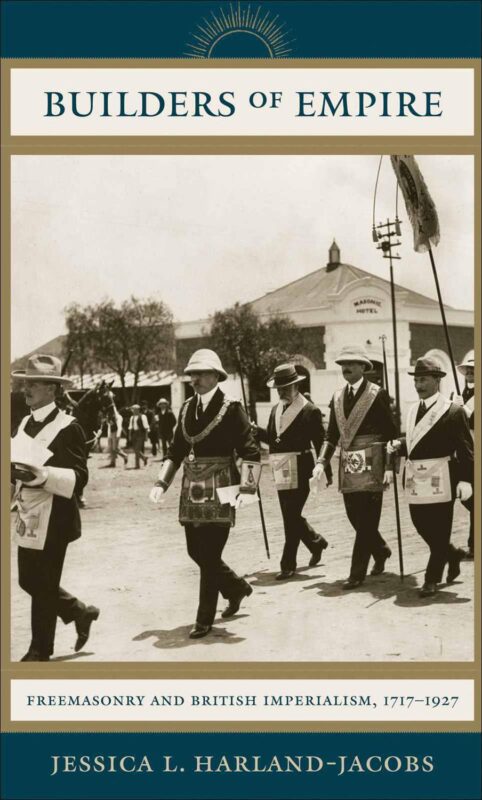
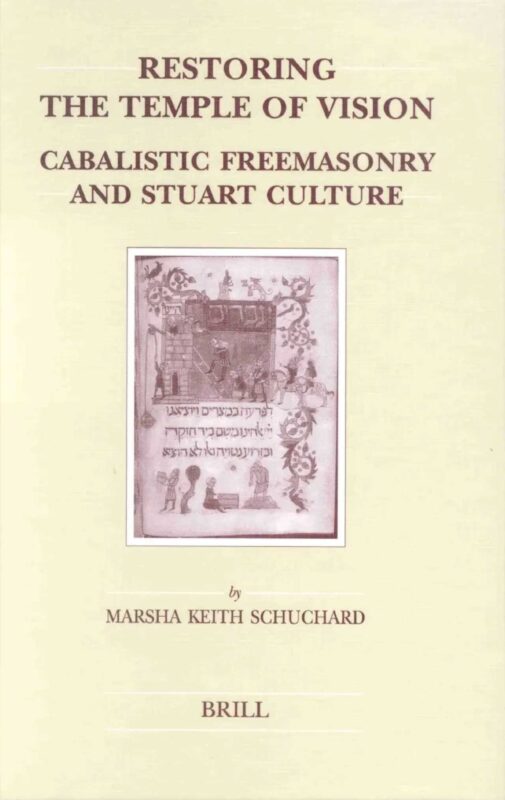
Freemasonry, as Barruel defines it, offers not only a method of social advancement and mutual protection but also a framework for the spread and concealment of radical ideas. The Grand Orient, under the leadership of the Duc d’Orléans, provides organizational structure and ritualized loyalty. Parisian lodges proliferate, rising from a handful to hundreds across France in two decades. Freemasons adopt rituals, symbols, and secret signs that bind members and distinguish insiders from outsiders. These rites reinforce trust and obedience, forging an invisible republic within the state.
Masonic influence permeates both the Jacobin clubs and the wider revolutionary movement. The Jacobins—so named for their meetings in the Dominican convent of Saint-Jacques—capitalize on the strategic discipline and secrecy of Masonic practice. As the political climate radicalizes, the distinction between lodge and club blurs, and Freemasons fill leadership roles within the revolutionary assemblies. Through this process, Barruel asserts, the power of ideas merges with the power of organization, creating a force capable of directing the passions of the crowd.
Illuminism and the Science of Secrecy
The Illuminati, founded by Adam Weishaupt in Bavaria, expand the reach and ambition of the conspiratorial model. Barruel examines the intricate structure of Illuminism—a hierarchy of degrees, from Novice to Epopt to Regent to Mage—each stage enveloped in mystery and governed by secret codes. Members commit themselves to a program of infiltration, recruitment, and social engineering. Their final objective: the creation of a new order founded on reason and natural law, liberated from the constraints of tradition, revelation, and inherited power.
Weishaupt’s system provides a template for transforming Freemasonry from a society of mutual benefit into an engine of revolution. The Illuminati infiltrate lodges, convert members, and repurpose rituals for their higher cause. Barruel identifies key moments—such as the Wilhelmsbad Congress of 1782—where this process accelerates, producing a network that crosses borders and unites disparate elements in pursuit of a shared objective.
Violence as Manifestation
Revolutionary violence, in Barruel’s account, does not arise from chance or unthinking passion. He sees deliberate engineering, a staged drama whose actors play assigned roles. The September massacres of 1792, the execution of clergy, the desecration of churches, and the ceremonial enthronement of the Goddess of Reason at Notre-Dame reveal the logic of the conspirators. Fanaticism, once a pejorative reserved for religious devotion, is redefined by the revolutionaries to justify the elimination of rivals and the enforcement of ideological purity.
The use of terror becomes systematic. Jacobin leaders rely on the sansculottes—the urban poor radicalized by scarcity and rhetoric—as an instrument of coercion. This partnership fuses ideology and brute force, enabling the purging of moderate rivals, the consolidation of power, and the execution of the king. The guillotine and the revolutionary tribunal stand as emblems of a new kind of justice, one that claims to serve reason but advances by fear and intimidation.
Narrative, Evidence, and the Work of History
Barruel grounds his narrative in direct testimony, personal experience, and a wide array of documentary sources. He relies on published writings, private correspondence, and the confessions of defectors. The introduction by Stanley L. Jaki foregrounds Barruel’s scholarly rigor and the challenge of assembling such a work in exile. Edmund Burke, the great English critic of the Revolution, finds in Barruel’s narrative a juridical precision and explanatory power that clarifies the logic of events.
At the same time, the Memoirs spark heated debate. Critics challenge the sufficiency and accuracy of Barruel’s evidence. Questions arise about the extent of the conspiracy, the agency of the masses, and the role of economic and cultural factors. Barruel’s defenders assert that history, unlike law, cannot always produce a smoking gun. The historian must discern pattern and intention from broad outlines, converging evidence, and the logic of action.
The Political and Religious Stakes
For Barruel, the stakes of the revolution extend far beyond political change. The contest pits two religions against each other: the Christian faith anchored in revelation, and the cult of reason advanced by the revolutionaries. Rituals and symbols shift, but the need for meaning and community persists. Freemasonic and Illuminist ceremonies step into the void left by suppressed Catholic worship, offering substitutes for transcendence and allegiance.
The revolution transforms the relationship between state and church. Civil constitutions seek to regulate religious life, demanding oaths of loyalty from clergy and recasting the church as a department of state. Those who resist face exile, imprisonment, or death. The logic of the new order rests on the supremacy of human reason, administered by the laws and tribunals of the revolutionary government.
Legacy and Influence
Memoirs Illustrating the History of Jacobinism becomes a touchstone for royalists, Catholics, and counter-revolutionaries across Europe. It offers both a comprehensive synthesis of anti-revolutionary argument and a handbook for understanding the methods of radical change. The book influences later interpretations of revolutionary events, secret societies, and the enduring conflict between tradition and innovation.
The structural vision articulated by Barruel shapes both scholarly inquiry and popular imagination. He frames the Revolution as the outgrowth of specific doctrines, methodically disseminated and enacted by identifiable agents. This model of conspiracy—combining philosophical critique, organizational secrecy, and strategic violence—enters the vocabulary of political analysis and polemic.
Barruel’s narrative situates the Revolution in the flow of European history, connecting local events to transnational networks of ideas and institutions. He tracks the migration of émigrés, the correspondence between lodges, and the cross-border circulation of revolutionary tracts. In doing so, he demonstrates the permeability of borders and the volatility of political climates. The Revolution, in his reading, becomes both a French tragedy and a European phenomenon.
Interpretations and Controversies
The reception of Barruel’s work reveals sharp divisions among contemporaries and later readers. Royalists and conservative Catholics hail the Memoirs as a masterwork of diagnosis and warning. Liberals, philosophes, and Freemasons dismiss it as exaggeration, misquotation, and hysteria. Later historians probe Barruel’s methods, noting his careful translations of German sources and his comprehensive engagement with available evidence.
Debate centers on the meaning of conspiracy and the standards of historical proof. Samuel Johnson’s broad definition of conspiracy, cited by Barruel’s defenders, permits the historian to infer intent and coordination from patterns of behavior, public statements, and organizational links. Critics demand more direct evidence of specific plans and secret meetings. The question sharpens: how does one demonstrate intent in the movement of masses and the swirl of events?
Barruel’s work also provokes reflection on the role of the historian. Can one trace the genealogy of an idea, the migration of a ritual, the arc of a passion? Barruel accepts the complexity of historical causality, weighing economic, cultural, and psychological factors, but insists on the primacy of agency and belief. For him, the Revolution results from the convergence of preparation, opportunity, and will.
Transformation and Endurance
The final chapters of the Memoirs describe the aftermath of revolution and the uncertain future of the conspiratorial orders. The Jacobin clubs, their work accomplished, fall victim to the same violence they unleashed. The Freemasons and Illuminati retreat, regroup, or dissolve, but their influence persists in new forms. The cult of reason survives as secular ideologies, shaping political discourse and cultural institutions into the nineteenth century and beyond.
Barruel’s account ends with both warning and promise. He cautions against the complacency of those who believe history proceeds without agency or that ideas lack the power to reorder societies. The lessons of the Revolution, inscribed in blood and flame, remain urgent wherever secret ambitions collide with public order.
The Memoirs continue to serve as a vital resource for those who seek to understand the dynamics of revolutionary change, the mechanics of conspiracy, and the enduring interplay of faith, power, and organization. Its synthesis of documentary evidence, narrative tension, and analytical clarity secures its place in the canon of historical literature on the French Revolution and the age of revolutionaries.