Hitler’s Vienna: A Portrait of the Tyrant as a Young Man
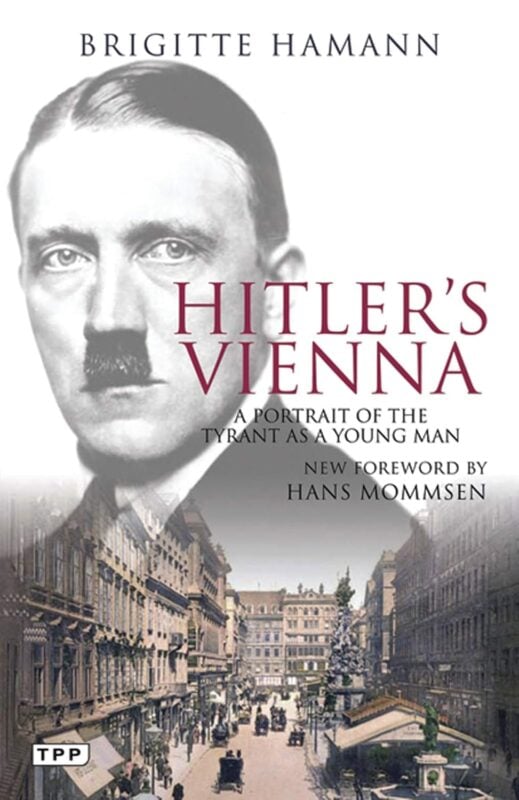
Hitler's Vienna: A Dictator's Apprenticeship by Brigitte Hamann investigates the formative years Adolf Hitler spent in Vienna between 1906 and 1913, arguing that the ideological infrastructure of his later dictatorship originated in the social, political, and ethnic dynamics of the Austrian capital. The book dissects Hitler's psychological and intellectual evolution in an urban landscape shaped by decaying empire, racial paranoia, nationalist factions, and cultural turbulence.
The Urban Laboratory of Identity
Vienna in the early twentieth century functioned as an incubator of ideological extremism. Adolf Hitler entered this city as an unformed adolescent with artistic ambitions and left as a man armed with a nascent worldview structured by ethnonationalism, authoritarian longings, and racial hierarchies. Vienna's stratified society, in which German-Austrians, Czechs, Jews, Hungarians, and Slavs coexisted in unstable proximity, sharpened his sense of ethnic order. Public discourse centered on population statistics, racial boundaries, and perceived threats from the “other.” Political speeches, newspaper editorials, and city council meetings recycled tropes of Slavic invasions, Jewish economic domination, and cultural betrayal.
What formed Hitler's earliest ideological anchors? He read the pamphlets of Georg von Schönerer, absorbed the rants of Vienna’s populist agitators, and studied the anti-Semitic broadsheets populating the working-class neighborhoods. Exposure to these ideologies did not merely inspire admiration. They offered architecture for a worldview that craved purity, hierarchy, and historical mission. As the Viennese press daily restated the threat posed by multiculturalism and social democracy, Hitler learned to define identity as exclusionary and state power as purgative.
From Marginal Student to Self-Appointed Visionary
Failure marked Hitler’s initial trajectory. Twice rejected from the Academy of Fine Arts, he spiraled into poverty and bitterness, living in men’s hostels, selling second-rate paintings, and surviving on subsidies. Brigitte Hamann tracks how this descent, rather than generating empathy, intensified his psychological need for superiority. Hitler saw his suffering as symbolic, not incidental. He interpreted personal failure as evidence of systemic corruption, which he attributed to liberalism, socialism, and above all, Jewry.
How did this conviction form? Hitler constructed causal chains where the Jewish press, Jewish professors, and Jewish intellectuals conspired to dismantle traditional values and undermine German-Austrian culture. His ideological radicalization was self-directed, reinforced through newspapers like the Deutsches Volksblatt, Ostdeutsche Rundschau, and Schönerer's Alldeutsches Tagblatt. These publications shaped a vocabulary of cultural betrayal, using racialized caricatures and apocalyptic rhetoric to depict politics as a zero-sum battle between Germandom and internal saboteurs. Hitler did not resist these narratives. He assimilated them as revelations.
Political Templates and Rhetorical Models
Parliamentary life in Vienna offered a dramatic stage of ethnic confrontation and procedural gridlock. Brigitte Hamann situates Hitler as a careful observer of these performances. He attended public sessions and watched as Czech, Polish, German, and Jewish representatives insulted each other, delayed proceedings, and staged nationalistic interruptions. These episodes did not appear to Hitler as examples of pluralism. He viewed them as chaos orchestrated by factions without loyalty to a unified cultural core.
Karl Lueger, the anti-Semitic mayor of Vienna and a Christian Social Party leader, served as a particularly powerful model. Lueger mobilized resentment, appealed to the petty bourgeoisie, and fused anti-capitalist rhetoric with racial ideology. Hitler admired Lueger’s ability to claim populist legitimacy while consolidating elite authority. Through Lueger, Hitler discovered how to politicize resentment, ritualize victimhood, and deploy historical grievance as a platform for control.
Why did Lueger captivate him so completely? Because Lueger showed how to dominate a city not with moderation but through calibrated rage. Hamann argues that Hitler’s style of speaking—didactic, combative, theatrical—originated from hours studying these Viennese rhetoricians. He learned to substitute facts with moral claims, to turn history into myth, and to offer redemptive violence as political salvation.
Ethnic Stratification as Social Logic
Vienna’s demography catalyzed Hitler’s racial thinking. Between 1900 and 1910, hundreds of thousands of Czechs, Slovaks, Galician Jews, and rural migrants entered the capital. Municipal records, censuses, and school data became battlegrounds for defining ethnic presence and priority. German-speaking Austrians, once dominant, felt their status eroding. Housing blocks, factory jobs, and classroom compositions testified to a changing city, one interpreted by German nationalists as evidence of cultural assault.
How did this perception shape Hitler’s theory of society? Hamann shows that he internalized a ranking system in which racial identity conferred moral value. Jews appeared not simply as different, but as orchestrators of degeneracy, prostitution, and economic parasitism. Czechs symbolized dilution, crowding out German essence. Hungarians represented insubordination. This taxonomy became the architecture for Hitler’s future racial state. In his mind, German culture did not merely deserve primacy—it embodied civilization.
The Microbiology of Hate
Hamann identifies a crucial evolution in Hitler’s anti-Semitism. It shifts from religious prejudice or personal dislike to a biological theory of corruption. Influenced by racial theorists like Guido von List and Jörg Lanz von Liebenfels, Hitler began to view Jews as a contaminant, an infectious presence requiring expulsion. Anti-Semitism mutated into a pseudoscientific doctrine demanding hygienic violence.
What justified such extremity? Hitler framed Jewishness as both omnipotent and invisible—capable of controlling finance, media, and ideology while simultaneously evading identification. This paradox enabled limitless projection. Every defeat, failure, or humiliation became legible through the imagined presence of the Jew. The newspapers of the day supplied corroboration. Incidents of crime, political disruption, or economic collapse often carried veiled or open references to “Jewish influence.”
Cultural Displacement and Artistic Frustration
Artistic ambition drove Hitler to Vienna, but failure redirected him toward politics. Hamann documents his obsessive visits to museums, opera houses, and architectural monuments. He admired the Ringstraße’s grandeur, the neoclassical symmetry of the Parliament building, and the mythic grandeur of Wagner’s operas. Yet these experiences did not inspire collaboration or openness. They intensified his elitism. Hitler saw true art as Germanic, heroic, and eternal—qualities he claimed modern artists had betrayed.
What did this betrayal mean to him? The modernist trends in Vienna—symbolism, expressionism, psychoanalysis—seemed to Hitler like proof of cultural sabotage. He accused Jewish patrons and critics of pushing decadence and relativism. His exclusion from the Academy of Fine Arts became a symbolic event: the gatekeepers of culture had rejected him because he represented the very tradition they wanted to destroy. This logic became foundational to his vision of a future cultural order—a state that would dictate aesthetics as firmly as it imposed laws.
Personal Solitude as Political Preparation
Hamann emphasizes Hitler’s isolation. He avoided friendships, shunned women, distrusted intimacy, and resisted mentorship. Yet this solitude did not produce passivity. It offered space for ideological synthesis. Hitler’s time in men’s hostels and shelters did not humble him. It convinced him that Germany’s future required a savior immune to compromise. He read voraciously, mostly nationalist propaganda and racial tracts, and began crafting his worldview in notes, sketches, and later, monologues.
How did he sustain such internal coherence amid failure? Hamann traces the psychological mechanism: personal rejection fueled cosmic theory. Vienna’s diversity and instability became evidence that only authoritarian unity could restore civilization. Solitude did not weaken his ambitions. It trained him to speak in absolutes, to distrust empathy, and to imagine history as a drama requiring a single protagonist.
The Return to Linz and the Cult of Memory
Even as he left Vienna, Hitler mythologized Linz as the true city of destiny. He envisioned it as a pure German town, a site of personal clarity and national regeneration. Years later, he would plan to transform Linz into a cultural capital, commissioning massive museums, architectural complexes, and ceremonial avenues. Hamann presents this obsession not as nostalgia, but as symbolic reversal: Linz became the ideal Germany, untouched by Vienna’s decay.
Why did this fantasy matter? Because it anchored Hitler’s historical mission. In transforming Linz, he believed he could undo Vienna. Architecture, in his mind, could overwrite memory, purify geography, and materialize ideology. The Linz plan exemplified his fusion of aesthetics and power, his belief that beauty belonged to hierarchy and order.
Ideological Apprenticeship Complete
By the time Hitler departed for Munich in 1913, his ideological framework was set. Vienna had supplied the components: racial theory, political models, cultural grievances, aesthetic preferences, and social resentments. Hamann’s narrative demonstrates that this period was not a prelude. It was foundational. Hitler arrived in Germany not as a blank slate, but as an ideologue prepared to interpret the world through the categories he had forged in Vienna.
What does this tell us about political formation? That ideology often precedes action. Before Hitler joined a party, delivered a speech, or planned a policy, he had already internalized a narrative in which struggle, hierarchy, and ethnic purity dictated human destiny. Vienna gave him that story. He spent the rest of his life trying to make it real.

About the Book