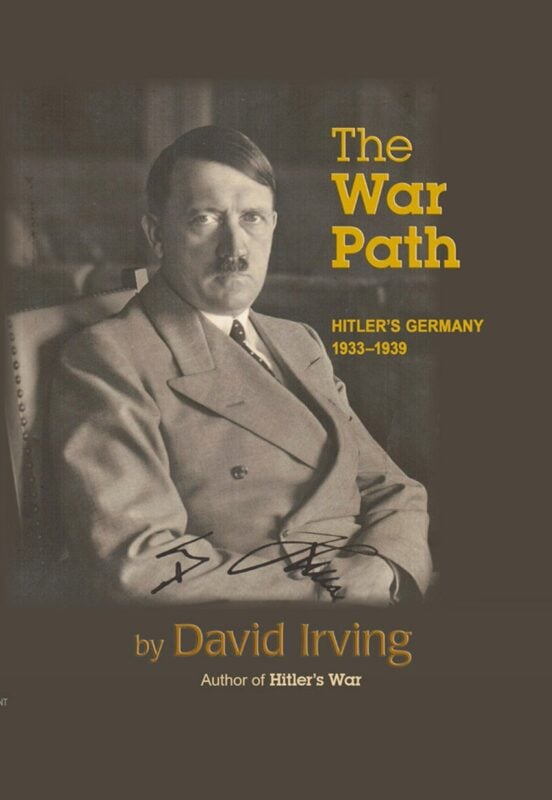
Hitler’s War and The War Path
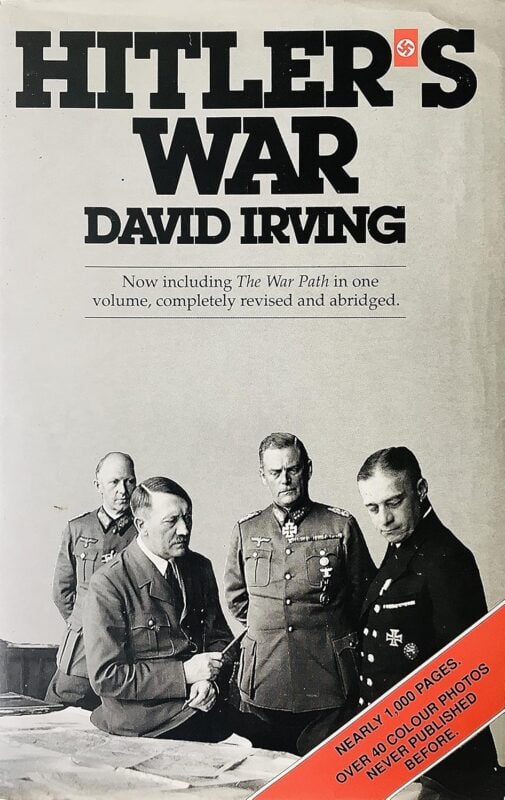
David Irving's Hitler's War and the War Path challenges prevailing historical accounts of Adolf Hitler's role in World War II and reexamines the origins, motives, and operations of the Nazi regime through a documentary-focused lens. Irving structures the narrative around Hitler's perspective, following his ascent to power, consolidation of control, wartime decisions, and ultimate downfall with meticulous reference to primary sources, internal memoranda, and unpublished diaries.
Reassessing Power and Authority in the Third Reich
Irving presents Hitler as a reactive strategist more than a central planner. He documents how key events, including the Röhm purge, the assassination of Austrian Chancellor Dollfuss, and the Kristallnacht pogrom, evolved beyond Hitler’s immediate directive. According to Irving, these episodes reveal a diffusion of authority within the Nazi hierarchy, where influential subordinates such as Himmler, Goebbels, and Bormann exercised independent power. Hitler’s decisions appear less as expressions of total control and more as responses to the momentum of internal power blocs within his regime.
Operational Opportunism and Strategic Flexibility
Irving’s Hitler relies on timing and perception rather than static doctrine. The book shows Hitler embracing psychological warfare, utilizing wiretapped communications and disinformation to create strategic leverage. Hitler's direction of operations like the Munich Crisis reveals his adept manipulation of public tension and diplomatic inertia. Irving frames these moments as intentional acts of strategic theater, aimed at securing territorial objectives without open conflict.
Eastern Ambitions and Military Planning
The archival evidence Irving introduces places consistent focus on Hitler’s expansionist goals toward the East. Memoranda from 1933 through 1938 demonstrate that Hitler viewed Soviet territories as the locus of German survival and resurgence. Irving points to naval infrastructure projects in the Baltic and explicit statements to Mussolini as confirmations of these long-standing aims. Western campaigns, by contrast, appear framed as defensive or deterrent rather than conquest-driven. The book underscores this distinction through Hitler’s repeated orders to preserve peace with Britain and delay confrontation with France.
Command Dynamics and Tactical Decision-Making
Within the military hierarchy, Irving portrays Hitler as a decisive commander during early victories, including France and Kharkov. But he emphasizes a growing disconnect between Hitler’s political focus and battlefield realities. As the war stretches into the Russian front, Hitler increasingly isolates himself in forward headquarters, delegating domestic authority to conflicting lieutenants. Irving’s reading of OKW (Armed Forces High Command) and OKH (Army High Command) diaries illustrates how Hitler's removal from Berlin created a vacuum of unified governance, leaving the German state fragmented across competing military and Party structures.
The Holocaust Controversy and Hitler’s Knowledge
The book’s most controversial claim centers on Hitler’s role in the Holocaust. Irving argues that available documentation does not confirm a direct, personal order from Hitler initiating the Final Solution. He presents handwritten notes from Himmler, intercepted communications, and secret conference records that, in his reading, reflect ambiguity or even resistance from Hitler regarding mass liquidation. He underscores instances where Hitler forbade or countermanded actions against Jews, including a 1941 directive halting the extermination of Berlin Jews. Irving positions this evidence to challenge prevailing narratives of Hitler as the principal architect of genocide.
Internal Resistance and Administrative Disarray
As the war turned against Germany, Irving highlights how inner circles fractured under pressure. Diaries and transcripts from Rommel, Guderian, and Halder reveal mounting dissatisfaction with Hitler’s strategic rigidity. Irving records intercepted conversations from Allied intelligence archives showing German generals conspiring to protect their reputations and preempt postwar prosecution. These transcripts illuminate how senior officers began shifting blame to Hitler even before Germany’s defeat. Irving uses this material to argue that postwar memoirs from German generals were systematically edited to dissociate themselves from Hitler’s decisions.
Source Criticism and the Collapse of Postwar Narratives
Irving critiques the historical record itself. He dissects discrepancies in published memoirs, highlights forgery in widely cited documents, and documents editorial manipulation in postwar editions. He accuses several authors of constructing fictionalized accounts or allowing publishers to modify original texts to suit postwar consensus. Irving places particular scrutiny on Albert Speer, arguing that Speer’s memoirs were ghostwritten and heavily sanitized. He also discredits the reliability of the Ciano diaries, Rauschning’s Conversations with Hitler, and Kersten’s medical dossier.
Historiographical Conflict and Institutional Rejection
The publication of Hitler's War and the War Path ignited a schism among historians. Military institutions once welcomed the book as a detailed operational history, but Irving claims that special interest pressure led to its removal from academic syllabi. He recounts personal reprisals including arrests, censorship campaigns, and legal bans across multiple countries. Irving presents these responses as indicative of the discomfort his findings provoke within established historiography.
Archival Discoveries and Documentation Depth
Irving boasts access to unpublished diaries, letters, and firsthand testimonies from high-ranking Nazi officials. His research includes original manuscripts by Erhard Milch, Jodl, Todt, and Schmundt. He references OKW stenographic records, intercepted SS radio messages, and Allied intelligence surveillance transcripts. The volume of material, according to Irving, exposes critical gaps in previous biographies of Hitler, especially those based on postwar interviews and secondhand reconstructions. He treats the recovered documentation as the cornerstone of a factual reevaluation of Hitler’s conduct.
Ideological Use of Caricature and Narrative Censorship
Irving claims that caricature has replaced inquiry in most representations of Hitler. He recounts his own early childhood impressions of the war shaped by popular media that depicted Nazi figures as cartoonish villains. He argues that such portrayals served wartime morale but later hardened into institutionalized myths. The Nuremberg Trials, in his view, reinforced these images by shifting blame exclusively onto Hitler and obliterating exculpatory documents. Irving suggests that licensed publishing in postwar Germany perpetuated these distortions by curating only those sources that supported Allied prosecution narratives.
Conclusion
David Irving's Hitler's War and the War Path presents a methodical revision of Adolf Hitler’s military, political, and personal role in the Nazi regime. Built from archives, firsthand accounts, and suppressed documents, the book reconstructs Hitler not as a demonic monolith but as a political tactician, wartime commander, and opportunistic nationalist who lost control of his apparatus long before the war ended. Irving challenges foundational claims of Holocaust historiography by emphasizing the absence of a direct written order from Hitler and the structural autonomy of agencies like the SS and Gestapo. The work’s evidentiary ambition and interpretative provocation have entrenched it in historical controversy, yet its source-driven narrative continues to provoke debate, institutional backlash, and scholarly contention.

About the Book
https://youtu.be/Ejdmzuf1j2I?si=NQ8griVD1CXOPGMG