How The Nation Was Won: America’s Untold Story, Volume One, 1630-1754
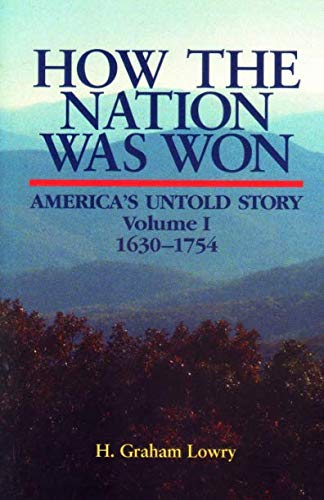
How the Nation Was Won: America’s Untold Story 1630–1754 by H. Graham Lowry unveils the hidden origins of American independence, tracing a lineage of republican intent, strategic vision, and trans-Atlantic alliances that shaped the continent before the first shots at Lexington and Concord. Lowry places the quest for a continental republic at the center of early American history, presenting the founders not as mere respondents to imperial provocation but as heirs and architects of a coherent, generational mission to create a sovereign nation grounded in reason, science, and civic virtue.
The Strategic Vision of the Puritan Founders
John Winthrop and his Massachusetts Bay collaborators engineered a new model of society, fusing religious purpose with republican governance and practical expertise. The Massachusetts Bay Charter, secured in a climate of European crisis, granted self-government unprecedented among English colonies. Winthrop and his circle viewed the New World as a stage for the advancement of human dignity, guided by natural law, and driven by a commitment to scientific and economic progress. They brought engineers, skilled craftsmen, and ambitious families to Massachusetts, anchoring a self-sufficient community capable of asserting autonomy against both local threats and distant crowns.
Securing Constitutional Independence
Massachusetts’ charter functioned as a bulwark for colonial liberty. Leaders orchestrated its legal structure to enable home rule, using diplomatic skill and political caution to resist efforts by Charles I and his ministers to recall or revise it. The General Court, elected by the freemen, legislated independently, enforcing a Body of Liberties that defined rights and limited the discretion of magistrates. The colony’s institutions grew in complexity and strength, embedding habits of self-government and popular defense. Through moments of crisis—threats from royal commissioners, Indian wars, and the designs of colonial rivals—Massachusetts sustained the principle that legitimate authority rested on the consent and participation of the governed.
The Engine of Economic Sovereignty
Industrial initiative surged from this republican order. The Saugus Iron Works, built under the leadership of John Winthrop, Jr., launched the first integrated iron manufacturing complex in North America. Water-driven machinery transformed ore to iron bars, supporting local infrastructure and regional commerce. The colony minted its own Pine Tree Shilling, circulating a currency shielded from external speculation and imperial depletion. These actions positioned Massachusetts as a center of technological ingenuity and economic autonomy, able to resist monopolistic pressures from the English mercantile system.
New England Confederation: A Continental Model
The New England Confederation, established in 1643, formalized mutual defense and political coordination among Massachusetts, Plymouth, and Connecticut. The confederation produced a functional federal structure, anticipating later American institutions. Member colonies pooled resources to confront military and diplomatic threats, especially as French and Jesuit alliances with Indian nations menaced the frontiers. Benjamin Franklin and other revolutionaries would later invoke the confederation as the intellectual and practical precursor to the Articles of Confederation, recognizing in it the first collective assertion of an American public will.
Expanding the Republican Mission Westward
The Puritan founders and their descendants conceived the republic as a continental project. They sought to break the natural barrier of the Appalachians, not merely to acquire land but to open space for a free and progressive society. As the population multiplied and economic needs outgrew the narrow coastal belt, Massachusetts and Connecticut men pressed into the interior, while figures like John Winthrop, Jr. secured charters for Connecticut that guaranteed internal self-determination. These expansionist efforts met constant opposition: British and French officials, often in collusion, orchestrated both legal restrictions and violent proxy wars to hem in the colonial settlements. The recurring devastation of Indian raids, directed from French Canada or Louisiana, represented more than a struggle over territory; these attacks aimed to snuff out the very possibility of a trans-Appalachian republic.
The Restoration and the Assault on Colonial Sovereignty
The Stuart Restoration in England initiated a period of intensified imperial pressure. Charles II and his ministers established the Lords of Trade and Plantations, appointing royal governors tasked with enforcing metropolitan authority and extracting wealth. Edward Randolph’s investigations, the imposition of Navigation Acts, and military threats revealed a systematic attempt to reintegrate New England into the orbit of the crown. The royal offensive included both administrative subversion and armed interventions. Massachusetts responded with fortification, mobilization, and further consolidation of its republican institutions, continually asserting the legitimacy of its charter and the rights conferred by it.
Virginia’s Transformation and the Emergence of a Southern Front
The struggle for continental expansion required coordination beyond New England. Alexander Spotswood, appointed lieutenant-governor of Virginia by Queen Anne, played a transformative role by modernizing Virginia’s institutions, promoting westward settlement, and fostering an elite committed to national development. Spotswood bridged the intellectual and political gap between New England and the South, mentoring future leaders and connecting with trans-Atlantic republican networks. He positioned Virginia as a forward base for breaking through the Appalachian barrier, launching exploratory and military expeditions that set precedents for the revolutionary generation.
Trans-Atlantic Republican Conspiracy
Lowry uncovers a web of collaboration among key European and colonial figures. Gottfried Wilhelm Leibniz in Hanover, Jonathan Swift in London and Dublin, and Cotton Mather in Boston exchanged ideas and coordinated efforts to promote republican ideals, scientific progress, and the public good. Benjamin Franklin’s scientific and political career, deeply influenced by these circles, demonstrates the deliberate cultivation of leadership dedicated to American nation-building. Franklin’s protean genius, molded by the teachings of Mather and the international republican milieu, catalyzed the emergence of a distinctively American identity and strategic vision.
Intelligence, Subversion, and Political Warfare
After the death of Queen Anne and the accession of George I, British policy hardened against colonial autonomy. The political and economic achievements of the preceding decades came under attack, compelling colonial leaders to adopt new forms of resistance. Covert communication, coded pamphlets, and disguised organizing replaced overt political action. Franklin’s early publishing efforts, for example, illustrate the use of public persuasion as a tool of subversive statecraft. The continental project survived through intelligence warfare, as patriots masked intentions, built secret alliances, and prepared the population for eventual confrontation.
The Western Crisis and the Road to Revolution
As the 18th century progressed, the stakes of westward expansion escalated. The Treaty of Albany and related negotiations signaled a coordinated colonial strategy to secure the Ohio Country and beyond. British and French imperial administrators intensified efforts to block American development, deploying both military force and diplomatic intrigue. Colonial leaders, having internalized a culture of republican defiance and practical organizing, coordinated actions across regional and ideological boundaries. The veterans and organizers of the wars for the West formed the cadre that would later lead the drive for independence.
Benjamin Franklin: Heir and Innovator
Franklin emerges as the central figure synthesizing the Puritan, republican, and scientific traditions into an American philosophy of self-government. His scientific achievements, practical inventions, and civic initiatives built the infrastructure for a dynamic public sphere. Franklin’s “Silence Dogood” letters, Poor Richard’s Almanack, and his role in forming voluntary associations advanced the cause of rational inquiry, economic productivity, and communal responsibility. His connections with European republicans, and his engagement with figures like Swift and Leibniz, fueled both the intellectual and operational aspects of the American movement for independence.
The Fairfax Legacy and the Genesis of the Continental Army
The genealogical and political ties connecting the Spotswood, Fairfax, and Washington families illuminate the passage of republican purpose from generation to generation. George Washington, shaped by this lineage and his collaboration with Franklin and other northern leaders, took command of a Continental Army drawn disproportionately from the New England militias. The concept of a continental force and a unified resistance drew directly on the earlier experiences of the confederations, militias, and intercolonial alliances engineered by Winthrop, Spotswood, and their successors.
The French and Indian War as the Final Test
Victory in the French and Indian War, achieved through the coordinated efforts of colonial leaders, broke the last barriers to continental expansion. The defeat of French power in North America opened the Ohio Country and secured the Atlantic seaboard. As imperial officials attempted to curtail colonial gains and reassert metropolitan authority, the colonies’ leadership mobilized their populations for decisive action. The infrastructure, culture, and vision forged over the previous century had produced a society capable of organizing, fighting, and governing as a unified republic.
A Century-Long Mission Realized
Lowry affirms that the American Revolution was not a spontaneous revolt but the outcome of a long, deliberate campaign to construct a sovereign, continental republic. The founders drew on a legacy of republican self-government, industrial and economic innovation, military organizing, and strategic alliance-building. They forged continuity across generations, integrating Puritan, scientific, and Enlightenment principles with practical action. The Revolution’s leaders recognized and claimed the full depth of this inheritance, embedding it in the institutions and ideals of the new nation.
The Hidden Story and Its Enduring Relevance
How the Nation Was Won recovers a crucial dimension of American history, demonstrating that the founding generation realized a vision conceived by their forebears and advanced through constant struggle. The republican project, built across a century of effort, offers both a model and a challenge for those seeking to understand and sustain the principles of self-government, civic virtue, and national development. The true story of American independence unfolds as the triumph of reasoned purpose over reaction, collaboration over isolation, and perseverance over inertia. In this account, the American nation emerges as the fulfillment of a deliberate, generational strategy—crafted, defended, and ultimately secured by men and women committed to liberty, progress, and the dignity of the human spirit.