The Geography of the Peace
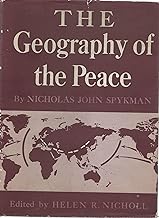
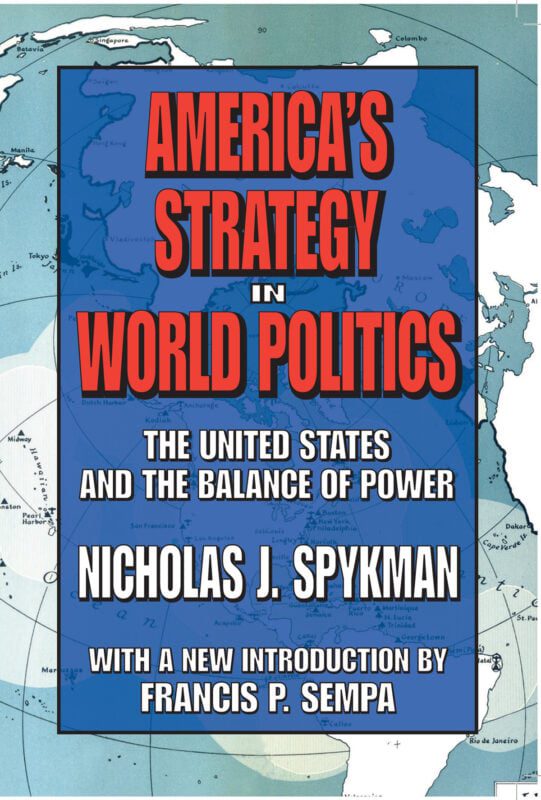
The Geography of the Peace by Nicholas Spykman presents a rigorous geopolitical framework for understanding international relations and the strategic imperatives of national security. Written during World War II, the book crystallizes Spykman's thesis that geography dictates power distribution, and that a state's survival hinges on its geographic position in relation to global centers of power. From this starting point, he constructs a comprehensive argument that guides foreign policy decisions through spatial logic and strategic foresight.
Geography as the Foundation of Power
Power emerges from location, resources, and accessibility. Spykman identifies the physical characteristics of a state's territory as inseparable from its political function. The bounded, sovereign state exists through its control over a definable landmass. That landmass confers opportunity and vulnerability depending on its size, terrain, climate, and proximity to other powers. Geography determines trade routes, supply chains, and military pathways. It shapes strategic priorities by defining both threats and possibilities.
The state does not float in abstraction. It is grounded in soil, constrained by mountains and oceans, and connected or isolated by the distribution of continents. Spykman insists that strategic planning must begin with the map. The geography of the earth provides the fundamental architecture within which all political actions occur.
The Rimland Doctrine
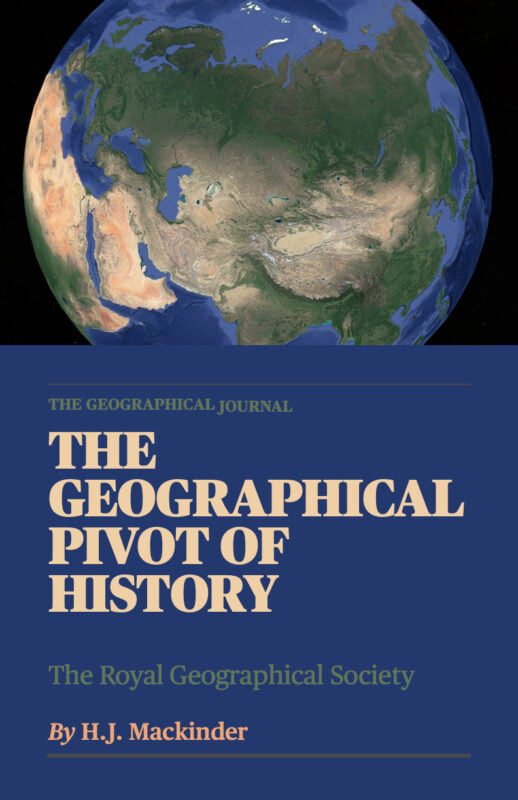
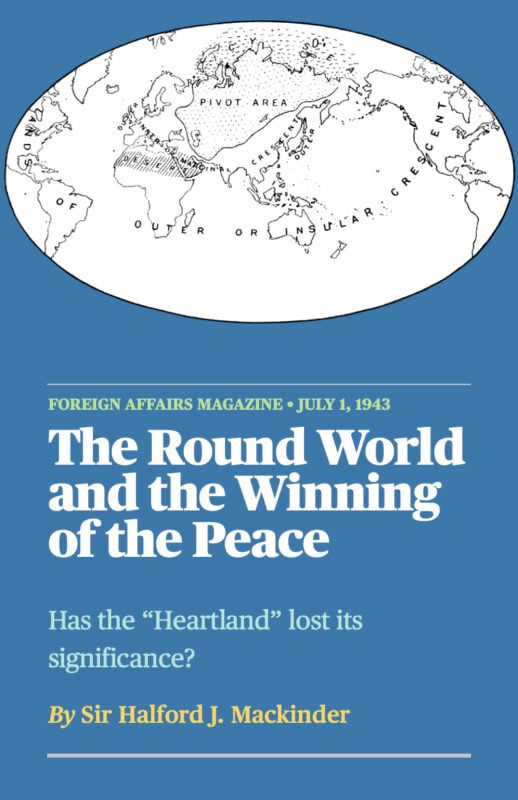
At the core of Spykman's strategic vision lies the concept of the Rimland. He divides Eurasia, the central landmass of world power, into three zones: the Heartland, the Rimland, and the offshore islands. The Heartland, which Mackinder previously deemed the pivot of history, lacks the access routes necessary for maritime dominance. The Rimland, a crescent surrounding the Heartland and stretching from Western Europe through the Middle East to East Asia, contains the dense populations, industrial bases, and navigable waters that enable projection of power across continents and oceans.
Control of the Rimland ensures influence over both land and sea, making it the decisive arena of global conflict. Spykman argues that the power that dominates the Rimland will control Eurasia, and the power that controls Eurasia will influence the destiny of the world. This vision creates a permanent rationale for strategic engagement in Europe, the Middle East, and East Asia.
Strategic Vulnerabilities of the United States
Spykman confronts the illusion of American isolation. Surrounded by oceans, the United States appears secure. Yet distance no longer guarantees safety. Advancements in aviation and maritime technology collapse geographic barriers. He demonstrates that power projection from Eurasia, especially through the Rimland, can reach the Western Hemisphere. Encirclement is no longer metaphorical. It becomes an operational threat.
Geopolitical encirclement means that the United States faces potential attack across three fronts: the Atlantic, the Pacific, and the Arctic. Each front presents logistical challenges and strategic risks. A hostile power controlling the Eurasian Rimland would be capable of projecting force into these zones. The book dismantles any assumption that America can withdraw into hemispheric defense. Security demands forward engagement.
The Map as a Strategic Instrument
Geopolitical reasoning begins with accurate cartography. Spykman explores various map projections, analyzing how different formats distort or clarify strategic relationships. He evaluates conic, azimuthal, and cylindrical projections, weighing their merits for military planning and geopolitical visualization. The globe provides the most accurate representation but lacks practicality in tactical operations. Among flat maps, the Miller cylindrical projection centered on the Western Hemisphere best illustrates America's strategic position relative to Eurasia.
By anchoring the map around the United States, Spykman emphasizes the centrality of American engagement across the oceans. This visual reframing corrects Eurocentric biases and aligns spatial analysis with contemporary power structures.
The Myth of the Polar Frontier
The airplane opens new routes, especially across the Arctic. Some strategists envision a future dominated by polar projections and airborne dominance. Spykman rejects this speculation. He assesses the limitations of Arctic infrastructure, severe climate, and minimal commercial capacity. The Atlantic and Pacific remain the vital arteries of global interaction. Strategic power still moves through sea lanes, coastal access, and navigable straits. The Arctic, while relevant for certain missions, lacks the continuity and capacity to replace the traditional zones of engagement.
The Dynamics of Peace and War
Security policy does not differ in principle from war strategy. Both aim to preserve the independence and integrity of the state. Both depend on power. Spykman contends that power is not incidental to peace. It is its precondition. A peaceful order arises from equilibrium among strong states capable of deterring aggression. Ideals unsupported by force dissolve under pressure. The structure of peace mirrors the structure of power.
Collective security mechanisms depend on the willingness and ability of strong states to act. Alliances function when their members perceive their own survival as linked to mutual defense. The viability of peace enforcement rests not on abstract commitments but on concrete calculations of interest and capacity.
Mapping Future Conflicts
Spykman traces the contours of potential post-war conflicts. He identifies the fragility of the European balance. The destruction of German power does not guarantee lasting stability. The re-emergence of any single dominant power in the Rimland, whether in Europe or Asia, creates a renewed threat. The book anticipates ideological and territorial conflicts involving the Soviet Union, even before the end of World War II.
China, though a large nation, lacks the cohesive infrastructure and military capability to dominate the Asian Rimland. Japan's defeat will neutralize immediate threats from the Pacific, but long-term stability depends on the political configuration of East Asia. The future security of the United States will hinge on its willingness to sustain presence and influence across the Eurasian periphery.
Foreign Policy as Spatial Strategy
Foreign policy requires deliberate spatial reasoning. Decisions about alliances, bases, and economic networks derive from an understanding of spatial relationships. Geographic proximity increases risk and opportunity. States define their security margins not only by borders but by spheres of influence and access corridors. A distant war may affect vital trade routes or disrupt the balance of power that ensures national freedom.
Spykman promotes a geopolitical method that evaluates every foreign policy move in terms of its spatial consequences. This method integrates military, economic, and diplomatic instruments into a coherent global posture. The goal is not domination, but stability through positional strength.
Security Through Global Engagement
Retrenchment leads to exposure. Spykman demands that the United States abandon the illusion of self-containment. Security does not derive from isolation but from calculated participation in shaping the balance of power. The survival of democracy depends on the strategic prevention of any hostile consolidation in the Eurasian Rimland.
The United States must anchor its security in a global architecture. Naval bases, airfields, economic corridors, and political alliances form the infrastructure of deterrence. Engagement is not optional. It is the structural requirement of geographic position.
The Legacy of Spykman's Vision
The Geography of the Peace establishes the foundational logic of post-war American strategy. It outlines the principles that will inform containment, alliance formation, and global military deployment for decades. Spykman’s clarity about the relationship between geography and power cuts through sentiment and wishful thinking. He offers a disciplined framework for understanding why some states endure, and others fall.
The book affirms the necessity of geopolitics as a discipline. It instructs policymakers, analysts, and citizens in the spatial dynamics that govern conflict and cooperation. Through his method, Spykman delivers a powerful analytic tool—one that continues to shape the architecture of international security.