The Killing of Osama Bin Laden
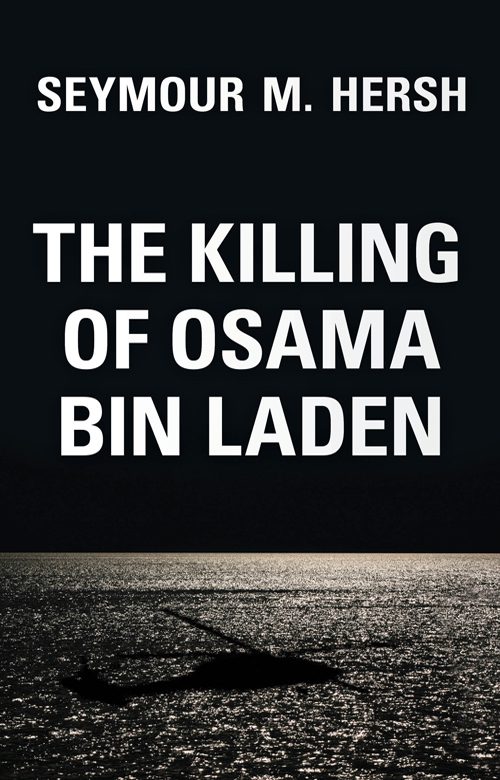
The Killing of Osama Bin Laden by Seymour M. Hersh exposes the covert realities of the mission that ended with the death of the world’s most wanted terrorist. Hersh interrogates the public narrative by meticulously examining the events, players, and power structures that shaped the raid and its aftermath.
Origins of the Hunt
A former Pakistani intelligence officer initiated the sequence of events by walking into the U.S. embassy in Islamabad, offering bin Laden’s location in exchange for a reward. This pivotal act shifted the U.S. approach from surveillance to active operational planning. The CIA and Joint Special Operations Command focused on confirming the intelligence, relying on satellite imagery, local informants, and strategic pressure on the Pakistani military and Inter-Services Intelligence (ISI) leadership. The hunt for bin Laden converged in Abbottabad, a military town less than an hour from Islamabad, where bin Laden had lived for years under ISI supervision.
US-Pakistani Negotiation and Collaboration
American and Pakistani military and intelligence officials negotiated the terms of engagement as the CIA gathered actionable intelligence. Pakistani Army chief General Ashfaq Kayani and ISI director General Ahmed Shuja Pasha received detailed briefings from the Americans. The Americans leveraged the prospect of continued military aid and political cover to secure Pakistani cooperation. ISI guards vacated bin Laden’s compound ahead of the U.S. assault. Pakistani air defenses stood down, enabling the SEAL helicopters to approach Abbottabad unchallenged.
Planning the Assault
The U.S. government constructed a full-scale mock-up of the Abbottabad compound at a secret Nevada site to drill the SEAL teams in precision tactics. The planners outlined key logistical concerns: the layout of the compound, the defenses, the location of bin Laden’s quarters, and the threat environment. In coordination with the ISI, the U.S. embedded a liaison team at Tarbela Ghazi, a Pakistani military base, to synchronize real-time communications during the mission. The agreement specified a surgical strike, minimal footprint, and direct action against bin Laden, whom the ISI regarded as a political liability and strategic bargaining chip.
The Raid: Execution and Impact
On the night of the raid, the SEAL team, guided by precise intelligence and local facilitation, infiltrated the compound. The ISI had cut power in the area and withdrawn its personnel. The SEALs encountered no resistance as they breached the compound’s defenses and located bin Laden in his quarters. They killed him swiftly and decisively. The team gathered minimal material evidence from the site, stuffing a few documents and personal items into backpacks. After the mission, the SEALs awaited extraction, confident in the security guarantee orchestrated by the ISI.
Narrative Construction and Public Announcement
President Obama’s advisors rapidly constructed a public narrative as the raid’s outcome became globally known. The administration described the operation as a daring solo American mission conducted in secrecy without Pakistani knowledge. White House officials detailed a firefight, a courageous confrontation, and a trove of actionable intelligence retrieved from the site. In reality, the pre-arranged agreement with Pakistani leadership, the absence of a firefight, and the limited value of confiscated material diverged sharply from official claims.
Information Management and Secrecy
The administration imposed strict nondisclosure requirements on the SEAL team and key participants. Admiral William McRaven, commander of the Joint Special Operations Command, transferred operational records from military to CIA custody, shielding them from public records laws. Official statements about the burial of bin Laden at sea created a layer of plausible deniability. Freedom of Information requests for photographs, logs, and other direct evidence encountered institutional barriers. Hersh’s reporting draws from first-hand accounts and classified briefings, revealing a pattern of tightly controlled information, strategic misinformation, and legal insulation.
Role of the ISI and Regional Calculus
Pakistani authorities had maintained bin Laden under house arrest since 2006, viewing him as a high-value prisoner with the potential to influence Taliban and al-Qaeda factions. The ISI’s rationale hinged on both internal security and external diplomatic leverage. By orchestrating bin Laden’s death on terms acceptable to both Washington and Islamabad, Pakistani leaders managed a potential threat to regime stability and safeguarded military aid. Saudi Arabia’s financial role in bin Laden’s upkeep signaled a larger web of interests converging on the Abbottabad compound.
Legacy of the Operation
Hersh asserts that the raid’s political significance eclipsed its operational details. Obama’s decision to go public with the news of bin Laden’s death, rather than adhere to the pre-agreed cover story of a drone strike, recalibrated the political stakes. The administration sought to maximize domestic and international prestige, projecting an image of decisive leadership and counterterrorism prowess. The episode revealed the intersection of intelligence, politics, and media in shaping global perceptions of power.
Challenges to the Official Story
Subsequent accounts from participants and observers raised questions about key details: the nature of the intelligence that led to bin Laden, the scale of resistance during the raid, the extent of Pakistani involvement, and the handling of bin Laden’s remains. The Pentagon and White House issued a series of clarifications in response to discrepancies, but the underlying structure of secrecy and narrative control persisted. The strategic choice to conceal Pakistani cooperation protected both governments from domestic backlash and geopolitical fallout.
Patterns of U.S. Foreign Policy
The killing of bin Laden exemplifies the continuity of U.S. counterterrorism doctrine across administrations. Hersh documents a reliance on targeted killings, drone strikes, special operations, and covert alliances as instruments of national policy. Presidential rhetoric often invoked moral clarity and rule of law, yet operational realities emphasized secrecy, deception, and the expedient use of force. Obama’s tenure saw an expansion of the legal and operational apparatus for extrajudicial action against suspected terrorists worldwide.
Media, Public Perception, and Political Utility
Media outlets reported the official account, reinforcing a narrative of technological superiority, operational bravery, and intelligence sophistication. The story of the “treasure trove” of materials seized from bin Laden’s compound circulated widely, though subsequent disclosures indicated a lack of substantive findings. The episode generated cultural and cinematic adaptations, further embedding the constructed narrative in public consciousness. The administration’s rapid dissemination of selective details shaped global reactions and secured a moment of political triumph.
Consequences for Intelligence and Humanitarian Work
The CIA’s use of a fake vaccination program in Abbottabad to collect DNA triggered severe backlash in Pakistan and internationally. Public revelation of this operation undermined trust in humanitarian health campaigns, led to the cancellation of critical vaccination drives, and exposed local medical workers to suspicion and retaliation. The arrest and imprisonment of Dr. Shakil Afridi, scapegoated for his tangential role in the operation, symbolized the human cost of intelligence tactics that blurred the line between humanitarian aid and espionage.
Aftermath in U.S.-Pakistan Relations
The bin Laden raid strained the alliance between Washington and Islamabad. Pakistani leaders faced internal criticism for their cooperation with the United States, while U.S. officials debated the balance between strategic necessity and political risk. Military aid and intelligence sharing continued, reflecting the enduring interdependence of the two countries’ security interests. The removal of bin Laden from the geopolitical equation did not diminish the underlying tensions or resolve broader conflicts in South Asia.
Interrogating the Value of Targeted Killings
The operational efficiency of the Abbottabad raid raised questions about the strategic efficacy of targeted assassinations. Bin Laden’s death provided symbolic closure for the September 11 attacks but did not end the threat posed by jihadist groups. The emergence of ISIS and the persistence of Taliban networks underscored the limits of leadership decapitation as a counterterrorism strategy. Hersh contends that American reliance on special operations reflected a deeper uncertainty about how to address the ideological and structural drivers of terrorism.
Cultural and Political Impact
The killing of bin Laden shaped global attitudes toward the United States, reinforcing an image of technological prowess and unilateral action. The operation’s portrayal in popular media amplified its political resonance, while the facts receded beneath layers of narrative construction. The raid influenced debates about executive authority, the ethics of assassination, and the legitimacy of covert action. Hersh’s analysis situates the event within a broader critique of the secrecy and spectacle that often define high-stakes national security policy.
Persistent Questions and Unresolved Mysteries
The precise fate of bin Laden’s remains, the details of the burial at sea, and the full extent of Pakistani cooperation remain subjects of speculation. Institutional efforts to restrict access to records, suppress dissenting voices, and enforce nondisclosure point to a culture of opacity. The SEAL team’s silence, imposed by legal threat, and the reclassification of mission records within the intelligence community serve as evidence of deliberate information management.
Reverberations Across the Global War on Terror
The bin Laden raid did not bring a decisive victory in the ongoing struggle against violent extremism. U.S. military engagement in Afghanistan continued, and the proliferation of drone warfare and targeted strikes accelerated. Obama’s foreign policy legacy reflects both historic achievements and enduring controversies. Hersh’s investigation traces the architecture of secrecy, cooperation, and self-interest that governs the shadow world of intelligence and counterterrorism.
Seymour M. Hersh demands scrutiny of the stories that governments tell about war, justice, and national security. The Killing of Osama Bin Laden assembles testimony, documentary evidence, and informed speculation to construct a compelling alternative account. By illuminating the actors, choices, and consequences of the Abbottabad raid, Hersh reveals how the confluence of politics, intelligence, and military power shapes the narratives that define our era. Who controls the story, and whose interests are served by its telling? The search for answers persists, woven into the history that the mission forged and the myths it inspired.