Tomorrow, the World: The Birth of U.S. Global Supremacy
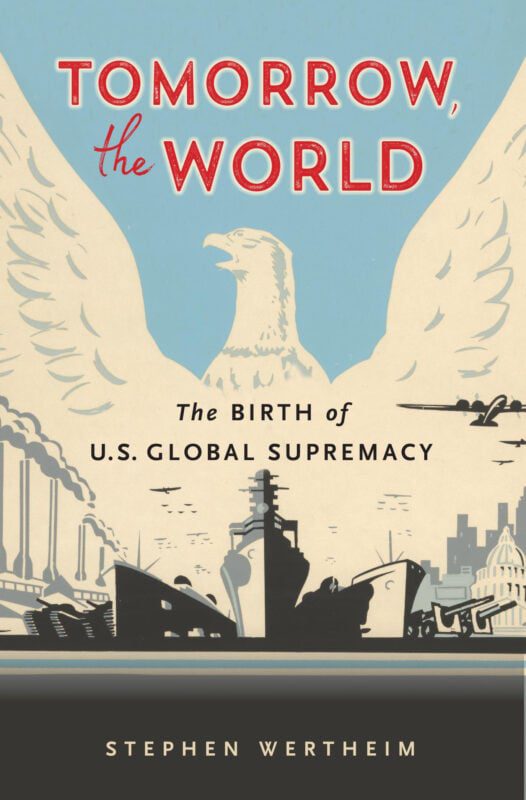
Tomorrow, the World by Stephen Wertheim identifies the pivotal moment when the United States chose global military supremacy as its permanent role. In mid-1940, before the country officially entered World War II, American policymakers, scholars, and strategists concluded that future peace demanded an American-led order backed by unmatched force. This conclusion became the foundation for the modern U.S. foreign policy establishment.
The Rupture of 1940
The Nazi conquest of France in the summer of 1940 destabilized prevailing American assumptions about international politics. Until that point, American elites viewed their nation as distinct from European power struggles. They believed that law, arbitration, and international organization could contain conflict. The destruction of France and the looming threat to Britain shattered confidence in that model. U.S. leaders feared that the fall of the European democracies would leave the world’s political and economic order in the hands of totalitarian states.
This fear crystallized into a decision. U.S. foreign policy planners, especially those at the Council on Foreign Relations, designed what became known as the “Grand Area” strategy. This vision encompassed the Western Hemisphere, the British Empire, and eventually the entire non-Axis world. The United States would assume responsibility for this vast region’s political and economic stability. Supremacy became necessary, not as an opportunistic expansion, but as the only way to preserve international order.
The Invention of Isolationism
To legitimize the shift, elites redefined the terms of American foreign policy. Before 1940, internationalism meant the rejection of militarism and imperial ambition. It favored peaceful intercourse, trade, law, and multilateral cooperation. Leaders across the political spectrum believed that the United States should avoid entanglements in the European balance of power. Even interventionists accepted the premise that American force should be used only sparingly.
Wertheim shows that “isolationism” did not exist as a coherent doctrine or identity before the 1940s. It entered public discourse as a term of abuse, invented to discredit those who opposed U.S. military commitments beyond the Western Hemisphere. The concept framed restraint as abdication and painted internationalists as the only responsible stewards of world peace. As a result, the entire foreign policy spectrum narrowed dramatically. The new binary—global leadership or isolationism—excluded alternative visions of international engagement.
Recasting Internationalism
The redefinition of internationalism served a strategic purpose. By fusing military dominance with cooperative ideals, elites constructed a narrative in which U.S. supremacy secured peace, law, and progress. This framework gave armed power a moral function. It also aligned public perception with elite priorities. Officials and commentators claimed that only American leadership could protect freedom, stability, and economic recovery after the war.
This alignment materialized most clearly in the creation of the United Nations. Although the UN appeared to represent a new era of multilateral governance, its architects, especially in the U.S. State Department, designed it as a mechanism to legitimate American power. The Security Council’s structure ensured that the U.S. and its allies retained decision-making authority. The language of cooperation masked a hierarchy in which American force remained central.
Strategic Planning and Public Messaging
Wertheim traces how planners and intellectuals coordinated postwar strategy with public messaging. From 1942 onward, they launched a campaign to convince Americans that leadership required military presence around the globe. This campaign framed global engagement as a binary choice: lead or retreat. The United Nations became a rhetorical centerpiece, marketed as the institutional embodiment of American values.
Public persuasion campaigns fused appeals to idealism with appeals to fear. They invoked the failures of the interwar period, blamed isolationism for the outbreak of war, and presented military primacy as a bulwark against tyranny. This discourse displaced debates about the form and extent of engagement. Instead, it entrenched the premise that American military power was the precondition for global cooperation.
The Architecture of Primacy
The U.S. did not simply inherit global power. Its elites built an architecture to sustain and justify it. They tied economic prosperity to access and influence across continents. They linked national security to the projection of force in distant regions. They treated any erosion of superiority as a systemic threat. Primacy became an axiom—a foundational truth upon which policies, alliances, and institutions depended.
Planners embedded this assumption in military basing strategies, economic frameworks like Bretton Woods, and security alliances such as NATO. They imagined a permanent infrastructure for American dominance. The goal was not to win the war and return home but to shape the peace and anchor the future. The Cold War extended this project but did not initiate it. Its foundation was laid before the U.S. entered combat in 1941.
Elites as Agents of Change
Wertheim emphasizes the role of intellectuals, experts, and institutions outside formal government channels. The State Department depended heavily on the Council on Foreign Relations and other think tanks for strategic thinking. These networks functioned as a proto–national security state. They produced studies, proposals, and scenarios for world order. They channeled their ideas through media, universities, and government advisors.
This elite consensus drove the ideological transformation of American foreign policy. It did not emerge from broad democratic deliberation or electoral mandates. It came from a class of actors who positioned themselves as representatives of rational expertise and global responsibility. Their power lay not in coercion but in the ability to define legitimate discourse.
The Moral Image of Supremacy
American leaders framed dominance as a moral obligation. They invoked destiny, responsibility, and providence. They promised to lead not for self-interest but for global peace. This language gave primacy a redemptive quality. It converted force into service, hierarchy into stewardship, and intervention into duty. By doing so, it made criticism of supremacy appear dangerous or naive.
This rhetorical strategy continues to shape U.S. policy. Politicians and commentators describe America as the “indispensable nation.” They treat leadership as identity, not strategy. They portray military withdrawal as abandonment and equate diplomacy with appeasement. These tropes trace back to the ideological work performed during and after World War II.
Historical Contingency
Tomorrow, the World refuses to treat U.S. dominance as inevitable. Wertheim restores contingency to the history of American foreign policy. He shows that elites faced real choices in 1940. They could have responded to the fall of France with containment, regional defense, or multilateral institutionalism without military supremacy. Instead, they chose a path that made dominance seem natural, necessary, and benevolent.
Understanding this choice matters for present debates. It reveals that the current international order reflects historical decisions, not structural destiny. It opens the possibility of reconsidering the foundations of U.S. foreign policy. It challenges the assumption that leadership requires force and that order depends on hierarchy.
Reclaiming Alternatives
Wertheim’s history recovers suppressed alternatives. Figures like Edwin Borchard, who championed legalism and nonintervention, represented an internationalist tradition that sought peace without empire. They did not seek disengagement but advocated a different kind of engagement—one rooted in law, neutrality, and mutual restraint.
These voices lost the definitional battle. They were recast as isolationists and pushed to the margins. But their ideas remain relevant. They invite reflection on what it means to participate in world affairs responsibly. They suggest that cooperation can occur without coercion and that internationalism can pursue equality rather than dominance.
Postwar Permanence
By 1945, supremacy was entrenched. The United States had the largest economy, unrivaled military capacity, and global infrastructure. It also had a legitimizing story: that this power served the common good. The Cold War institutionalized this system. But the logic preceded the rivalry. Primacy became an end, not just a means.
The permanence of supremacy limits policy flexibility. It treats status quo dominance as the baseline and pressures leaders to defend it unconditionally. It narrows the range of possible responses to global events. It converts challenges into threats and partners into dependents. It sustains a system where American decline is treated as global crisis.
Strategic Reorientation
Tomorrow, the World calls for strategic reorientation. It does not advocate isolation. It proposes recovering the distinction between leadership and supremacy. It urges a vision of internationalism based on rules, cooperation, and reciprocity rather than force. It invites Americans to imagine engagement that respects sovereignty, limits coercion, and seeks justice without empire.
This reorientation requires dismantling the myths that sustain primacy. It means questioning the moral superiority claimed by power. It means confronting the costs of perpetual dominance—militarization, entanglement, and backlash. It means treating peace as a project of restraint, not control.
The Future of American Purpose
The book ends with a challenge. What kind of international role should the United States pursue in the twenty-first century? The answer begins by recognizing the historical construction of its current role. Supremacy emerged from crisis, ideology, and choice. It does not define the limits of possibility. Other futures exist.
Those futures depend on intellectual clarity, political courage, and public imagination. They demand honesty about the origins and operations of power. They require institutions that serve global justice, not national dominance. They invite a new generation to rethink what it means to lead in a world shaped by interdependence, not hegemony.