Seeds of Destruction: The Hidden Agenda of Genetic Manipulation
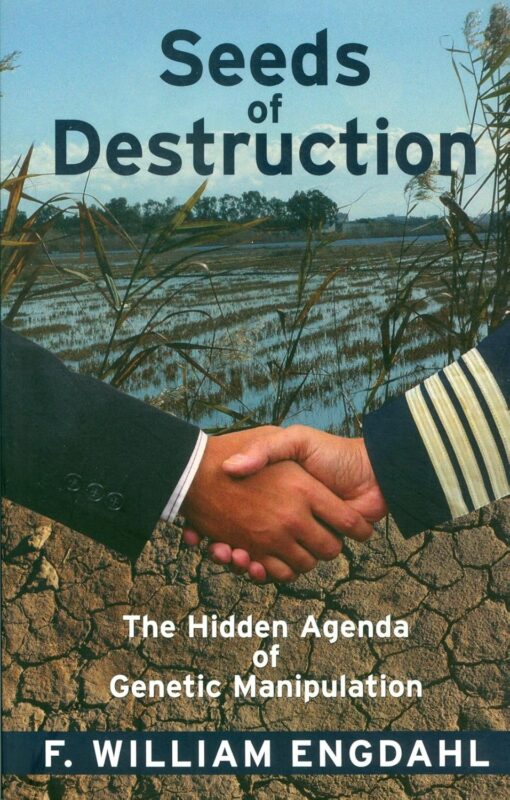
Seeds of Destruction the Hidden Agenda of Genetic Manipulation by F. William Engdahl exposes the convergence of corporate ambition, geopolitical strategy, and scientific manipulation behind the global spread of genetically modified organisms. The book situates GMO technology within a framework of elite control, tracing its evolution through strategic governmental and institutional support.
Power Realigned: From Oil to Food
Following the success of oil as a lever of global influence, powerful American families sought to extend their control into agriculture. By engineering dependence on patented seeds and chemical inputs, they laid the groundwork for a food supply governed by proprietary science. Engdahl identifies the Rockefeller Foundation as the primary catalyst, funding biotech research, university programs, and international initiatives to normalize GMO agriculture under the guise of development and humanitarian relief.
Control over food production achieved multiple strategic goals. It secured access to markets in the Global South, eroded national food sovereignty, and funneled profits to a handful of agrochemical corporations. In this vision, controlling seed genetics became a geopolitical imperative. Monsanto, DuPont, Syngenta, and Dow emerged as enforcers of a global system that commodified the most fundamental element of life: the capacity to grow food.
The Corporate-State Nexus
The institutional machinery of the U.S. government proved essential in shielding GMO products from scrutiny. In the 1980s and 1990s, administrations aligned policy with industry priorities. Vice President George H. W. Bush’s quiet deals with Monsanto executives, followed by Vice President Dan Quayle’s formal embrace of deregulation, signaled a decisive pivot. The FDA declared genetically modified products “substantially equivalent” to their natural counterparts. This single ruling eliminated the requirement for rigorous safety testing or consumer labeling.
Appointments blurred the boundary between regulator and regulated. Lawyers and executives from Monsanto rotated through senior FDA positions, where they drafted guidelines favorable to their former employers. The same individuals later returned to Monsanto with expanded influence. The doctrine of substantial equivalence enabled untested foods to enter the marketplace disguised as ordinary produce.
Technology as Weapon
Engdahl charts how genetically modified seeds functioned not only as commercial products but also as instruments of geopolitical leverage. In Argentina, widespread adoption of GMO soy followed a debt crisis that disempowered the state and opened markets to foreign agribusiness. U.S. agencies promoted GMO cultivation in Iraq after the 2003 invasion, even issuing Order 81 under Paul Bremer to outlaw traditional seed saving and mandate the use of patented varieties.
The goal was not only to profit from seed sales but to disable indigenous food systems and lock nations into a cycle of dependency. Through mechanisms such as the WTO, U.S. trade policy forced open reluctant markets. Simultaneously, NGOs and development agencies promoted GMO crops under the pretense of solving hunger. In practice, this meant transferring control of local agriculture to transnational corporations and undermining traditional practices of seed exchange and ecological adaptation.
Scientific Fraud and Media Complicity
Engdahl documents how early scientific dissent was silenced through institutional intimidation. Dr. Arpad Pusztai, a leading expert on lectins, conducted government-funded research revealing harmful effects in rats fed GM potatoes. His findings indicated immune suppression, organ damage, and developmental abnormalities. Within days of revealing these results, he was fired, discredited, and subjected to a media campaign orchestrated by his own institute under political pressure.
The British Prime Minister, acting on a call from U.S. President Bill Clinton, intervened to suppress the research. Blair’s biotech-friendly policies depended on the elimination of obstacles. Monsanto’s influence reached into editorial boards, regulatory agencies, and research institutes, ensuring that dissent remained fringe and industry narratives dominated public discourse.
Patents on Life
As corporations acquired patents not only on GMO seeds but also on animal genetics, the nature of biological life shifted. Monsanto patented genetic sequences for pigs, claiming ownership of offspring produced using its technology. Delta & Pine Land developed “Terminator” seeds, engineered to produce sterile plants, preventing farmers from saving seeds and ensuring a perpetual dependence on corporate suppliers.
This transformation made food not a common resource but a licensed product. Patents replaced traditional rights, transforming farming into a subscription model. The consolidation of seed companies further concentrated power, giving a handful of entities control over the genetic code of global agriculture.
From Green Revolution to Genetic Dominance
The so-called Green Revolution of the mid-20th century served as the prelude. Funded by Rockefeller and Ford Foundations, it introduced high-yield crops reliant on chemical fertilizers and pesticides. Though marketed as humanitarian, it displaced biodiverse farming systems and introduced monoculture economies that depleted soils and undermined food resilience.
GMO technology represented the next phase. Rather than increasing yield or solving hunger, it intensified market capture. Farmers who adopted GMO crops faced new debts, ecological consequences, and contractual restrictions. Those who resisted often found their fields contaminated by windblown GMO pollen and then faced lawsuits for patent infringement. This inversion of justice ensured the expansion of GMO agriculture regardless of consent.
The Rockefeller Strategy
Engdahl traces a consistent lineage from Rockefeller oil interests to biotech domination. He presents extensive documentation showing how family foundations funded research into eugenics, population control, and reproductive intervention alongside GMO development. The same logic governed each initiative: reshape the biological landscape to conform to elite priorities. By redesigning agriculture, they sought to manage population dynamics, resource access, and geopolitical stability.
Scientific disciplines were molded to serve these goals. University research responded to foundation grants that dictated the framing and outcome of studies. Entire institutions, such as the Consultative Group on International Agricultural Research (CGIAR), functioned as arms of this strategy. What emerged was a science of obedience, tailored to corporate interests, and unmoored from ecological or public health concerns.
Disease and Disruption
The consequences of genetic manipulation extended beyond plants. Monsanto developed recombinant bovine growth hormone (rBGH) to increase milk production, despite evidence linking it to cancer. Cows injected with rBGH suffered from mastitis and other illnesses, requiring antibiotic treatments that further contaminated the food chain. The FDA approved rBGH based on Monsanto's internal studies, blocking external reviews and punishing whistleblowers.
Similar patterns emerged with genetically engineered poultry and flu-resistant chickens. Avian flu scares enabled the rollout of new GMO breeds under emergency protocols. Each disease became an entry point for a new product, each crisis an opportunity for deeper corporate penetration.
Legal Infrastructure of Control
International trade law enforced GMO proliferation. The World Trade Organization ruled against the European Union’s resistance to GMO imports, compelling compliance through threat of sanctions. Intellectual property regimes, bolstered by TRIPS agreements, enabled corporations to enforce seed patents globally. Farmers in India, Africa, and Southeast Asia found themselves subject to foreign legal systems and corporate enforcement tactics.
Laws once designed to protect consumers and national industries now enforced dependency. Local governments lost the ability to regulate their own agriculture. Legal structures made survival contingent on compliance with corporate terms.
Endgame: Full Spectrum Dominance
Engdahl situates the GMO agenda within a broader doctrine articulated by the U.S. military: full spectrum dominance. Control of food ensures control of populations. Genetic engineering, deployed through state policy, private investment, and legal coercion, becomes a tool of empire. The goal is to consolidate influence over life itself, replacing ecosystems with engineered systems governed by proprietary algorithms.
This architecture of control depends on invisibility. Consumers cannot detect GMOs in their food. Farmers face contracts written in legalese. Governments enforce foreign mandates under trade agreements few citizens have read. The cumulative effect is displacement—of agency, of sovereignty, of biological diversity.
The convergence of finance, biotech, and military doctrine reveals a coherent project. By turning food into a strategic asset and biology into intellectual property, a global elite engineered a system that rewards compliance and punishes autonomy. Seeds of Destruction documents that convergence with precision, exposing the mechanisms and motives behind the genetic manipulation of the global food chain.


About the Book
https://youtu.be/Uy7BajkRlvI
https://youtu.be/syjN01jua60