Superclass: The Global Power Elite and the World They Are Making
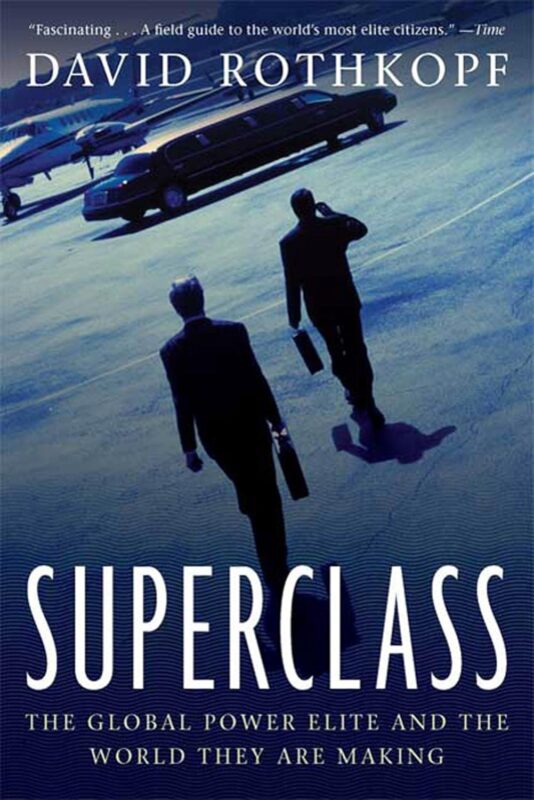
Superclass: The Global Power Elite and the World They Are Making by David Rothkopf examines the dynamics of global influence exerted by a concentrated group of powerful individuals who shape the world’s political, economic, and cultural agendas.
Mapping Global Influence
David Rothkopf defines the superclass as a network of approximately 6,000 individuals who shape international events and systems. These are the CEOs of multinational corporations, heads of state, financial moguls, cultural icons, military leaders, and key players in media and religion. They operate transnationally, leveraging institutional roles and personal networks to influence decisions affecting billions. Rothkopf traces how access, ideas, wealth, force, and institutional control converge in this elite stratum, producing asymmetrical impacts across borders.
The Metrics of Power
Superclass membership is determined by an individual's consistent capacity to influence lives beyond their immediate environment. Rothkopf rejects symbolic power and focuses on tangible leverage. Influence must be transnational, sustained, and potent. This framework reveals that power resides where decisions move capital, direct media narratives, manipulate policy, and command militaries. Rothkopf identifies leadership in corporate boardrooms, central banks, private equity, energy conglomerates, and international non-governmental organizations as primary vectors of global agency.
Concentration and Consequence
The rise of this elite accompanies structural shifts in governance. As multinationals surpass state capacities, and as finance becomes borderless, individuals at the helm of these forces command disproportionate sway. Rothkopf traces the emergence of financial and corporate leaders who redefine sovereignty, replacing public accountability with private strategy. Where once generals and politicians dominated, now financiers and technocrats set agendas. This transfer reconfigures the architecture of global order. Power no longer requires armies. Influence flows through liquidity, platforms, and compliance networks.
Institutions of Access
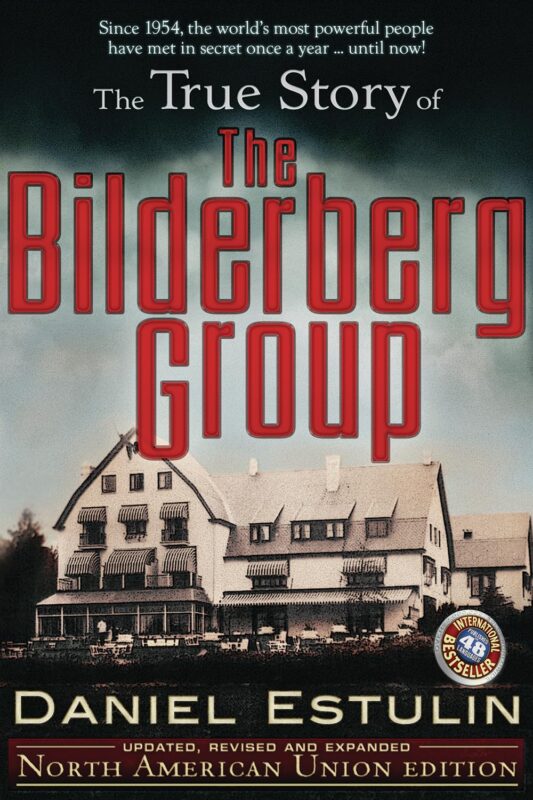
Superclass members build their influence through strategic positioning within high-leverage institutions. Central banks, transnational regulatory bodies, media conglomerates, energy consortiums, and defense contractors serve as engines of coordinated global impact. Rothkopf examines events like the World Economic Forum in Davos and summits such as Bilderberg as sites where alliances consolidate. These institutions, formal and informal, structure access and circulate information among insiders, reinforcing shared worldviews and policy trajectories.
Technocracy as Ideology
A defining trait of the superclass is its ideological preference for market logic, deregulation, and supranational governance. Rothkopf argues this orientation reflects the backgrounds and interests of its members, many of whom rise through financial or corporate hierarchies. Their decisions amplify the systemic incentives of capital over labor, mobility over locality, and stability over equity. This elite promotes global rulesets designed to preserve the fluidity of markets and the autonomy of multinationals, even when these structures marginalize democratic voice.
Origins and Gatekeeping
Entry into the superclass depends on a confluence of education, proximity, and institutional trajectory. Rothkopf details the prevalence of elite schools, family ties, military service, and early career placements in think tanks or global finance as common precursors. These pathways restrict membership and insulate decision-making. The interlocking nature of elite networks—through advisory boards, philanthropic platforms, and strategic partnerships—forms a gatekeeping system that preserves the status quo and regulates who participates in global leadership.
The Corporate Epoch
The superclass thrives in an era dominated by corporate capital. Rothkopf highlights the role of financial elites—hedge fund managers, investment bankers, tech entrepreneurs—in shaping policy and governance. Their influence accelerates through privatization, deregulation, and the ascendancy of shareholder value as a guiding principle. From oil conglomerates to digital monopolies, corporate actors now rival or surpass states in negotiating treaties, funding infrastructure, and enforcing norms. The decisions made in corporate boardrooms determine trade routes, technological standards, and political alliances.
Asymmetry of Access
Rothkopf outlines how the superclass capitalizes on uneven regulatory environments and fragmented national oversight. As governments struggle to coordinate effective international regulation, private actors operate with impunity across jurisdictions. This asymmetry allows elites to avoid taxes, evade accountability, and shape laws in their favor. Power clusters around those who can act across borders while remaining shielded from public scrutiny. This dynamic sustains inequality and disempowers national populations from influencing decisions that affect their lives.
Information, Narrative, and Control
The superclass also shapes global perception through control of information flows. Media magnates, tech platform executives, and cultural influencers determine what becomes news, how events are framed, and which narratives receive legitimacy. Rothkopf emphasizes that control over content—whether through ownership, algorithms, or editorial direction—constitutes a powerful form of soft influence. The ability to shape public discourse confers cultural authority and political leverage, often more effective than legislative power.
The Psychodynamics of Power
Membership in the superclass reshapes identity. Rothkopf delves into the psychology of elite power—its detachment, its insularity, and its internal codes. Leaders within this class often see themselves as stewards rather than citizens. They prioritize global systems over national allegiances. This mindset promotes policies that benefit mobile capital and elite continuity, even at the cost of local disruption or political unrest. The worldview of the superclass, shaped by private schools, international meetings, and curated data streams, narrows its moral and operational lens.
Resentment and Reaction
The visibility of elite decision-making, especially during crises, fuels backlash. Rothkopf chronicles the public reaction to the 2008 financial collapse, where financial leaders who championed deregulation demanded government intervention. This revealed the dual standards of elite influence: freedom in prosperity, protection in failure. Populist movements and nationalist parties exploit this contradiction. They reject the superclass not for its methods but for its outcomes. Elites claim competence; critics point to instability, inequality, and exclusion.
Inheritance and Innovation
The new elite rises through merit, not lineage. Rothkopf clarifies that today's superclass includes self-made billionaires and technologists who displaced aristocracies and political dynasties. Yet once inside, members adopt similar behaviors—securing privilege, minimizing exposure, and preserving capital. The superclass regenerates itself through foundations, lobbying, strategic philanthropy, and educational endowments. These tools ensure influence persists across generations, redefining dynastic continuity in global terms.
Consequences of Overreach
Unchecked elite influence carries systemic risks. Rothkopf explores how concentrated power distorts markets, corrupts governance, and weakens institutional legitimacy. Without accountability, the superclass can produce fragile systems that amplify shocks. Financial contagions, political unrest, and technological disruption often trace back to elite decisions insulated from consequence. Rothkopf warns that unless governance catches up with mobility, the consequences will intensify.
Recalibrating Global Order
The book concludes by urging a reconfiguration of global governance. Rothkopf argues for multilateral mechanisms that match the scale of private influence. This includes new regulatory architectures, transnational accountability frameworks, and civic engagement that transcends national borders. The challenge is structural: align the scale of democracy with the scale of power. Without this alignment, the legitimacy of both markets and states will continue to erode.
Superclass as Lens and Signal
Rothkopf presents the superclass as a diagnostic tool. It reveals how power aggregates, how decisions travel, and where control resides. The superclass is not a conspiracy; it is a pattern. Understanding its structure clarifies the mechanics of the global era. Policy, inequality, and culture all move along its channels. To engage the future, one must study its architects.