Cloak and Gown: Scholars in the Secret War, 1939-1961, Second Edition
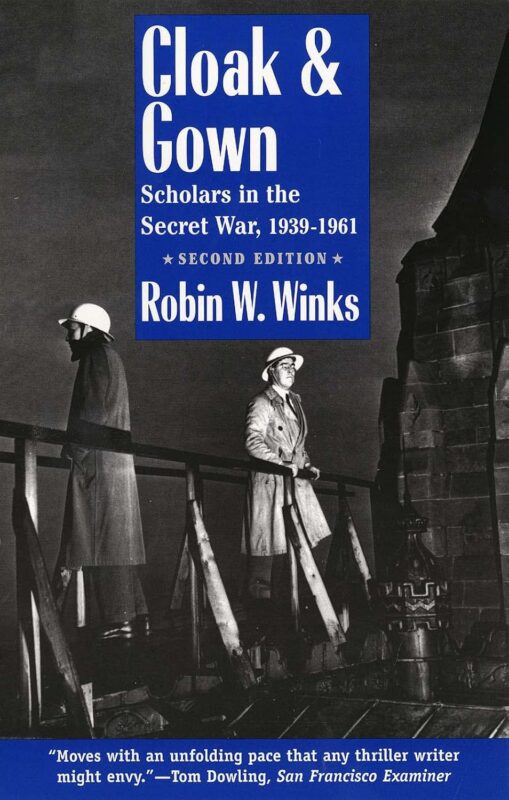
Cloak and Gown: Scholars in the Secret War, 1939–1961 by Robin W. Winks explores the covert alliance between American academia and the intelligence community during World War II and the Cold War, anchored in the recruitment of Yale University scholars into the Office of Strategic Services (OSS) and later the CIA.
The University as Recruitment Incubator
A university cultivates its own nationalism—songs, mascots, rituals, and a sense of territoriality. Yale embodied this nationalism with a culture that fostered intellectual rigor and aristocratic service. The culture of the institution channeled young men into public roles, not merely by training, but by instilling a belief in service through knowledge. Within the tightly bound ethos of Yale, scholars felt compelled to act, not just to think.
During wartime, this institutional identity aligned with the needs of the nascent American intelligence apparatus. OSS recruiters sought minds that could interpret ambiguity, handle secrets, and analyze patterns. They found these minds in Yale’s history seminars, literary circles, and law lectures. Professors and students alike internalized the idea that scholarship should serve national imperatives.
Codes, Covers, and Academic Precedent
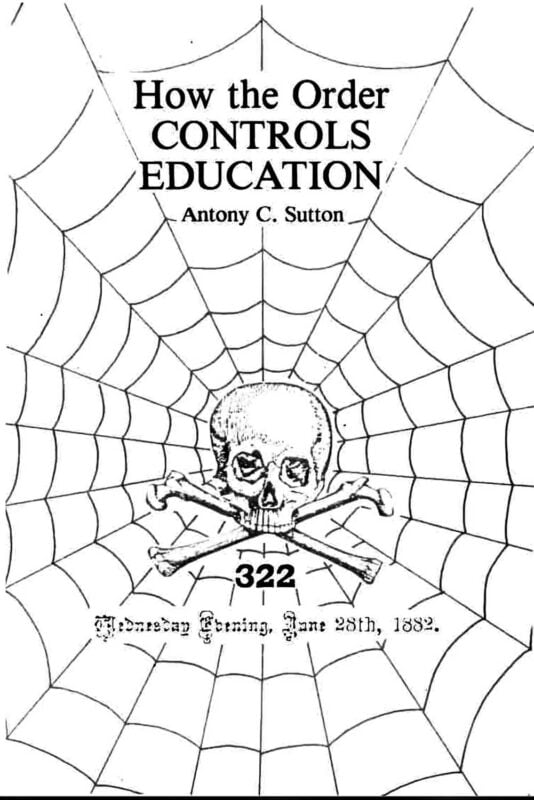
Recruitment operated through the familiar codes of campus life. Secret societies like Skull and Bones served as proto-vetting mechanisms. They assessed character, signaled trustworthiness, and ensured discretion—qualities essential to intelligence work. Unlike bureaucracies that standardized compliance, OSS valued deviation as innovation. It did not merely tolerate eccentricity; it sought it.
The OSS mirrored academic values. Faculty meetings mirrored operational briefings; footnotes became intelligence memos. Intelligence analysis thrived on the same methods as historical interpretation: synthesizing fragments, evaluating credibility, detecting bias. Scholars trained in archival research became natural assets in intelligence.
Yale’s Historical Mythos and Nathan Hale
The mythology surrounding Nathan Hale, Yale’s most famous early spy, reinforced the institution’s claim to the espionage lineage. Though Hale failed in his mission and died young, his martyrdom was converted into institutional pride. Yale installed his statue, recited his legend, and placed his figure at the entrance of the CIA headquarters in Langley.
This symbolic continuity justified further recruitment. If Yale had birthed the first American spy, then its continued contribution was a natural extension. Stories like Hale’s became the narrative capital that supported real-world assignments in Europe, Asia, and Africa.
OSS Culture as Extension of Academic Ethos
OSS culture and Yale culture converged. The OSS rewarded intellectual freedom, tolerated rule-bending, and encouraged improvisation. It allowed experimental sabotage tactics, unorthodox data gathering, and speculative theorizing. The organization operated less as a command structure and more as an idea lab, making it amenable to scholars more than soldiers.
Winks dissects this alignment with vivid character portraits. Donald Downes, Norman Holmes Pearson, and James Jesus Angleton emerge as emblematic figures. They lived academic lives, spoke in references, argued with footnotes, and translated those habits into espionage roles. Pearson ran counterintelligence in London while keeping up correspondence on modernist poetry. Angleton developed theories of Soviet deception while steeped in literary criticism.
The Rise of Research and Analysis
The OSS created the Research and Analysis (R&A) Branch as its intellectual arm. Staffed overwhelmingly by academics, R&A mapped enemy infrastructure, interpreted intercepted data, and modeled future scenarios. Their task resembled academic review: understanding systems through inference, detecting truths through patterns.
Yale’s legacy dominated R&A. The department became a think tank within a clandestine network. It aggregated insights from economics, history, literature, and law to develop actionable intelligence. Its approach was integrative, drawing on the liberal arts to understand geopolitical dynamics.
Returning Alumni and the Intelligence Continuum
After the war, Yale veterans of OSS returned to civilian life, many resuming academic careers. Others transitioned into the newly formed CIA, preserving institutional continuity. Winks traces this alumni network, showing how wartime habits matured into Cold War policy frameworks.
These alumni did not merely bring skills—they imported a culture. They structured the CIA around scholarly principles: analytical rigor, peer review, and long-range forecasting. Intelligence, for them, was not a branch of war-making but of knowledge production. Winks highlights how this epistemological stance defined CIA operations for decades.
Yale's Moral Ambiguities and Institutional Memory
Winks does not sidestep moral complications. He confronts the role of elitism, the use of covert power, and the ambiguity of outcomes. He examines how the university’s insular traditions, while fostering excellence, also excluded dissent and entrenched a sense of entitlement.
The book delves into episodes of surveillance, ideological filtering, and internal censorship that arose from this close institutional bond. Fisher’s secret files on Yale students, faculty cooperation with intelligence vetting, and the quiet monitoring of ideological compliance show that the alliance had costs. Privacy was sacrificed to protect an ideal of national service.
Parallel Lives: Historians as Spymasters
Winks aligns the craft of the historian with that of the spy. Both sift sources, question authenticity, and operate in interpretive uncertainty. Both construct narratives from silence and trace the outline of what is hidden. In Winks’s view, the historian and the spy operate with similar tools, driven by a belief that evidence, however fragmented, leads to truth.
This thematic strand binds the book. Winks shows how the method of scholarship—its patience, skepticism, and deep reading—became the method of intelligence. He does not romanticize the process. He frames it as a structural evolution, an inheritance of function.
From OSS to CIA: Continuity through Ideation
The transition from OSS to CIA carried institutional DNA. OSS’s intellectual openness became CIA’s analytical backbone. Angleton’s rise from Yale undergraduate to CIA counterintelligence chief illustrates this trajectory. Winks traces how early habits—skeptical reading, metaphorical thinking, recursive logic—shaped national policy on surveillance and subversion.
Through Angleton, the book explores the limits of interpretation. The same critical thinking that produced deep insight also bred paranoia. Angleton’s obsession with Soviet moles sprang from habits of over-reading, of seeing conspiracy as text. Winks does not pathologize this tendency—he situates it within the framework of scholarly rigor unchecked by empirical feedback.
A Study of Institutions, Not Just Individuals
Cloak and Gown functions as institutional ethnography. It treats Yale and the OSS as cultural systems with shared codes, rituals, and gatekeepers. Winks’s use of anecdotes, archival digressions, and profile sketches maps the hidden architecture of elite consensus.
This structural approach foregrounds networks over biographies. Names recur—Sherman Kent, Tracy Barnes, Richard Bissell—but their significance lies in their positional roles within intersecting systems. Winks draws out the choreography: who knew whom, who vouched for whom, who moved from classroom to control room.
A Legacy of Scholarly Espionage
The book argues that intelligence work, as it evolved in the U.S., depended on a very specific model of elite education. It demanded a belief in abstraction, a facility with ambiguity, and a moral seriousness. These qualities did not arise from generic patriotism. They were cultivated in the seminar, the archive, and the faculty lounge.
Cloak and Gown closes not with celebration but with recognition. Intelligence institutions are not just tools of policy. They are expressions of how a society defines knowledge, authority, and secrecy. In tracing the Yale-OSS-CIA triad, Winks defines the intellectual undercurrents of American covert power.
Conclusion
Winks delivers more than a history of espionage. He uncovers the intellectual infrastructure that made modern intelligence possible. Through his detailed excavation of Yale’s role, he reveals how institutions build, reinforce, and extend their influence not only through formal appointments but through habits of mind. In that sense, Cloak and Gown explains how a university became a covert state actor—through pedagogy, through myth, and through the assertion that ideas can govern war.