The Octopus of Global Control
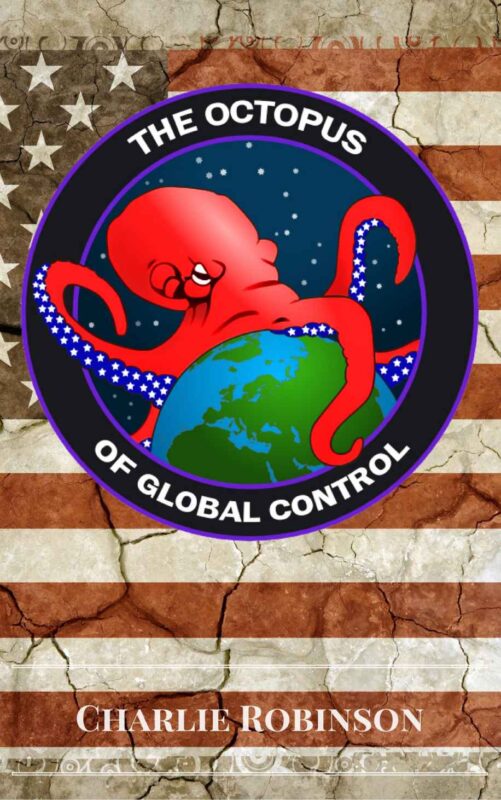
The Octopus of Global Control by Charlie Robinson interrogates the structures of power that shape the contemporary world. Robinson maps the architecture of influence and manipulation, identifying elite agents, their tactics, and the tools by which they maintain control. The book demands that readers confront the forces directing economies, media, governments, and ideologies. Robinson’s synthesis of historical precedent, insider testimony, political theory, and dark humor yields a narrative of systematized deception and structural dominance.
Origins of Perception: Constructing Reality
Societies generate consent and belief through repeated narratives and ritualized information. The education system, media broadcasts, political statements, and cultural myths collaborate to assemble a cohesive, yet artificial, sense of truth. Robinson frames this phenomenon as a form of voluntary ignorance. When people favor comfort over investigation, they invite manipulation. Information overload conceals rather than reveals the mechanics of control. The ceaseless flow of data obscures pattern, and the intended effect is bewilderment, submission, and passivity.
Robinson asserts that power thrives in ambiguity. The more invisible the controlling agents, the more effectively they operate. Elites craft a system where the population mistakes narratives for truth and authority for legitimacy. The official story of any major event—the sudden outbreak of war, the rationale behind a financial collapse, the selection of political candidates—emerges first and sticks. Subsequent counter-narratives struggle to dislodge initial beliefs. Robinson directs attention to the media’s role in scripting reality, highlighting that credibility accrues to those who speak first and most broadly.
The Metaphor of the Octopus
The octopus stands as Robinson’s central metaphor for global control. Its many tentacles represent discrete systems of influence: military, governmental, covert, physical, financial, media, spiritual, and scientific. Each tentacle operates semi-independently but coordinates toward a central goal: the maintenance and expansion of control. The octopus adapts, camouflages, and strikes with precision, making it an apt analogy for secretive, adaptable elites.
Chromatophores in the animal kingdom allow an octopus to alter its color and texture, enabling evasion and deception. Robinson extends this metaphor to institutions of power, which adapt public messaging, legal frameworks, and social norms to suit emerging circumstances. Flexibility, intelligence, and concealment define both the animal and the system of control. The octopus hunts with patience and cunning, using ink to obscure its tracks and confusion to facilitate escape or attack. Institutions mask intent, using front organizations, media spin, and legal opacity to ensure plausible deniability.
Problem-Reaction-Solution: The Engine of Change
Robinson foregrounds the Hegelian dialectic—problem, reaction, solution—as the primary tactic for driving social transformation. Agents of control manufacture crises, either directly or through policy and mismanagement. The populace, shocked and destabilized, demands relief or protection. Solutions, previously unthinkable, become possible in the aftermath of trauma. These solutions frequently involve the surrender of rights, wealth, or autonomy, resulting in greater consolidation of elite power.
Historical examples abound. Wars follow “incidents” that generate outrage. Financial crises elicit emergency measures that deepen dependency on centralized banking. Terrorist attacks prompt surveillance expansion, suspension of due process, and permanent states of emergency. The process relies on the psychology of fear. The more terrified a society becomes, the more readily its members submit to authority. Robinson attributes much of this to engineered information environments and the pre-emptive framing of issues in the mass media.
Information Control and the Manufacture of Consent
Robinson examines the specific mechanisms by which information is controlled and consent is manufactured. Media conglomerates present the appearance of diversity but often fall under the ownership or influence of a small cadre of financial and political actors. Corporate interests dictate editorial direction, shape investigative priorities, and suppress dissent. The regulatory agencies responsible for maintaining objectivity in the press often populate their ranks with former executives from the industries they claim to oversee. This revolving door assures that institutional loyalties trump public interest.
Language itself becomes an instrument of control. Robinson emphasizes the manipulation of terms, the dilution of meaning, and the propagation of euphemisms. Definitions of “terrorism,” “freedom,” or “democracy” fluctuate according to convenience, allowing for broad or narrow application depending on policy objectives. Through linguistic management, power renders dissent illegible or criminal, and elevates conformity as virtue.
Financial Systems as Tools of Enslavement
Central banks, fractional reserve lending, and unaccountable international monetary organizations comprise a crucial tentacle of the octopus. Robinson details how money creation, debt, and inflation function to keep populations in a state of perpetual obligation. The financial elite—unconstrained by national borders—redirect wealth through cycles of boom, bust, bailout, and austerity. Regulatory capture ensures that no meaningful challenge emerges from within the system.
The book presents the 2008 financial collapse as a case study in engineered disaster and upward wealth transfer. Emergency interventions served the interests of the largest banks while eroding the savings and prospects of millions. Robinson argues that these dynamics repeat across continents and decades, always producing the same outcome: consolidation of power, dispossession of the many, and the normalization of crisis management as a permanent condition.
Military and Covert Manipulation
Robinson examines the military-industrial complex as another principal vector of control. The consolidation of military, intelligence, and security functions into a semi-autonomous complex provides the infrastructure for both external aggression and internal surveillance. Wars justify vast expenditures, enable legal exceptions, and create the context for executive overreach. The apparatus of surveillance, justified as protection, enables tracking, cataloguing, and policing of citizens beyond historical precedent.
False flag operations and covert interventions punctuate the record of modern conflict. Robinson traces a pattern from staged provocations to legislative overhauls, using fear and patriotism as tools for consent. Intelligence agencies engage in information warfare domestically and abroad, supporting or destabilizing governments in pursuit of global agendas.
Spiritual and Psychological Manipulation
Robinson moves beyond the material to examine how psychological operations and spiritual beliefs become tools of control. Organized religion, mass entertainment, and the invocation of existential threats all function to shape perception and channel collective energy. Ideology serves as both a sedative and a weapon, dividing populations along lines of identity, faith, or allegiance. Through these tactics, elites redirect opposition and cultivate passivity.
The book outlines how cognitive dissonance, groupthink, and herd mentality prevent populations from perceiving patterns of manipulation. The more contradictory the official narrative, the more vigorously some defend it, as acknowledging deception would require a wholesale reevaluation of self and society. Robinson contends that people often internalize propaganda, serving as unwitting enforcers of the very system that exploits them.
Legal and Political Engineering
Legislation, regulation, and the design of political systems are subject to manipulation by those with the resources to purchase influence. Robinson identifies the creation of “temporary” emergency powers, expansions of executive authority, and the proliferation of “public-private partnerships” as methods for converting private interests into public policy. Elections, far from expressing popular will, become exercises in managed choice, with candidates selected through a complex interplay of money, media exposure, and backroom negotiation.
Public outrage at corruption or abuse often dissipates without structural change. Investigations lead to reforms that concentrate power further, under the guise of oversight. Whistleblowers and dissenters face surveillance, harassment, and criminal prosecution. The machinery of state absorbs criticism and transmutes it into further justification for control.
Media as Instrument and Arena
Robinson dissects the transformation of news and entertainment into vehicles for programming rather than informing. “News anchors” recite prepared scripts. Public relations professionals manage “crises” through image control and strategic leaks. Dissenting perspectives are marginalized, ridiculed, or deplatformed, while entertainment programming distracts, soothes, and normalizes prevailing narratives.
The rise of alternative media, citizen journalism, and digital platforms introduces new vectors for contesting official stories, but these are subject to algorithmic manipulation, demonetization, and content moderation. Robinson identifies the interplay between legacy institutions and emerging technologies as a dynamic battlefield, with information as both prize and weapon.
Surveillance, Censorship, and Physical Control
Robinson documents the expansion of surveillance systems, both digital and physical. From biometric databases to predictive policing algorithms, control becomes increasingly granular and anticipatory. Governments and corporations collaborate to catalog, track, and analyze behavior at scale. Censorship operates through both overt bans and more subtle throttling or shadow banning, ensuring that dangerous or destabilizing information reaches only a small audience.
Physical control extends to the management of bodies and movements. Law enforcement, border regimes, and health mandates intersect to constrain freedom of association, assembly, and speech. Robinson explores how emergencies—whether real or constructed—justify permanent expansions of state power over daily life.
The New World Order: Plan and Trajectory
Robinson concludes that the convergence of these tentacles signals the advance of a project for global governance. Centralization of currency, the creation of international legal regimes, and the push for standardized digital identities mark the infrastructure for world administration. Those who resist or question the project face ridicule, exclusion, or direct repression.
The octopus does not rely on brute force alone. Its strength lies in adaptability, intelligence, and the concealment of true purpose. Robinson contends that awareness, skepticism, and independent inquiry constitute the only viable antidotes to systemic control. Agency begins with the refusal to accept packaged realities and the cultivation of critical thought.
Agency, Resistance, and the Imperative of Awareness
To resist the octopus requires understanding its anatomy and tactics. Robinson asserts that individuals must first recognize manipulation, then cultivate courage to act on inconvenient truths. Dissent flourishes where information flows freely and critical faculties are nurtured. Structural change begins with small groups—dissenters, whistleblowers, and truth-seekers—who disrupt the machinery by refusing silence.
The book closes with an invitation to vigilance and action. History rewards those who question, investigate, and challenge. The forces of control count on apathy, fear, and disbelief. Agency emerges where awareness replaces illusion. As the octopus adapts, so too must those who would resist its grasp.

About the Book
https://www.youtube.com/watch?v=tLtp4EvpR0