How the Order Controls Education
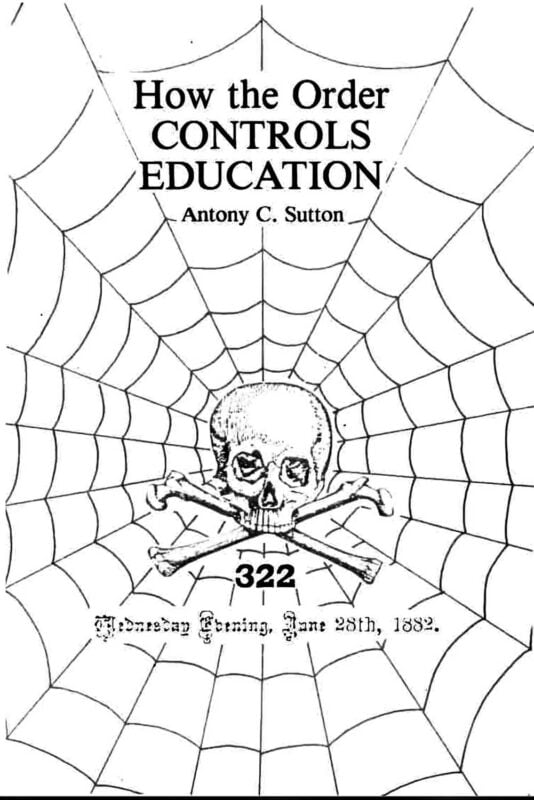
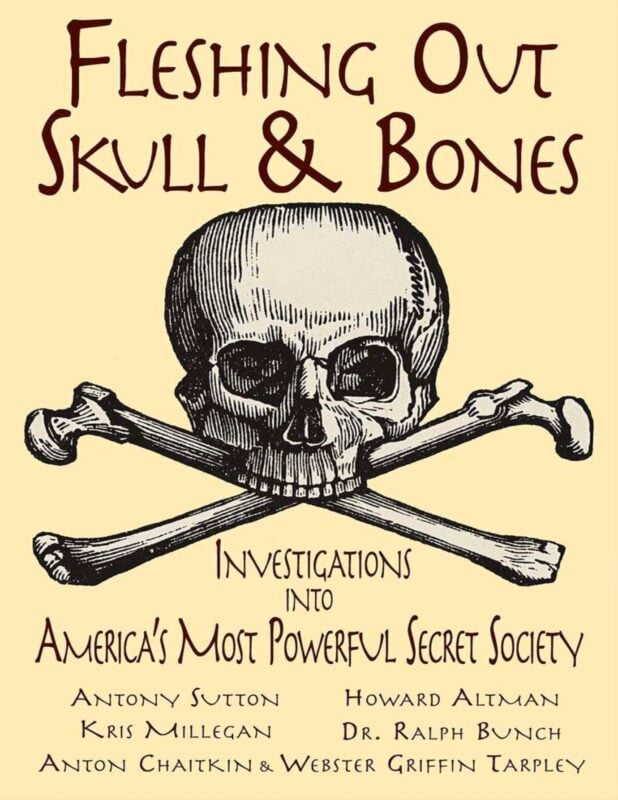
How the Order Controls Education by Antony C. Sutton identifies a systematic program of influence rooted in a secretive Yale-based network known as The Order, historically aligned with Skull and Bones. Sutton maps a century-long expansion of influence in U.S. education, tracing intellectual lineages, strategic placements, and institutional control.
The origins of institutional dominance
In the mid-19th century, three Yale graduates—Daniel Coit Gilman, Timothy Dwight, and Andrew Dickson White—embarked on European tours that embedded them in the philosophical ecosystem of post-Hegelian Germany. They absorbed frameworks that treated the individual as subordinate to the state and returned to initiate foundational reforms in American higher education. Gilman became the first president of Johns Hopkins University, White founded Cornell University, and Dwight later presided over Yale. Through administrative placement and structural redesign, these men instantiated a system guided by Prussian pedagogical values and committed to elite stewardship.
Gilman’s incorporation of Skull and Bones into legal existence as the Russell Trust set a precedent for clandestine institutional control. At Yale, he redirected land-grant funds into the newly formed Sheffield Scientific School, leveraging state and federal support with private governance. His actions formed a pattern of public resource acquisition paired with exclusive access. This approach transferred to Cornell, where White ensured the same land-grant monopoly.
Educational theory as ideological architecture
The philosophical underpinning of this transformation derives from a synthesis of Herbartian psychology and Hegelian political philosophy. Sutton presents Johann Friedrich Herbart’s educational theory—founded on moral instruction through state-oriented curricula—as a mechanism of social design. Herbart's conception of morality emerged from utility to the state, not autonomous virtue. Teachers became agents of moral regulation. Curriculum design prioritized core thematic convergence—grouping history, literature, and social studies—to reinforce dominant social narratives.
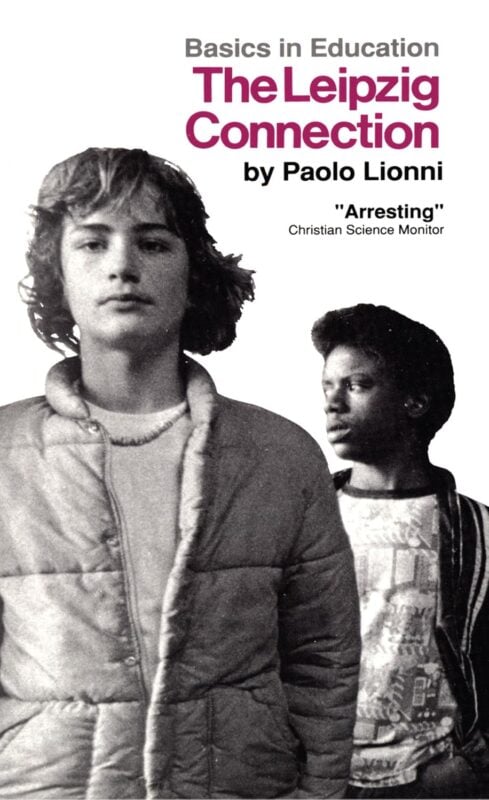
This intellectual inheritance entered American practice through Wilhelm Wundt, whose Leipzig laboratory institutionalized experimental psychology. G. Stanley Hall, first of many Americans to study under Wundt, exported these methods to Johns Hopkins. There, under Gilman’s patronage, he trained a generation of pedagogical reformers including John Dewey, James McKeen Cattell, and E.L. Thorndike. These men shaped curricula, textbooks, and educational psychology with the deterministic premise that human behavior could be engineered through controlled stimuli and social modeling.
Operational control through professional institutions
The Order's strategy extended beyond university administration into professional and academic associations. Andrew Dickson White, while serving as Cornell president and later as U.S. ambassador to Germany, helped found the American Historical Association. Richard T. Ely, backed by Gilman and White, organized the American Economic Association. These organizations codified orthodoxy in their respective fields. Through publication standards, peer review control, and hiring pipelines, they standardized acceptable academic discourse. Dissenting views—particularly classical liberal and individualist economic schools—were excluded from institutional legitimacy.
The Order’s grip tightened through philanthropic intermediaries. Gilman presided over the Carnegie Institution, directing funding toward aligned research and discouraging independent inquiry. William Welch, another member, led Johns Hopkins Medical School and later headed the Rockefeller Institute for Medical Research, importing the same model into science and medicine. These institutions embedded a managerial elite within education, medicine, and public policy.
Conditioning literacy for compliance
Sutton spotlights the Look-Say method of reading instruction as a functional illustration of ideological conditioning. Originally developed for deaf-mute education, this system teaches recognition of entire words rather than phonetic decoding. First adopted experimentally in Massachusetts under Horace Mann, the method reappeared in mainstream curricula during the early 20th century, promoted through Columbia’s Teachers College and Deweyite pedagogy.
The method fragments language learning, detaching literacy from analytical reasoning. By eliminating phonics, it reduces the learner’s ability to independently acquire new vocabulary. Sutton argues that this degradation of reading proficiency serves a functional purpose: it produces citizens fluent enough for instruction, but incapable of structured criticism. This aligns with the Hegelian vision of the state as moral totality and the individual as integrated part.
Dewey, Thorndike, and institutional normalization
John Dewey synthesized Wundtian psychology with Hegelian logic, reframing education as socialization rather than knowledge acquisition. Thorndike operationalized this into measurement tools—standardized testing and behaviorist reward systems. Columbia’s Teachers College, where both men worked, became the nexus of modern teacher training. Their ideas diffused nationwide through normal schools, textbook publishers, and educational policy.
These methods inculcate adaptive conformity. Rather than teach content mastery, they promote procedural compliance, reducing critical dissent and reinforcing administrative hierarchy. Testing mechanisms prioritize correct responses over reflective understanding. Instructional pacing flattens variance, discouraging intellectual differentiation.
Integration through federal and philanthropic structures
Federal legislation, especially the Morrill Act and later federal education mandates, provided infrastructure. Members of The Order positioned themselves to influence implementation. At the state level, they secured disproportionate resource allocation—Yale and Cornell monopolized their respective state’s land-grant funding.
Private foundations expanded this integration. The General Education Board and the Carnegie Foundation, guided by members or close allies, funded aligned research and pilot programs. They created credentialing mechanisms that rewarded ideological fidelity. The Rockefeller Foundation’s support for educational psychology cemented behaviorist methods across disciplines.
Secrecy, succession, and consolidation
The Order’s secrecy—modeled on the Illuminati and European esoteric networks—allowed quiet succession and strategic obscurity. Few public documents confirm operational structures. Sutton reconstructs influence through circumstantial connections, career trajectories, and institutional alignments.
Presidential succession at Yale post-1871 followed familial and fraternal lineage. Dwight, Hadley, Seymour, and Brewster maintained continuity. Faculty appointments within key departments repeatedly drew from known members or connected families. This continuity extended beyond Yale, with members taking roles in university boards, policy commissions, and federal education offices.
Curricular and administrative dominance by 1940s
By mid-20th century, the educational system had absorbed the structural designs initiated by The Order. Philosophy departments prioritized analytic models or historical materialism. History textbooks framed progress through statist development. Economic curricula adopted Keynesian synthesis as default orthodoxy.
Elementary and secondary education emphasized functional literacy, social adjustment, and vocational training. Liberal arts content became marginal. Civic instruction adopted procedural patriotism, with minimal exploration of constitutional limits or natural rights.
Strategic consequence of elite education control
The educational apparatus trains not only students but administrators, regulators, and legislators. By controlling the institutions that credential these roles, The Order shaped the culture of governance. School boards, state departments, and federal agencies filled leadership from universities aligned to this system.
This model ensures that the next generation of teachers, policymakers, and cultural gatekeepers emerge from a pipeline that reinforces collectivist premises and technocratic oversight. The long-term result is a society structured to defer, conform, and integrate rather than question, lead, and transform.
The convergence of administrative, philanthropic, and intellectual forces over 150 years produced a unified educational ideology. Its core is not academic inquiry, but social management. The Order engineered this system with precision, secrecy, and generational planning. Their success transformed education from a process of individual enlightenment into an instrument of elite continuity.