Arms and Influence

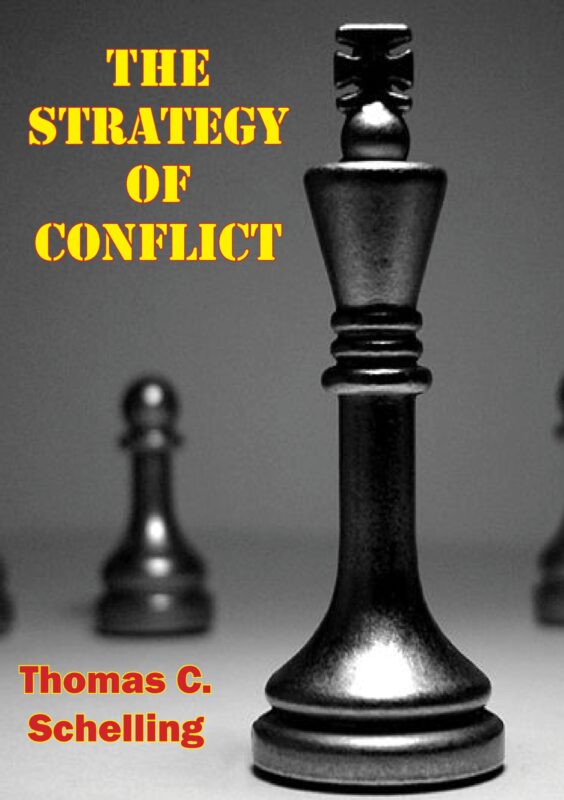
Arms and Influence by Thomas C. Schelling transformed the way leaders and strategists understand the dynamics of military power and international bargaining. Schelling grounds his analysis in the claim that the capacity to inflict harm—whether through violence or its threat—constitutes a fundamental form of bargaining power. He unfolds the logic by which this power shapes global security, crisis management, and the architecture of peace.
The Diplomacy of Violence
Military force does not function only through conquest or defense. Schelling demonstrates how states deploy the threat of pain, disruption, and destruction to structure negotiation. Violence can serve as a communicative act, sending signals that clarify intent, resolve, and the terms of possible settlement. Adversaries calibrate their actions by weighing both capability and willingness to impose losses. The ability to hurt compels attention, motivates compromise, and expands the field of bargaining beyond the simple calculus of battle. When two parties possess destructive power, each gains leverage over the other’s preferences, producing outcomes that hinge not just on what is physically possible, but on what is credibly threatened and strategically withheld.
Deterrence, Compellence, and the Grammar of Threats
Schelling defines deterrence as the use of threats to prevent action, whereas compellence seeks to induce an action by threatening harm if compliance is not achieved. The distinction runs deeper than terminology. Deterrence works by raising the cost of initiating an undesired action; compellence introduces an ongoing cost until the adversary alters its behavior. Success requires a credible demonstration of resolve, an adversary’s clear understanding of both the risk and the pathway to relief, and calibrated signals that leave the door open to de-escalation. Schelling explores how actors use ambiguity, escalation, and risk manipulation to sharpen or blur the boundaries of conflict. Leaders craft their signals to manage uncertainty and preserve the flexibility necessary for negotiation, yet risk losing control if signals provoke unintended responses or become too ambiguous to convey meaning.
The Manipulation of Risk
Strategic bargaining, in Schelling’s model, thrives on the management of uncertainty. Actors rarely hold total control over outcomes. Instead, risk emerges as a lever, forcing adversaries to consider the unpredictable consequences of further action or escalation. The manipulation of risk compels decision-makers to weigh not only the likelihood of disaster but also the potential for limited losses to spiral into catastrophic outcomes. As crises intensify, leaders face a narrowing window for communication, a heightened need for restraint, and increased vulnerability to miscalculation. Schelling argues that the possibility of catastrophe serves as a kind of currency, structuring incentives and creating the conditions for compromise.
The Nuclear Revolution and Mutual Vulnerability
The advent of nuclear weapons altered the architecture of international security. Schelling asserts that nuclear arms grant states the ability to inflict rapid, large-scale destruction without first achieving military victory in the conventional sense. The destructive power of these weapons renders populations and infrastructure immediately vulnerable, removing the historical sequence in which armies shield societies and wars end before total devastation. In this new strategic environment, mutual vulnerability becomes the foundation of deterrence. No state can ensure its own survival by seeking absolute security; each must live with the knowledge that retaliation can follow any first strike. This reality transforms war from a contest of military forces to a bargaining process structured by the threat of annihilation.
The Taboo Against Use
Since Hiroshima and Nagasaki, nuclear weapons have shaped global politics through their non-use. Schelling describes how the persistent avoidance of nuclear strikes created an informal “taboo,” elevating the threshold for employment and reinforcing restraint among nuclear-armed states. This taboo grew not from formal treaties, but from shared recognition of the stakes involved and the risks of breaking precedent. Over decades, the expectation that nuclear weapons remain tools of deterrence rather than instruments of war has endured, providing a fragile but critical safeguard against escalation.
Bargaining, Communication, and the Management of Escalation
Diplomacy in the nuclear age depends on signaling, credibility, and the capacity to manage escalation. Schelling maps the grammar of coercive diplomacy: leaders use threats, assurances, and limited actions to convey intentions, test adversaries’ resolve, and explore the boundaries of possible settlement. Success hinges on clarity of purpose, precision in messaging, and the ability to control one’s own forces as well as interpret the adversary’s actions. Schelling shows how even minor incidents, if mishandled, can trigger cycles of escalation that neither side originally desired. The management of risk, rather than its elimination, defines the essence of modern crisis diplomacy.
Overlapping Interests and the Space for Negotiation
Conflict arises where interests collide, yet Schelling identifies the crucial role of overlapping interests—mutual desire to avoid catastrophic loss or costly escalation—in creating space for negotiation. Adversaries may distrust each other’s motives and remain locked in competition, but the shared interest in survival and order provides a basis for compromise. Schelling explains that bargaining succeeds when parties recognize the incentives to accept outcomes preferable to disaster. The logic of deterrence and compellence both depend on the adversary’s belief that accommodation brings relief from threatened harm. This structure of incentives underpins arms control agreements, ceasefires, and crisis management across time.
Historical Patterns and Case Studies
Drawing on examples from ancient warfare, World Wars, the early Cold War, and mid-century crises, Schelling demonstrates recurring patterns in the use of violence as a diplomatic tool. Genghis Khan’s employment of hostages, British punitive air campaigns, and Sherman’s March to the Sea each illustrate the calculated use of pain to influence choices. The atomic bombings of Hiroshima and Nagasaki signal a paradigm shift, making plain the use of violence against societies themselves to force surrender, rather than merely defeat armies. Schelling dissects these cases to reveal how leaders weigh costs, measure adversaries’ willingness to suffer, and deploy both overt and implicit threats to shape outcomes.
Evolution of Nonproliferation and the New Security Environment
Since the original publication of Arms and Influence, the global landscape has shifted. The dissolution of the Cold War’s bipolar structure gave rise to new nuclear powers, including India, Pakistan, and North Korea. Schelling observes that nonproliferation efforts achieved results far beyond contemporary expectations. Policy choices, technological developments, and changing attitudes toward nuclear energy limited the spread of weapons, stabilizing the international system. Yet the emergence of new actors with nuclear capabilities injects fresh complexity into the logic of deterrence and compellence. Each new nuclear state must confront the realities of mutual vulnerability, risk manipulation, and the responsibilities of restraint.
Terrorism, Rogue Actors, and the Diffusion of Violence
Schelling addresses the changing face of terrorism and the possibility that non-state actors might acquire weapons of mass destruction. He interrogates the extent to which the logic of deterrence and compellence applies to groups with unconventional motives or willingness to incur extreme risks. The diffusion of destructive capability challenges established patterns of crisis management, introducing new uncertainties about credibility, control, and the potential for catastrophic escalation. Schelling contends that even unconventional adversaries possess incentives for restraint when they appreciate the value of influence over mere destruction.
Ethics, Policy, and the Limits of Control
Schelling refrains from prescribing specific policy solutions. Instead, he clarifies the structural conditions that inform strategic choices. He acknowledges the ethical dilemmas inherent in wielding the power to hurt—coercion, blackmail, and threats extract compliance through fear, testing the boundaries of what societies and leaders can justify. The pursuit of peace, justice, and order relies on the capacity to use this power wisely, understanding when to escalate and when to accommodate. Schelling warns that the power to hurt, once unleashed, can escape rational control, spiraling into cycles of retaliation and destruction that defy original intentions.
Contemporary Relevance and Enduring Lessons
The lessons of Arms and Influence resonate in today’s global security environment. North Korea’s pursuit of nuclear weapons, ongoing crises in South Asia, and debates over arms control reflect the persistent relevance of Schelling’s analysis. Leaders who grasp the logic of deterrence and the power of credible threats can better navigate crises, manage escalation, and design stable security arrangements. The underlying principles of bargaining, risk manipulation, and mutual vulnerability remain central to strategic thinking, shaping policy choices from nuclear strategy to counterterrorism.
The Future of Coercive Diplomacy
The future of international order depends on the mastery of coercive diplomacy and the preservation of credible restraint. As technological change accelerates, new domains of warfare and influence—cyber, space, autonomous systems—will augment the traditional forms of violence and bargaining. Schelling’s framework equips policymakers to adapt, teaching the necessity of clear signaling, the dangers of misperception, and the logic by which adversaries weigh risk and opportunity. The taboo against nuclear use, the architecture of arms control, and the willingness to engage in structured negotiation provide hope for stability, even amid uncertainty.
Strategic Clarity in an Uncertain World
Schelling’s achievement lies in revealing the structural grammar of violence as a tool of influence and negotiation. By defining the terms, tracing the causal sequences, and articulating the stakes, he provides a roadmap for understanding and managing the dangers of armed conflict. Arms and Influence endures as a cornerstone of strategic thought, its relevance sharpened by the persistence of risk, the evolution of technology, and the enduring complexity of human rivalry and cooperation.