State of Fear
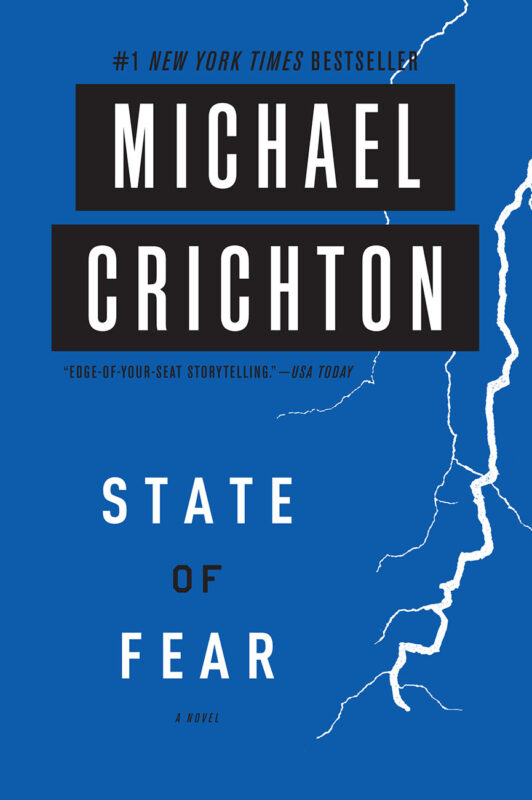
State of Fear by Michael Crichton launches with a premise that fuses global suspense, scientific controversy, and the relentless machinery of modern media. The narrative surges from courtroom drama to high-tech action, all while interrogating the foundations of environmental belief and public anxiety. Crichton, wielding the full force of his medical and scientific background, orchestrates a thriller where the mechanisms of fear become as visible as the dangers they claim to reveal.
Science, Speculation, and the Power of Narrative
Crichton positions speculation at the heart of public discourse. He asserts that media enterprises, motivated by expedience and profit, embrace speculation as a strategy for content generation. This approach accelerates the dissemination of ideas without subjecting them to the discipline of verification. Speculation, detached from the constraints of evidence, shapes public perception and drives societal behavior. The book’s characters—lawyers, activists, scientists, and government operatives—operate within this volatile ecosystem, where assertion substitutes for proof and narrative coherence supersedes factual rigor.
Speculation persists because it is cheap, self-replicating, and immune to retrospective accountability. Media platforms benefit by fostering a climate of constant crisis. Public figures, pundits, and even academic experts become repeat players in a game defined by its capacity to generate attention, not clarity. The book dramatizes how individuals and organizations manufacture urgency, employ rhetorical spectacle, and transform everyday events into existential threats.
The Media’s Mechanisms: From Fact to Fear
Crichton diagnoses the structure of media as a system that rewards the conversion of ambiguous facts into compelling crises. He traces a pattern in which speculative reporting migrates from tabloids and talk shows into newspapers and academic discussions. He introduces the concept of the “Gell-Mann Amnesia effect,” observing that readers who recognize errors in one area of coverage suspend skepticism when engaging with unfamiliar topics. This cyclical pattern enables the proliferation of error and solidifies institutional credibility.
The novel’s plot echoes this logic, staging sequences where information, misinformation, and disinformation move with identical velocity. Stakeholders deploy media manipulation to advance legal cases, environmental agendas, and personal ambitions. Crichton choreographs high-stakes confrontations, demonstrating the real-world consequences of data distortion, strategic leaks, and media theatrics.
Environmentalism: Belief, Ritual, and Modern Myth
State of Fear exposes the transformation of environmentalism into a belief system that blends scientific language with ritualistic structure. Crichton proposes that contemporary environmentalism inherits the framework of religious tradition, complete with origin myths, original sin, judgment, and salvation. He frames the environmental movement as a system of meaning, offering adherents a sense of belonging, moral clarity, and existential purpose.
Within the story, activists and institutions project images of Edenic pasts, catastrophic futures, and prescribed paths to redemption. The characters who question or challenge these dogmas encounter resistance, isolation, or even hostility. The novel’s protagonist, propelled into a labyrinth of intrigue, confronts the tension between environmental action and environmental faith. Crichton’s portrayal intensifies as he catalogs historical predictions about resource exhaustion, mass extinction, and global catastrophe, tracing the persistence of apocalyptic rhetoric across decades.
Science Under Siege: Consensus and Controversy
Crichton scrutinizes the relationship between science and consensus. He distinguishes scientific progress as a process rooted in reproducible results, subject to continuous scrutiny and revision. He argues that the invocation of consensus, especially in debates surrounding environmental and public health issues, signals a departure from genuine scientific inquiry. Consensus, as he sees it, belongs to the realm of politics, serving as a rhetorical shield to deflect skepticism and forestall dissent.
Through narrative and embedded speeches, the book chronicles landmark controversies—ranging from the debates over DDT, second-hand smoke, and population collapse to the modeling of climate change scenarios. Crichton compiles a record of predictions and policy recommendations that, upon examination, reveal weak evidentiary foundations and far-reaching unintended consequences. He foregrounds the risks of politicizing science, warning of a future dominated by dogma, groupthink, and ideological rigidity.
Global Plots, Local Consequences
The thriller unfolds across continents and jurisdictions, with scenes in Paris, Tokyo, Los Angeles, and remote Pacific islands. Legal maneuvering, technological sabotage, and deadly natural phenomena intertwine as a legal team and a set of adversaries race to prevent—or exploit—disasters linked to climate manipulation and environmental activism. Crichton synchronizes fictional events with the real-world proliferation of advocacy litigation, regulatory disputes, and corporate influence.
Characters pursue data, track suspicious funding, and seek to decode the motives of international organizations. The legal thriller framework provides a backdrop for exploring the intersection of law, science, and activism. Decisions by judges, bureaucrats, and investigators ripple outward, generating outcomes that affect policy, reputation, and lives. Crichton builds dramatic momentum by tethering abstract arguments to visible stakes—floods, hurricanes, landslides, and acts of eco-terrorism.
Technology, Measurement, and the Construction of Reality
Throughout the book, Crichton anchors dramatic action in the apparatus of modern measurement—satellites, remote sensors, digital models, and forensic analysis. He observes that technology shapes not only scientific understanding but also the scale and shape of public fears. The characters rely on data visualization, statistical modeling, and risk assessment to inform decision-making. Yet, the proliferation of data generates its own complexities, as rival factions interpret, manipulate, or selectively disclose findings to suit competing narratives.
The tension between technological possibility and interpretive ambiguity runs through the plot. As new data emerges, old conclusions fracture, and institutional actors jockey for position. The velocity of information transfer amplifies the stakes of misunderstanding, error, and deception. Crichton’s characters, pursuing both truth and advantage, inhabit a world where the boundary between natural and artificial events blurs, and where control over narrative becomes a tool of power.
Public Policy, Advocacy, and the Dilemmas of Action
State of Fear interrogates the process by which scientific findings translate into public policy. Crichton identifies the hazards inherent in transforming provisional or contested research into binding law, regulation, or social mobilization. He details how advocacy organizations, government agencies, and private interests seek to influence legislation and shape public priorities through orchestrated campaigns, litigation, and crisis messaging.
The novel’s narrative structure mirrors the procedural uncertainties and moral dilemmas faced by policymakers, scientists, and citizens. Actions intended to avert harm or promote justice can trigger unpredictable or paradoxical results. As the characters navigate bureaucratic hurdles and legal thresholds, they must grapple with the weight of their own convictions and the possibility of unintended consequences.
Lessons from History: Precedent and Pattern Recognition
Crichton’s embedded essays and character dialogue invite readers to trace the lineage of environmental and scientific controversy. He presents case studies—germ theory, pellagra, continental drift, and dietary guidelines—as evidence of the protracted struggle to separate reliable knowledge from entrenched error. Each episode illustrates how entrenched interests, institutional inertia, and consensus-building can obstruct the recognition of verifiable fact.
The novel’s argument gains momentum as it weaves together historical lessons with contemporary debates. Crichton suggests that the mechanisms generating past misjudgments persist, reshaped by modern media and political advocacy. He challenges readers to adopt a stance of humility, skepticism, and methodological rigor. His characters, forced to reexamine their own assumptions, exemplify the transformative potential of inquiry when it resists premature closure.
The Ethics of Information: Transparency, Accountability, and Memory
State of Fear scrutinizes the ethics of information management in science, policy, and the media. Crichton contends that the suppression of dissenting voices, the strategic deployment of consensus, and the tendency toward sensationalism erode the public’s ability to make informed decisions. He advocates for transparency in the sourcing, interpretation, and dissemination of data.
The book dramatizes the costs of institutional forgetfulness and selective memory. As crises come and go, as predictions are made and forgotten, Crichton asks who stands accountable for error, misdirection, or harm. His characters confront the moral and practical stakes of their choices, recognizing that the consequences of error are real, measurable, and often irreversible.
Toward a Science of Uncertainty
Crichton’s vision converges on the necessity for science to embrace uncertainty as a productive force. He argues that genuine scientific progress flourishes when practitioners recognize the limits of knowledge, welcome dissent, and subject claims to continuous testing. Humility becomes a source of strength, not a sign of weakness. The story’s resolution aligns with the proposition that genuine progress emerges through disciplined investigation, critical reflection, and a willingness to revise beliefs.
The novel closes with a call for a culture that prizes inquiry over dogma, transparency over spectacle, and evidence over consensus. Crichton’s characters, shaped by conflict and revelation, embody the challenges and possibilities inherent in the pursuit of truth within a world saturated by fear, ideology, and media-driven uncertainty. The message of State of Fear endures in its advocacy for the vital interplay of skepticism, reason, and the courage to question prevailing orthodoxies.